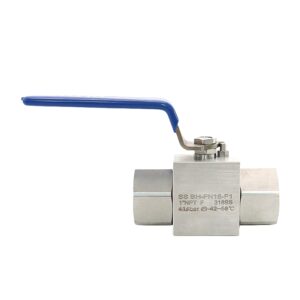
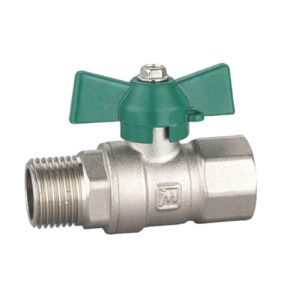
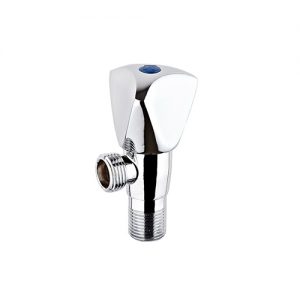
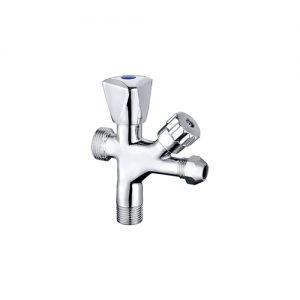
“High Pressure Stainless Steel Ball Valve For Natural Gas” has been added to your cart. View cart
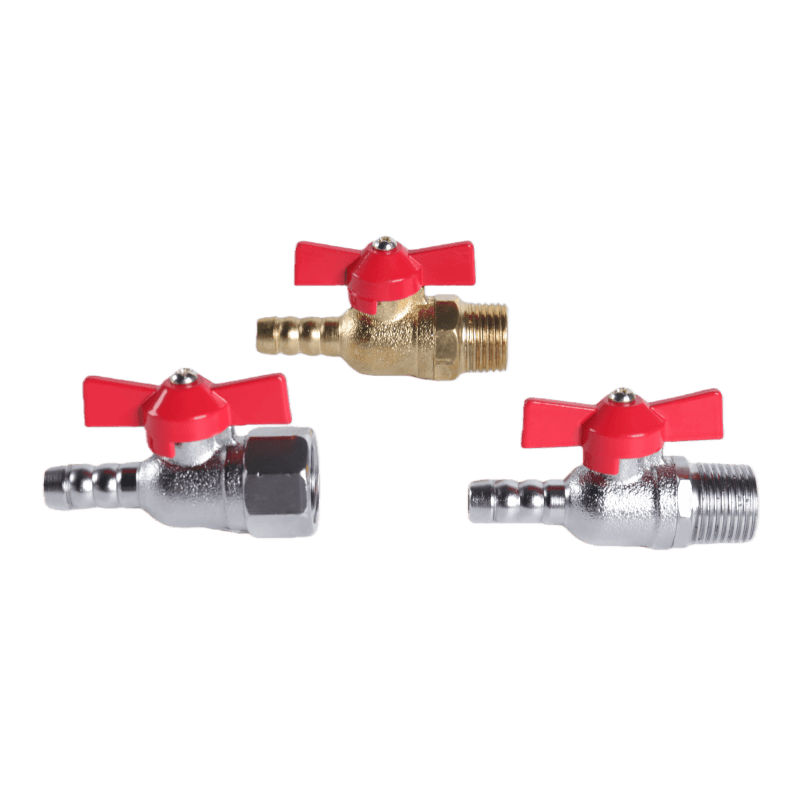
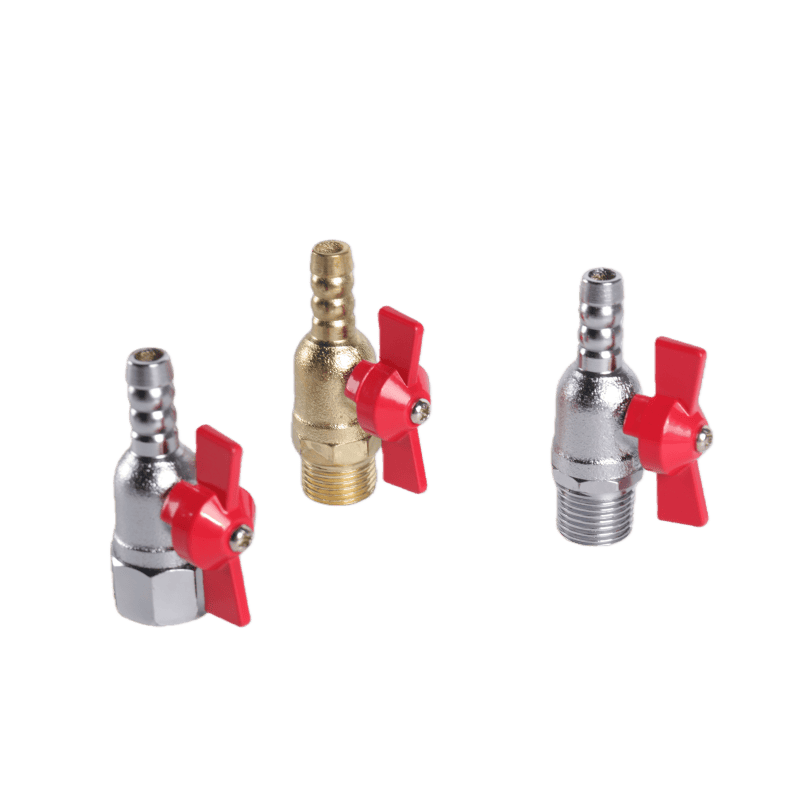
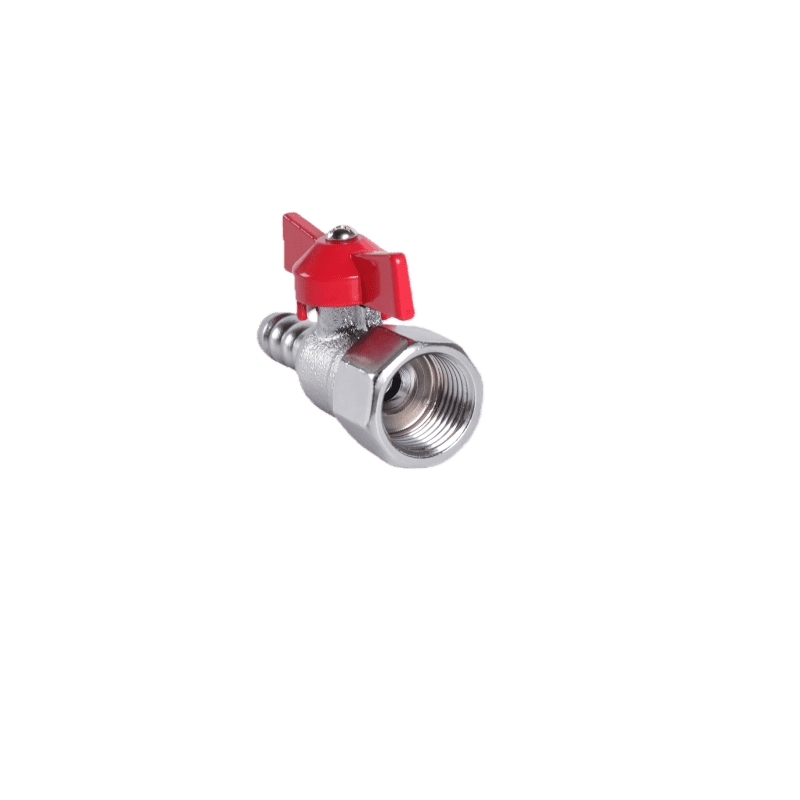
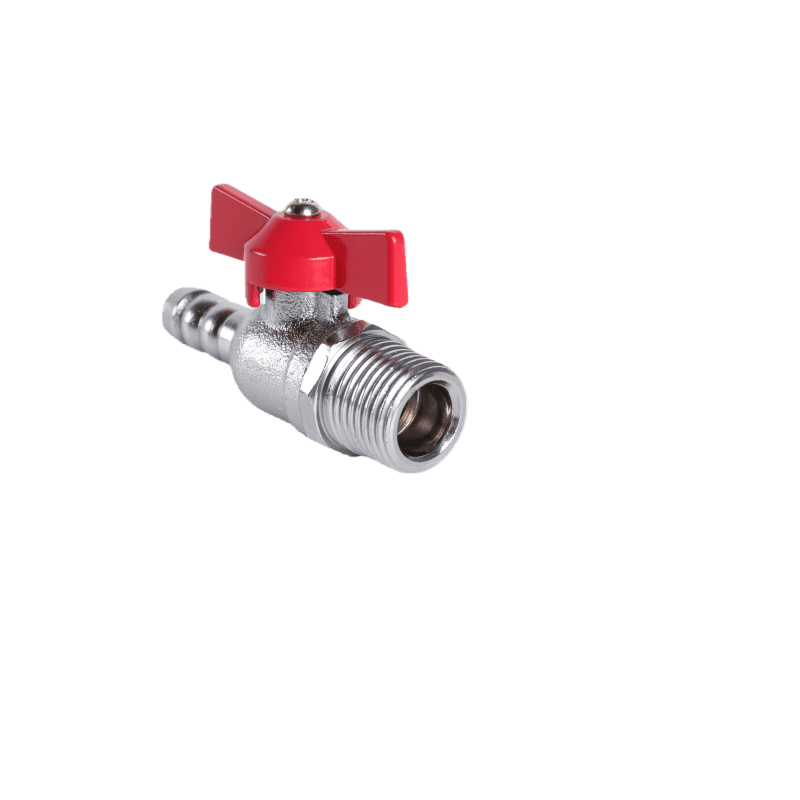
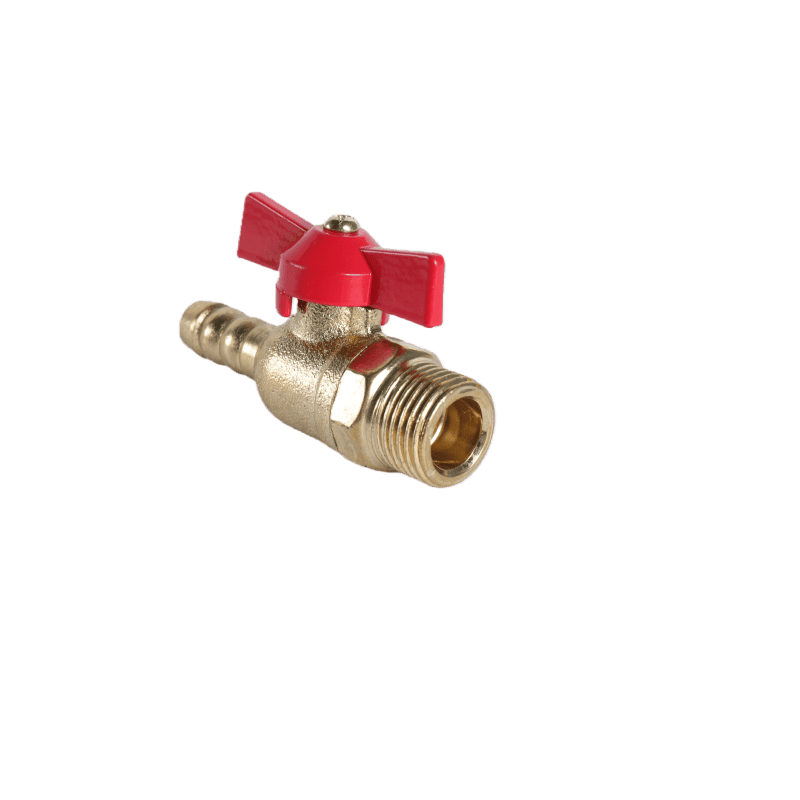
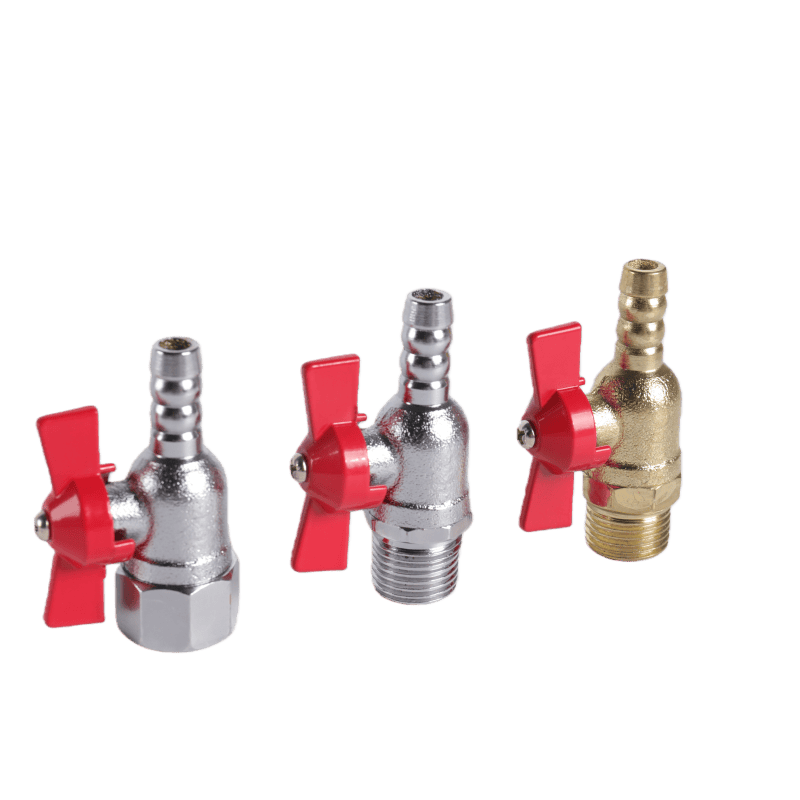
Hose Joint Gas Ball Valve
Parameters of Hose Joint Gas Ball Valve
The hose joint gas ball valve is achieved through the ball core’s 90° rotation to achieve on-off control of the gas path. Its use is mainly concentrated in the gas transmission scene: on the one hand, it is suitable for the quick docking of gas hose and threaded pipeline, and the convex structure of hose joint ensures sealing and leakage prevention; on the other hand, it realizes the unobstructed circulation of gas flow and convenient switch by virtue of the full diameter and light opening and closing characteristics of ball valve.
The PEX Ball Valve With Drain is a dedicated pipeline valve integrating on-off control and drainage functions. It is compatible with push-to-connect or crimp connection methods. Featuring an integrated drain port and small-caliber drain valve on the valve body, it allows for rapid discharge of residual medium in the pipeline while the main medium flow is shut off. Boasting low opening and closing torque of the valve core, it enables quick on-off control of the main medium flow.
Model No.: JX-0449
Size: 1/2 “EXP Pex x 1/2 ” EXP Pex
Material: Lead Free DZR Forged Brass
With a Blue Long Lever handle
Valve Operation: Manual
Barb Crimp Ring Type
Standard: ASTM/NSF
A 90-degree quarter turn is achieved by opening or closing
Max working pressure: 400 psi
Max working temperature: 203°F
PTFE seat & stem
Midline Valve Full Port Ball Valve
The Midline Valve Full Port Ball Valve features a bore diameter identical to the pipe size, minimizing pressure loss during medium flow and enabling high-flow delivery. Its midline ball sealing structure allows for bidirectional sealing, and the valve stem is equipped with a blowout-proof protection design. This valve is ideal for applications involving the transportation of media containing particulate impurities or high-flow media.
Model No.: JX-0420
Size: 1/2″, 3/4″
Material: Lead-free brass, C46500, CW510l
Item Height: 1-2 “
Connection: MIP x FIP
Working Pressure: 150 PSI
Working Temperature: -20-300°F
Standard: CSA, UPC
Inlet Connection Type: Full port
Outlet Connection Type: FIP
With a Steel Lever Handle with a rubber cover
Brass ball with brass stem
Sealing: Teflon(PTFE)
Parking: PTFE with brass nut
Full Port
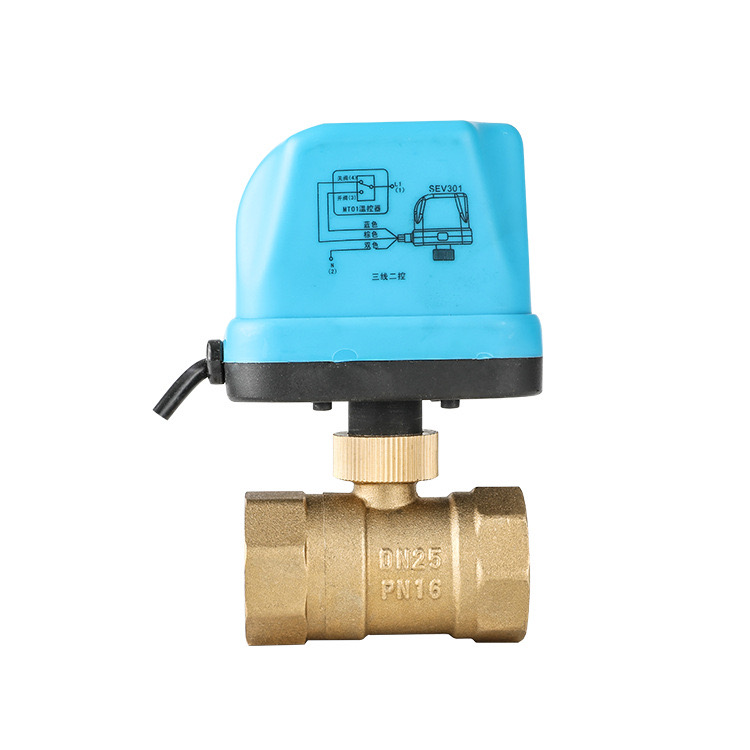
2-Way/3-Way Brass Electric Ball Valve
The 2-Way/3-Way Brass Electric Ball Valve comes in two configurations: the 2-way version enables pipeline on-off control and bidirectional sealing, while the 3-way version is capable of media confluence, diversion, or circuit switching. It features a chrome-plated brass ball valve core paired with PTFE seals. The electric actuator supports rapid 90° rotation switching and is usually equipped with limit switches and manual emergency operation functions. Certain models are designed with power-off hold or reset functions and can reach an IP65/IP67 protection rating.
Model No.: JX-0311
Specification: DN15- DN25
Material: Brass
Type (Channel Location): Two-way, Three-way
Connection Form: Thread
Applicable medium: Air, Water, and Oil
Flow direction: One-way
Purpose: Influent water
Nominal Path: 10-50mm
Rated voltage: AC220V, DC24V, DC12V
Working temperature: 80-150°C
Working pressure: 0-1.0 MPa
Plastic Electric Actuator Control Ball Valve
The valve body of the Plastic Electric Actuator Control Ball Valve is primarily made of corrosion-resistant materials such as PP, PVC, or UPVC. It is suitable for non-high-pressure working conditions, including the conveyance of weakly corrosive chemical media, civil water supply and drainage, and water treatment processes. Its electric actuator supports remote automatic control and manual emergency operation. This valve is widely applied in scenarios like building water supply and drainage, as well as swimming pool water circulation, and is particularly ideal for low-pressure pipeline systems that are cost-sensitive and handle non-corrosive media.
Model No.: JX-0313
Valve size: DN15, DN20, DN25
Connection: BSP/BSPT
Valve structure: Two-way
Media: Hot/cold water
Pressure: PN10
Turn off: <7s
Lifetime: 70000 times on-off
Torque: 3N.m
Power supply voltage: DC5V, DC12V, DC24V, AC/DC 9V-24V
Consumable power: <6.5W
Condition temp: -15C°-50C°
Water temp: 2C°-90C°
Seat: PTFE, IP67
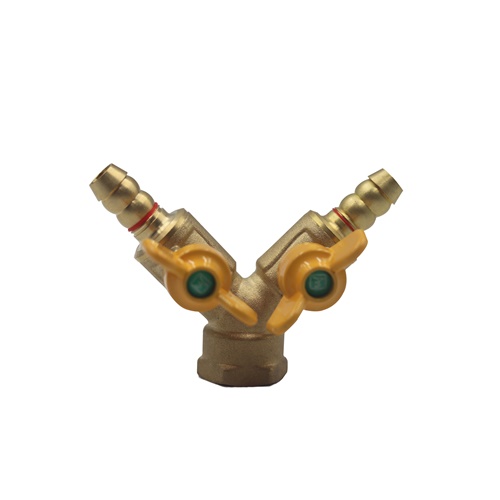
Y Shape 3-Way Shut off Ball Valve Fitting Hose Fuel Gas
The Y-shaped 3-Way Hose-Type Gas Shut-off Ball Valve minimizes gas flow resistance and reduces pressure loss during transmission. Equipped with dedicated hose connectors, the valve body forms a secure connection with gas delivery hoses to prevent gas leakage. Its 3-way valve core design enables gas path diversion, confluence, direction switching, and rapid on-off control. This valve is mainly applied in scenarios where multiple terminals share a single gas source, such as household gas stoves, gas water heaters, and small industrial gas-fired equipment.
Model No.: JX-0429
Material: Brass, CW614N, CW617N
Size: 1/2″
Barb Outer Diameter: 11mm
Barb Length: 20mm
With two Aluminum handles
Easy for 90° rotation
Working pressure rating: 400 psi
Finishing: Sand-blasted
Seal material: PTFE
Max work temperature: -10-110℃
Medium: Gas
Suitable for PEX, Copper, and HDPE hose
Brass Ball Valve Drive Motor
The Brass Ball Valve Drive Motor adopts a high-efficiency DC or AC motor core, featuring compact size, stable torque output, and fast response speed. It can accurately drive the ball valve core to perform a 90° rotation, achieving automatic on-off control and flow regulation of media in pipelines. This motor usually has a protection rating of IP54 or higher.
Model No.: JX-0302
Size: 1/2″, 3/4″, 1″, 1-1/4″, 1-1/2″, 2″
Material: Standard brass, CW617N
Finising: Sand blasted
Thread connection: BSP, BSPT, NPT
Action time: 15s
Drive power: 220VAC, 50-60HZ (can be customized 24V AC), DC24V
Medium temperature: 2 ℃ -95 ℃
Power: 6 W
Lead length: 50 cm (can be customized)
Medium: cold/hot water
Control: three-wire two control (can be customized three-line control)
Working pressure: 1.6MPa
Power consumption: 5VA
FAQs of Hose Joint Gas Ball Valve
1. What is the difference between a gas ball valve and a water ball valve?
The core difference between a gas ball valve and a water ball valve is reflected in the medium adaptation design, safety requirements, and material focus.
Gas ball valve designed for flammable and explosive gas (e.g., natural gas, liquefied gas), with a higher seal rating (PTFE and other gas corrosion-resistant sealing materials are mainly used), explosion-proof structure, and anti-leakage performance. The valve body material is typically brass, cast iron, or other materials resistant to gas corrosion and capable of stable heat conduction. Some of them have special safety certification for gas. The water ball valve is suitable for water and aqueous media. The seal focuses on anti-scale adhesion. The material can be plastic, brass, or other suitable materials. There is no mandatory requirement for explosion-proof, but water corrosion resistance and water quality compatibility (such as lead-free requirements) should be considered.
In addition, the gas ball valve flow channel design pays more attention to gas flow smoothness to reduce resistance, water ball valve may be designed for scale, impurities more easily clean structure, the two can not be mixed, misuse will cause safety risks (such as gas ball valve for water pipe may affect the water quality due to material dissolution, water ball valve for gas is easy to cause leakage due to insufficient sealing).
The hose joint gas ball valve is available in two design types: full-bore and non-full-bore. The specific type required should be confirmed in combination with the product specifications.
The core feature of the full-diameter model is that the circulation aperture of the ball core in the valve body is essentially consistent with the inner diameter of the valve body inlet and outlet, as well as the connected gas pipeline. The full-diameter design has a significant effect on the improvement of gas circulation efficiency:
Firstly, it can minimize the resistance of gas flowing through the valve, reduce pressure loss, and ensure that the gas is transported in a state closer to the rated flow of the pipeline, making it especially suitable for scenes with high requirements for flow stability, such as household cookers and commercial small gas equipment.
Second, it can reduce the residual gas in the valve body, thereby reducing the local corrosion risk caused by medium retention, and provide convenience for purging and cleaning during subsequent pipeline maintenance, indirectly ensuring the stability of circulation efficiency over the long term.
Although the flow resistance of the non-full-diameter type is slightly higher, the cost is relatively low, and it is suitable for simple gas passages with low flow requirements.
3. How to select the diameter of the Hose Joint Gas Ball Valve to match the DN size of the valve body?
First, confirm the pipe diameter and rated flow corresponding to the DN specification of the valve body to avoid insufficient flow due to a too small joint diameter. Secondly, select the joint according to the actual inner diameter of the gas hose. If the hose is standard,(For example, the corresponding inner diameter of 4-point hose is φ12mm), directly match the joint of DN15 valve body with the exact specification; finally, in combination with the use scenario, verify the flow capacity matching between the joint and the valve body through the flow calculation formula, and refer to the hose specification or sample provided by the customer to ensure that the joint insertion depth matches the hose wall thickness to avoid falling off or sealing failure.
Small body (such as DN08/DN10) usually matched with φ8mm/φ10mm inner diameter hose joint, DN15 (4 points) valve body multi-matching φ12mm/φ15mm joint, DN20 (6 points) valve body corresponding to φ16mm/φ20mm joint, large size DN25 (1 inch) valve body matching φ22mm/φ25mm joint, some memorable scenes will use “reducing joint” to achieve reducing adaptation (For example, DN15 valve body is equipped with φ10mm joint), but it is necessary to ensure that the flow resistance is within the allowable range.
4. What is the MOQ for Hose Joint Gas Ball Valve?
The MOQ of the Hose Joint Gas Ball Valve shall be determined comprehensively in combination with product specifications and procurement scenarios. For custom models and special specifications, such as large diameter DN40/DN50 models, custom tooth models, or industrial grade models with explosion-proof structure, the MOQ is usually 500. However, for long-term cooperation customers or large-batch purchase orders, the minimum quantity can be negotiated flexibly. For example, when the total purchase quantity exceeds 1000 in a single purchase, some non-standard specifications can also be executed according to a lower MOQ, which is subject to the agreement of both parties in trade negotiations.
For Hose Joint Gas Ball Valve problems caused by customer selection errors, return and exchange processing shall be determined comprehensively in conjunction with product status and cooperation scenarios. The core principle is “non-quality problems shall be solved through negotiation to ensure reasonable rights and interests of both parties”.
If the product is not opened, unused, and the complete packaging and identification are retained, an application can be made within the agreed acceptance period (usually 10-15 days) after arrival. The return and exchange can be supported, but the customer has to bear the round-trip freight and the corresponding customs declaration, customs clearance, and other related expenses. At the same time, it is necessary to ensure that the product does not affect the secondary sales.
If the product has been opened, installed, or worn, resulting in logo damage, etc., as the gas valve is a safety industrial product, it directly affects the safety of use. Generally, we do not support returns. However, we can provide a discount for replacement, specification adjustment, or assistance with resale solutions.
To minimize selection errors, we will provide detailed selection guides before purchase, helping customers verify key information such as pipeline diameter, pressure parameters, and media type. For long-term cooperative customers or those with large-volume orders, we also offer sample testing services. Reduce the risk of selection at the source; specific details for return and exchange can be clearly agreed upon in the contract to ensure clear rights and responsibilities.
6. What is the core advantage of Plumberstar’s hose joint gas ball valve compared to others?
The core advantages of Plumberstar hose fitting gas ball valves focus on material reliability, safety performance, and adaptability.
The material features a cast steel, integrated, forged valve body with a PTFE corrosion-resistant sealing structure. It offers improved gas corrosion resistance and wear resistance compared to ordinary cast iron or mixed copper materials in the same industry, extending the service life by more than 30% compared to the industry average level.
Safety design meets CE and UL double standards, featuring a built-in explosion-proof valve core and a double-sealing, leakproof structure. The air tightness test strictly follows the EN 12266 standard, with a leakage rate approaching zero. This design is suitable for liquefied gas, natural gas, and other gas media without the need for additional selection.
Adaptability supports PT/NPT/G full series tooth type, provides DN08 to DN50 full specification coverage, special diameter hose can customize the joint, especially the “external tooth + cannula” combination interface, with cannula size accuracy of ±0.1mm, suitable for all kinds of gas hose and installation without special tools.
7. How many times can the hose joint gas ball valve be opened and closed?
The opening and closing times of the hose joint gas ball valve are directly related to the sealing type and material process. Conventional soft seals, PTFE seals can be stable to more than 100,000 open and close cycles, metal hard seals due to hardening treatment of the sealing surface (such as tungsten carbide coating), open and close times can reach more than 50,000 times, special customized high wear resistant models can even break through 100,000 times. This performance index far exceeds the basic requirements of the industry standard for 10,000 times of opening and closing the gas stove valve. It is also better than the average level of 5-80,000 times for ordinary gas ball valves on the market. The core advantage stems from the high-purity brass integrated forging process employed in the valve body, combined with the nitriding treatment of the valve stem and the precision seal structure design, which effectively reduces wear during the opening and closing processes. Even under normal gas working conditions of -20 ℃ to 90 ℃, the wear amount of the sealing surface after 100,000 cycles can still be controlled within 0.1mm, ensuring that the leakage rate is maintained at the ANSI Class VI zero leakage standard, fully meeting the long-term, frequent operation requirements of civil and commercial scenes.
8. What is your monthly production capacity for gas ball valves?
We maintain competitive pricing for our hose joint gas ball valves tailored to wholesale buyers through four core initiatives:
We capitalize on large-scale procurement and production strengths. Core raw materials, such as brass and stainless steel, are sourced in bulk to lower procurement costs. Meanwhile, standardized production lines and automated processing equipment enhance operational efficiency, thereby reducing the unit processing cost of each product.
We optimize supply chain management by streamlining intermediate distribution channels. By engaging in direct cooperation with wholesale buyers and offering factory-direct pricing, we eliminate unnecessary markup from middlemen.
We implement a tiered wholesale pricing strategy. Larger order volumes unlock more substantial unit price discounts. Additionally, we offer exclusive, preferential benefits and rebate programs to our long-term wholesale partners.
We exercise flexible control over customization costs. For custom wholesale orders, we utilize standardized customization modules and proven process solutions to prevent cost escalations resulting from non-standard designs, ensuring that custom products remain competitively priced in the market.
9. How do you handle delays caused by Hose Joint Gas Ball Valve raw material shortages?
We have established a full-process emergency response mechanism for delivery delays caused by raw material shortages for hose joint gas ball valves.
Firstly, we will maintain a safe inventory of core raw materials, including brass and stainless steel. The regular stock quantity can meet the standard production capacity demand of 30 days. At the same time, we will sign long-term cooperation agreements with more than three qualified raw material suppliers to ensure that standby suppliers can be quickly switched when the main supply channel is blocked.
Secondly, once a shortage warning of raw materials is issued, we will notify customers as soon as possible, explaining the reasons for the shortage, the estimated recovery time, and alternative solutions simultaneously. These solutions may include replacing substitute materials with equal performance or adjusting production scheduling priorities to ensure core orders.
Additionally, we will initiate the capacity allocation plan to enhance production efficiency by optimizing production processes and adjusting production line scheduling, thereby minimizing the delay period as much as possible.
Finally, for orders that require late delivery, we will negotiate compensation plans with customers, such as offering a percentage discount on the price or extending the product warranty period, to minimize customer losses.
10. Do you produce the hose joint gas ball valve in your Plumberstar own factory?
Yes, we produce all of the ball valves in our own factory.