FAQs of Pressure Reducing Valve
1. How does a compact PRV differ from a standard pressure relief valve?
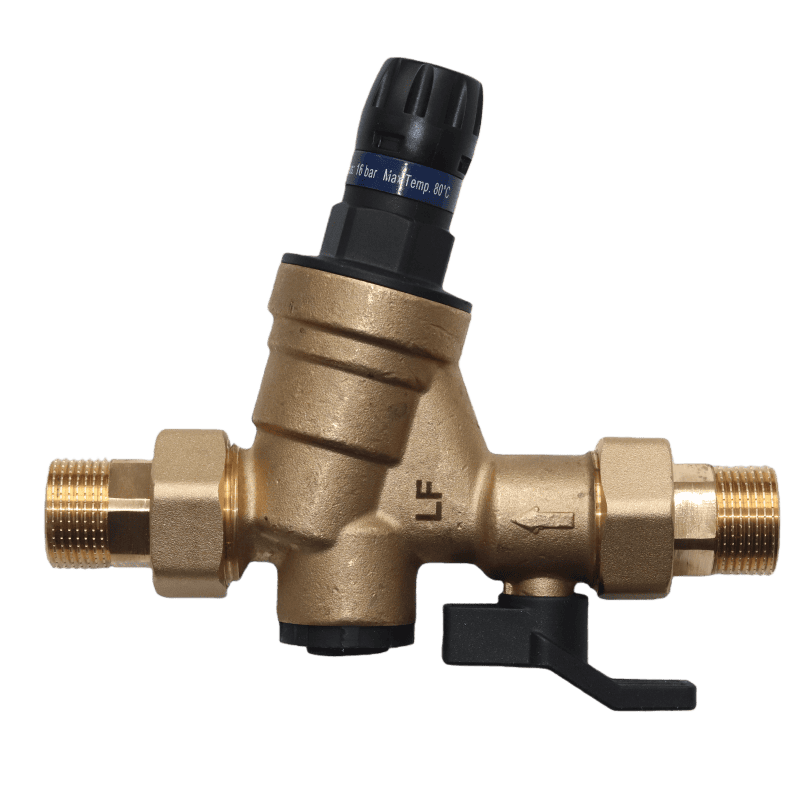
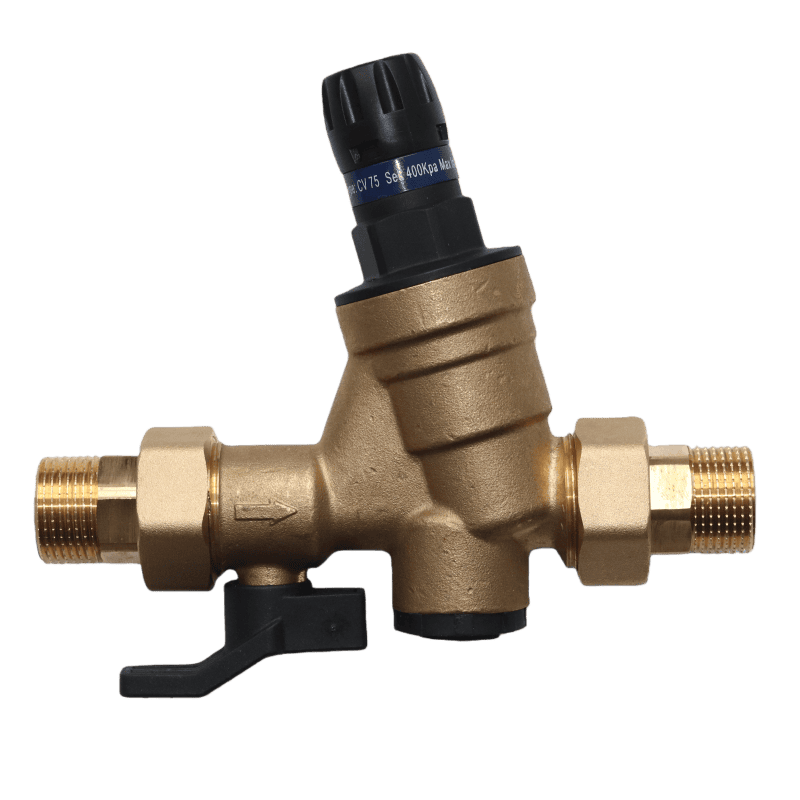
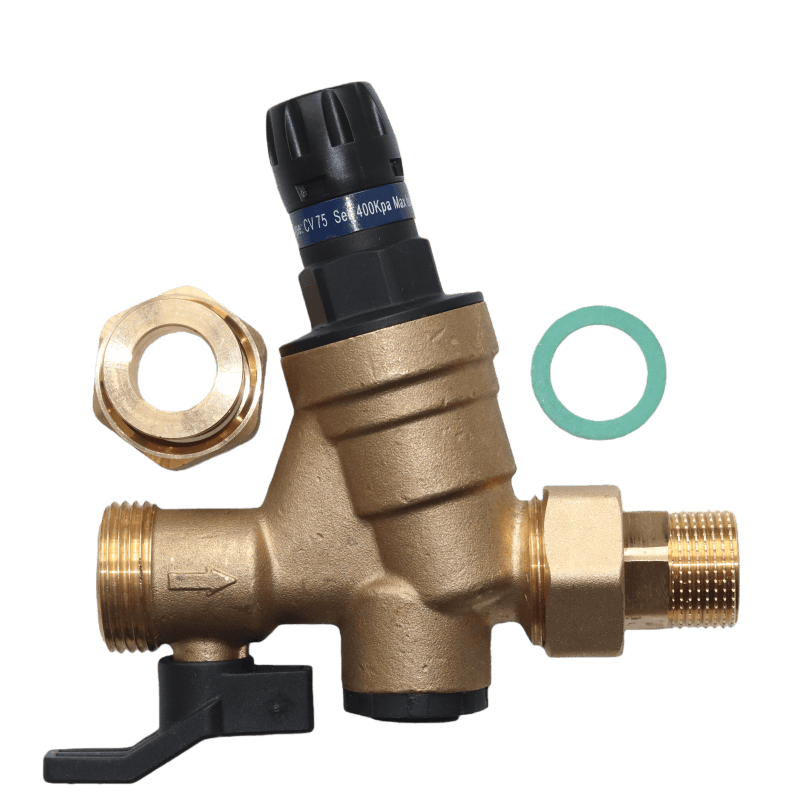
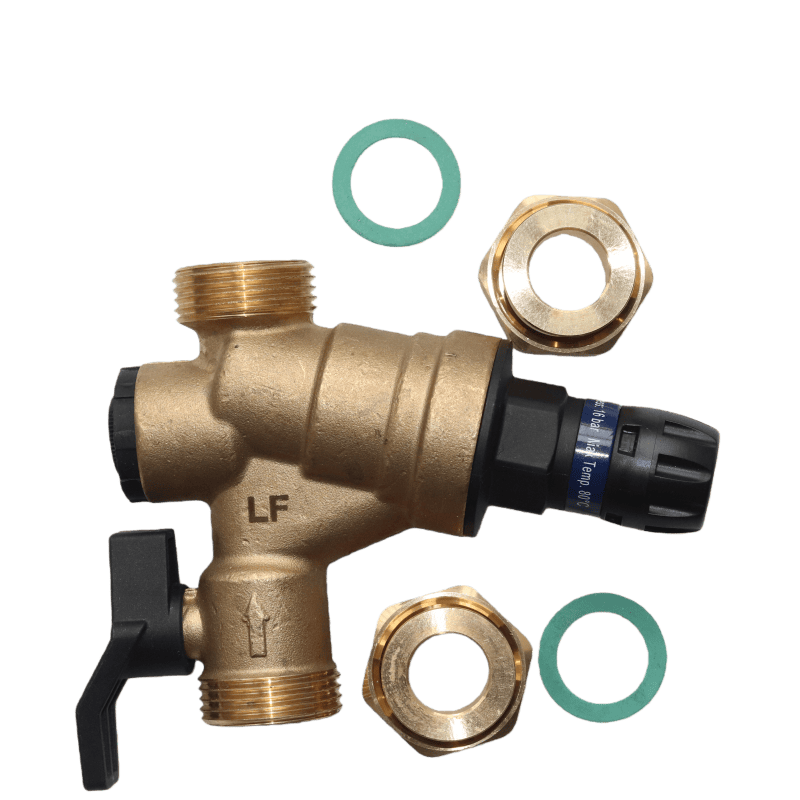
Compact pressure relief valves are miniaturized and scenario-optimized versions of standard pressure relief valves. Their core working principle is the same: both rely on the balance between spring force and medium pressure to control the opening and closing of the valve core. However, compact pressure relief valves are tailor-made for small systems with limited space and medium to small flow rates. The specific differences are reflected in the following aspects:
1. Structural and volume characteristics: Compact pressure relief valves are highly compact. Their internal components have undergone miniaturization optimization. This results in a smaller overall volume and lighter weight. They are mainly suitable for medium to small flow rates and medium and low-pressure systems. Their pressure relief capacity matches the pressure fluctuation requirements of small systems. In contrast, standard pressure relief valves generally adopt a split structure design. The valve body is larger, and the pressure sensing and exhaust components are longer. They are suitable for meeting the pressure relief needs of large flow rates and high-pressure systems.
2. Space utilization and installation adaptability: Compact pressure relief valves are suitable for narrow installation spaces. They support multi-angle installation (wall-mounted, pipeline-mounted). The connecting parts are simple, and no additional adapters are required. Standard pressure relief valves have higher requirements for the distance between the valve body and the valve seat. The surrounding pipelines are to ensure unobstructed pressure relief. When connected to the main pipeline, they often require auxiliary components, such as connecting flanges and pressure-reducing valves. They are more suitable for modular assembly of large-scale pipeline systems.
3. Maintenance and operation: The internal components of compact pressure relief valves are integrated and miniaturized. It makes disassembly and assembly simple. Daily inspection and cleaning of the valve core do not require professional tools, facilitating on-site maintenance. The internal components of standard pressure relief valves are more complex, with independent modules for pressure regulation, sealing, etc. They require professional personnel for debugging and maintenance. Moreover, the maintenance process requires shutting down the entire main pipeline system. This results in higher operation and maintenance costs.
2. Which compact pressure-reducing valve material is best suited for the German market?
Certifications for the German market: DVGW W534 and DVGW W539. We have a general plan for the material selection of the Compact Pressure Reducing Valve.
Valve body: DZR brass CW617N/CW602N
Internal components: PPS/PA66 GF30 engineering plastics + EPDM/NBR food-grade seals
This combination can meet all mandatory standards and water quality adaptability requirements in Germany. It also aligns well with the market’s high expectations for durability, hygiene, and low maintenance. This material selection is the most recognized and market-competitive in Germany. 316 stainless steel can also be used as a customized option for special non-drinking water scenarios.
3. Can the Pressure Reducing Valve spring be customized for non-standard requirements?
Yes, Plumberstar fully supports the customization of PRV springs for non-standard requirements. The specifications of the spring will affect the set pressure, pressure regulation range, and pressure relief response speed of the pressure-reducing valve.
For non-standard spring customization, we will first confirm your specific technical requirements. Then select the spring material. Available materials include 304/316 stainless steel, high-carbon spring steel for high-pressure industrial systems, and Inconel alloy for high-temperature special working conditions. And design the spring structural parameters through pressure performance tests. We can provide small-batch customized production for sample verification.

4. Is your “100% pressure testing” claim just a sample test, or is it literally a pressure-reducing valve?
Our 100% pressure testing is not a random sampling test, but a strict quality commitment implemented for every pressure-reducing valve.
For all pressure reducing valves, after the assembly, polishing, and sealing processes are completed. We conduct a comprehensive pressure test on the finished products. Each valve is individually connected to automated pressure testing equipment. The test pressure is set to 1.5 times its rated working pressure and maintained for 3-5 minutes for strict inspection. We use high-precision pressure gauges and leak detectors to monitor pressure changes in real-time. Any pressure-reducing valve with slight leakage, pressure drop exceeding the standard limit, or abnormal pressure-regulating performance. It will be immediately marked as unqualified. It will be returned to the production workshop for rework or directly scrapped. It will never enter the packaging and shipping process.
At the same time, the pressure test data of each pressure-reducing valve is collected. It is together with its unique product number that is recorded in our traceable quality management system. It can be queried and verified at any time. This 100% individual pressure testing ensures that every pressure-reducing valve delivered to customers meets our strict standards for pressure resistance and sealing performance. It fully ensures the stable operation of the valve in actual pipeline systems.
5. How does your burst pressure test standard for Pressure Reducing Valves exceed industry standards?
Mainstream industry standards require that the burst pressure test for pressure-reducing valve bodies is at least 2.5 times the rated working pressure. It only requires the valve body to avoid rupture without specifying strict deformation limits. However, our standard increases the burst pressure test for all pressure-reducing valves to 4 times the rated PN. For custom pressure reducing valves used in special scenarios, we can even require the multiple to be further increased to 4.5–5.0 times the PN.
More importantly, we set very strict rules for deformation. After the burst pressure test, the valve body, valve seat, and pressure control chamber must not change shape permanently. Many industry standards only require that the valve does not break. Our rule is higher. This means the pressure-reducing valve can still keep its shape and work properly even if an accident happens, helping to avoid more damage to the pipeline.
In the industry, testing rules for compact pressure reducing valves are often looser. Because these valves are small and have thinner walls, some standards allow lower burst pressure or shorter test time. We do not do this. All our pressure-reducing valves follow the same strict burst pressure test. For compact models, we also test key internal parts one by one. Each important part must handle pressure up to four times the normal working pressure. This helps make sure even small valves are safe and strong under extreme pressure.
6. Is it possible to get PPAP documentation for my OEM Pressure Reducing Valves?
Certainly!
1. Customization for regional standards: For markets with specific requirements, we can adjust the PPAP document package to comply with VDA standards. Additionally, we will add DVGW/DIN certification documents for pressure-reducing valve materials/performance to meet the access requirements of the EU/German market.
2. Flexible submission levels: For OEM parts with repeat orders, we adopt Level 1. For new key pressure-reducing valve parts in your high-priority projects, we adopt Level 4.
3. Timely delivery and revision support: After sample confirmation and mass production process locking, we will complete the PPAP documents for the new OEM pressure-reducing valve within 7-15 working days. If revisions are needed, we will update the corresponding documents and resubmit them within 3-5 working days.
4. Cooperation in on-site audits: Our factory will fully cooperate with the submission of Level 4 PPAP or your on-site quality audit needs.
5. Long-term document storage: We will store all PPAP documents of OEM pressure-reducing valves in the digital quality management system throughout the cooperation period. This meets your supply chain review or project certification needs.

7. Do you perform dezincification testing on pressure-reducing valves?
Yes, we conduct dezincification corrosion tests on all PRVs with brass valve bodies. The test standards include ISO 6509 and ASTM B753.
-
Incoming material dezincification test: For DZR brass raw materials and forged valve body blanks, we take sample pieces and run a standard dezincification test based on ISO 6509. The samples are soaked in a mixed solution of copper sulfate and sulfuric acid at about 70°C for 24 hours. After the test, the samples are cut open and checked under a microscope to see how deep the corrosion goes. The dezincification depth must be no more than 0.01 mm.
-
Finished product verification: We also test finished valve bodies. Samples are placed in corrosive water that copies real working conditions and are soaked on and off for up to 1000 hours. After this test, we check the pressure strength and sealing again. This makes sure the valve body still resists dezincification and works well even after machining and long-term use.