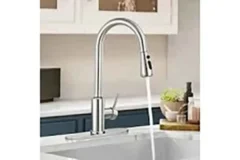
A quarter-turn shutoff valve manages the flow of complex fluids, such as gases, liquids, slurries, and fluidized solids. Shutoff valves are also known as on-off valves and lockout valves. They stop or continue the fluid flow. When not in use, they separate the subsystem.
Significant Functions of Quarter Turn Shut-off Valves
For hot or cold water usage, feed with temperatures 40-165 °C Fahrenheit. Fit them to hook up to your faucet source, drinking fountain supply, and toilet supply. It can also be used on a dishwasher basis. It will stop the flow of water that comes from the water central.
The main water shutoff valve is usually set outside the building, on the ground floor (or in the basement for buildings with one). They found it at the straight point from the water central to the building. These can stop water movement to a definite fixture rather than the whole building. You’ll find showers at fittings, including toilets, sinks, and washing machines.
These valves intend to regulate the flow of water. Yet other materials have full-on and full-off functionality or a specific flow rate. These valves use commercial, residential, and institutional applications. Yet, for handling slurry, gases, and liquids.

Dimension
| Finishing | Polishing and chrome-plated |
| Size | ½”,3/8” |
| Thread Connection | BSP, NPT |
| Cartridge | Brass |
| Temperature | -10C -100C |
| Working Pressure | 125 PSI |
How to Install a Quarter-turn Shutoff Valve?
- Switch off the water supply to the lavatory by turning off the valve on the pipe leading into the privy tank. Twist to eliminate the used shutoff valve below the reservoir rim and remove it.
- Wash any waste around the bottom of your new quarter-turn shutoff valve. Then, locate it over the flange with its eased end facing up. Stiffen it using pliers or channel locks. It confirms that it fits well and is not leaking, but it is not suitable for destroying your sanitation system.
- Fit a new wax ring onto your new latrine bowl. Fix it on top of the flange, with the end edge loose on top of the flange and its front surface. Seal any holes between the two sides with silicone caulk. Then, place one end of your new water supply line into its base at the back side of your latrine bowl. And grip it there, though press down on its extra end till it clicks into its seat at
- Eliminate all caps from your new shutoff valve. Loosen each cap’s bolt a few caps, then pull the lid up and off its valve stem. Swap each cap with one altered to fit over the valve’s top screw. Yet stiffen them down using pliers or channel lock pliers.

Things to Consider When Buying the Best 1/4 Turn Shut-Off Valve
The best 1/4-turn shutoff valve is the one that fits your wants and is cheap.
Size
The size of a 1/4-turn shutoff valve is measured in millimeters, inches, or inches per second. Selecting a size that matches the inflow of your water use is vital. If you’reyou’ree whatyowhatyou’rexoose, talk to an accomplished.
Length
Take something smaller if you’d like something that touches down in your basin or below the countertop. But if you choose a len, you’d have a len. However, that fits atop the bay, deprived of obstructive entry to other fixtures. Yet go with something somewhat longer!
Purpose
When observing a 1/4-turn shutoff valve, consider why you will use it. If you are following a leaking faucet or want to change the previous one, this is the time to adapt.
Material
Yovalve’s matter will define its permanence and lifetime, so examining what it’ll be in is vital before it affects one. Some materials are more disposed to rust than others. In contrast, others can survive high temperatures well. If you don’t know which mechanical effort would be best for your use, talk to practice it!
Color
You have many choices regarding the shades of your 1/4-turn shutoff valve. These valves come in a variety of shades, including black and white. White may be the top selection if you want something that will blend into your kitchen. Black will be the best choice if you want something multi-colored and attractive.
Fitting
If you plan to use your 1/4-turn shutoff valve in a fitted space, be assured it will be fixed. The valve should be capable of working into the area without being too firm or too free. You don’t want to finish in a condition where you can’t open or close the valve because it’s too large.

How Easy Is It to Turn It On and Off?
- Close the water to the faucet by switching off the main water supply valve.
- Unfasten the filling nut that keeps the faucet’s knob from the faucet. With a jerk, loosen it anti-clockwise, then carry off the handle and cut it from the faucet figure.
- Based on the stem assemblage on top of your shutoff valve, you can eliminate bolts in the bonnet nut using a Phillips screwdriver or a hex wrench. However, all screws detach and are pulled on one side of the bonnet nut, which then rises free from its bracket and falls out of place.
- Employ a flexible wrench or channel lock pliers. Yet to eliminate any fixtures that link your shutoff assembly. You don’t want to destroy them in any way! Eliminate all fittings till they are separate from one another. This must come with only two parts: a washer (or two) and a ball valve assembly (with male threads).
- Use your adjustable wrench, channel lock, or pliers. Yet loosen the ball valve assembly from the washer. The ball valve should open when you turn it counterclockwise. Once again, don’t forget to be constructive while performing at this stage!
Fixing A Stuck 1/4 Turn Shutoff Valve
The choice to move into the house I bought last spring, so that I can make an effort on it, was a viable option. Time making it over here was rare and far from schoolwork and finding life along the way. Here, schemes meld into daily life. I can beam knowing my home is getting ready, even if we have had to get a bit innovative. While employed, 9on re-plumbed the kitchenette sink. Nothing would turn the new shark bite 1/4 turn shut-off valve. These shutoff valves fix any required parts at that time.
Steps
Initially, you tried each tool at my discarding to turn the shutoff valves. Imploring it was not me being too loose to turn—a logical option for a treatment mom. Wrench pliers, both, nothing worked. I learned how to fix these stuck shark-bite valves and kicked myself for how easy it was.
You will need:
- Pliers
- Philips head screwdriver.
To fix your stuck ¼ turn shutoff valves, whether new or already set. Yet start by shutting the water off if you are linking.
Loosen the small Philips head bolt going through the center of the valve handle.
· Eliminate the handle.
· Use pliers to turn the valve a times to make it move.
· Locate the handle back on and change the screw.
· Turn the handle to confirm it is now moving freely.
Quarter-turn shut-off valve Leak. Remove the handle from the stem, untie it, and remove the packing nut. If you joined a ball valve in the open point, it should not leak.
This should typically fix the issue. If you join a ball valve in the open position, it should not leak. Not all builds use this method, but most metallic ones do.

When the valve is in the”on” position, it’s a quarter Turn Clockwise To Shut The Valve Off.
If water is still coming out, you can try tying the nut by creating a quarter turn. 1/4 turn ball valves have plastic closures at each side of the ball with a hole. Next, eliminate the handle from the stem and untie and eliminate the packing nut.
Loosen The Small Philips Head Screw Going Through the Centre Of The Valve Handle.
This should fix the issue. On the other hand, compression shutoff valves can often be mended. I turned it back a quarter turn to where it was, but it’s still leaking, and has a full cup in just below 60 minutes.
Re-join The Handle, Turn On the Water, and Open The Valve To Confirm If It Still Leaks.
Check out the new valve where you purchase your quarter-turn valves, and see that there’s a packing there, so the handle. If the valve is still fresh, performing this will help. Usually, quarter-turn valves are about a dollar more than compression valves.
From Got2Learn
Fixing A Valve That Leak Is Pretty Simple.
It may be leaky from the packing. The shutoff valves below the sink or beyond the latrines have rarely been switched on or off. The valve can often be tautened (not the stem), but the end that threads into the body to tauten it up and stop the leak.