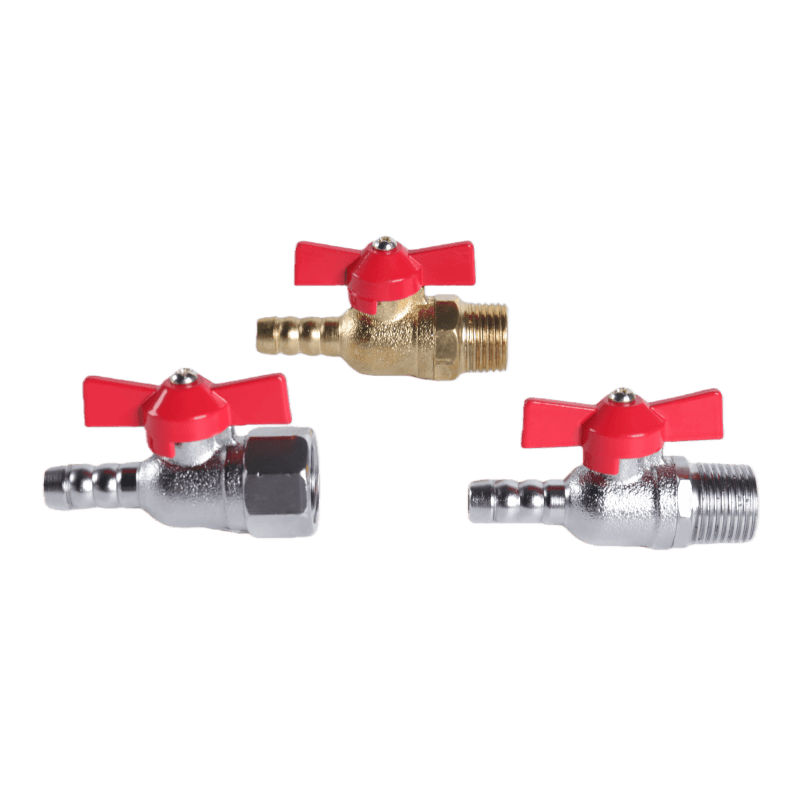
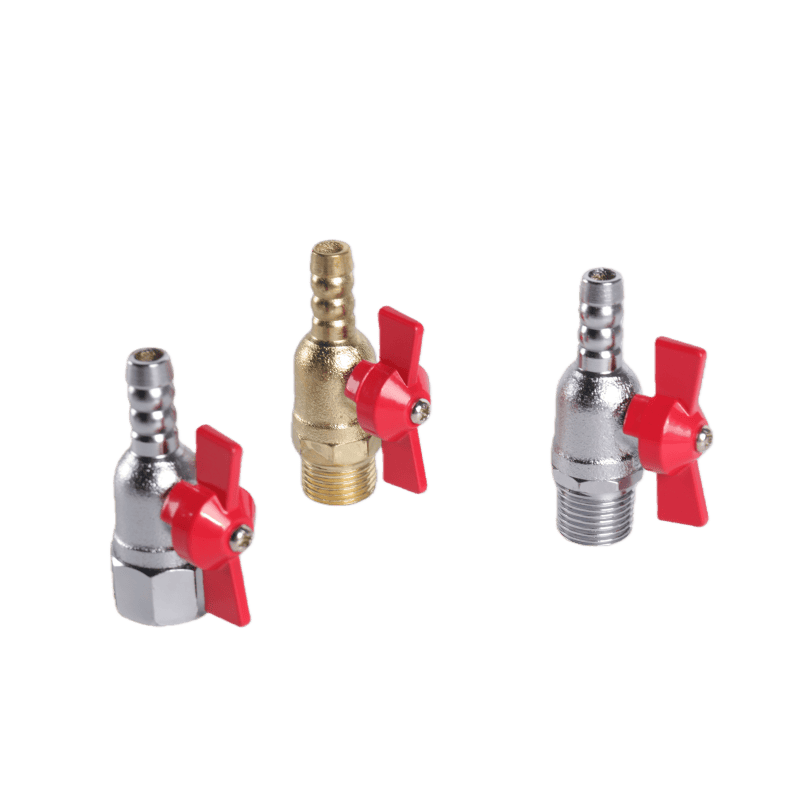
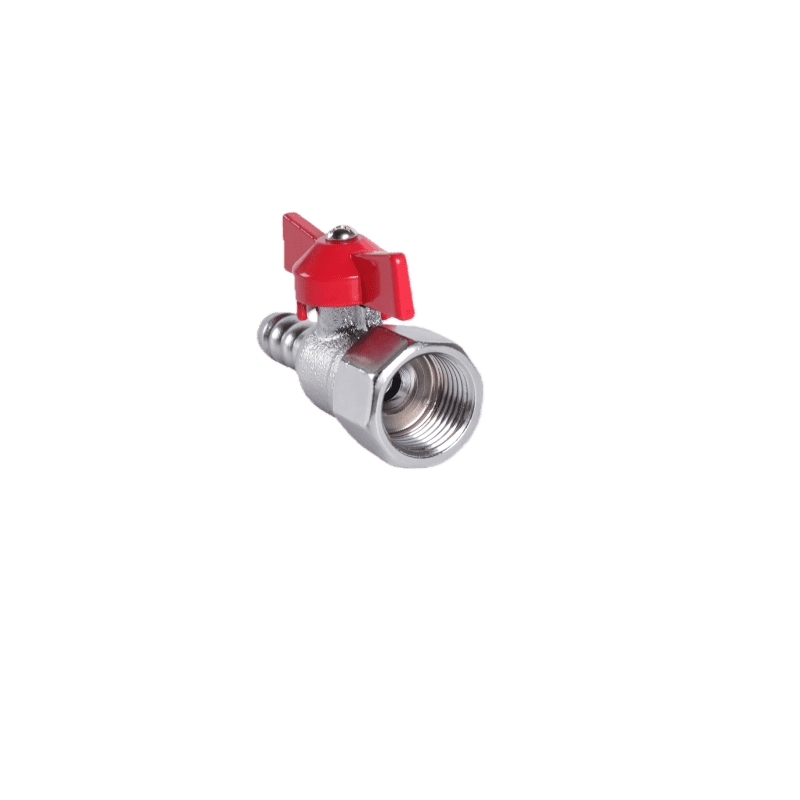
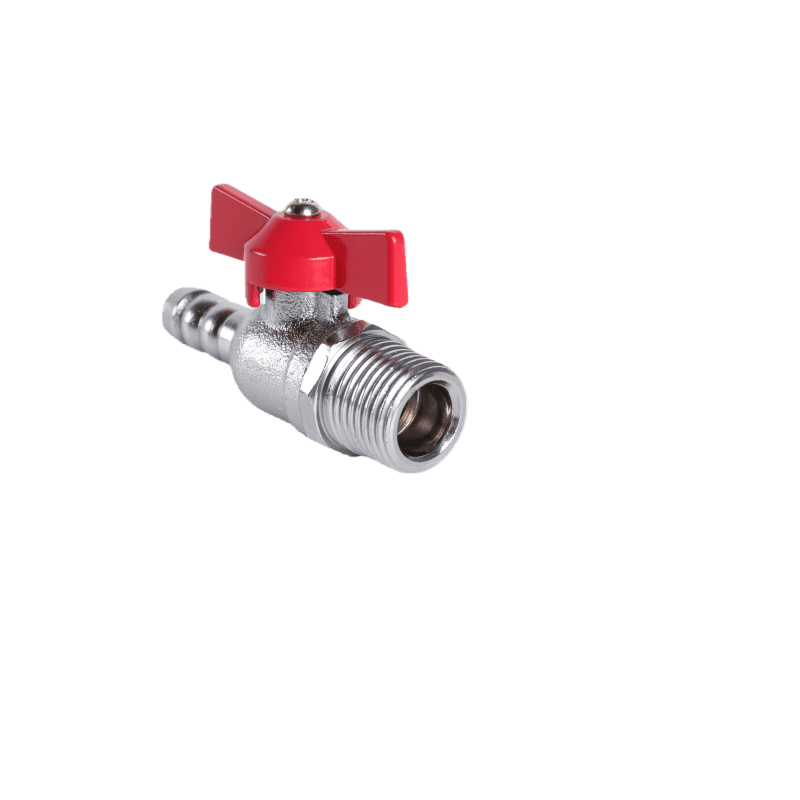
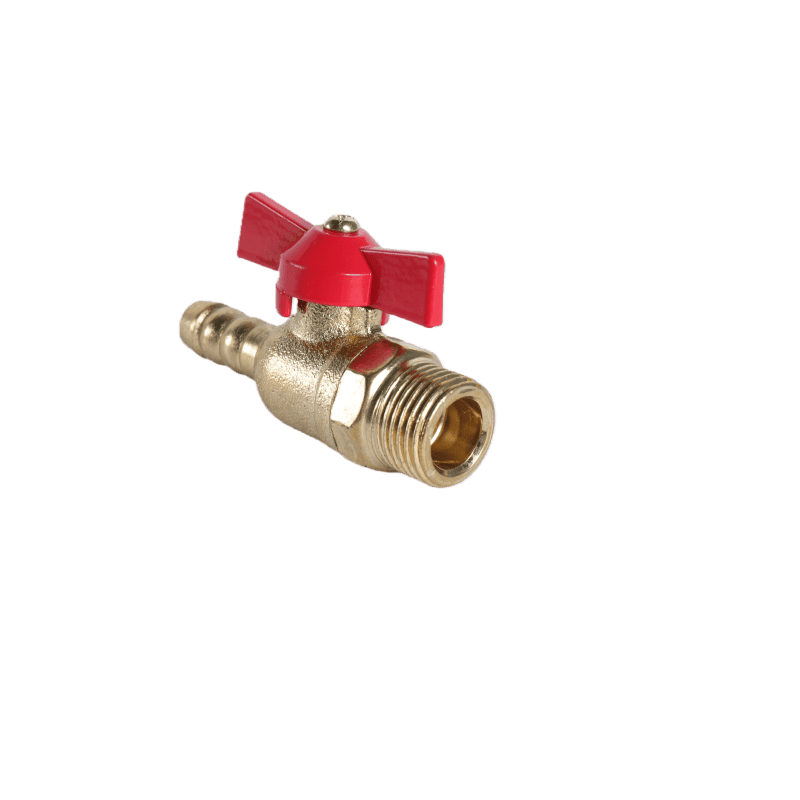
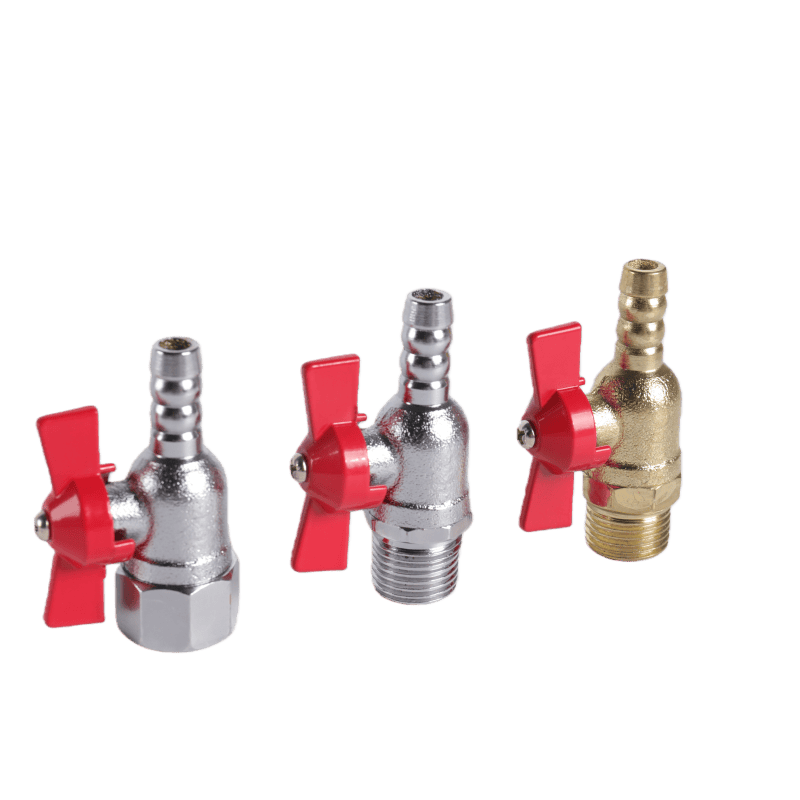
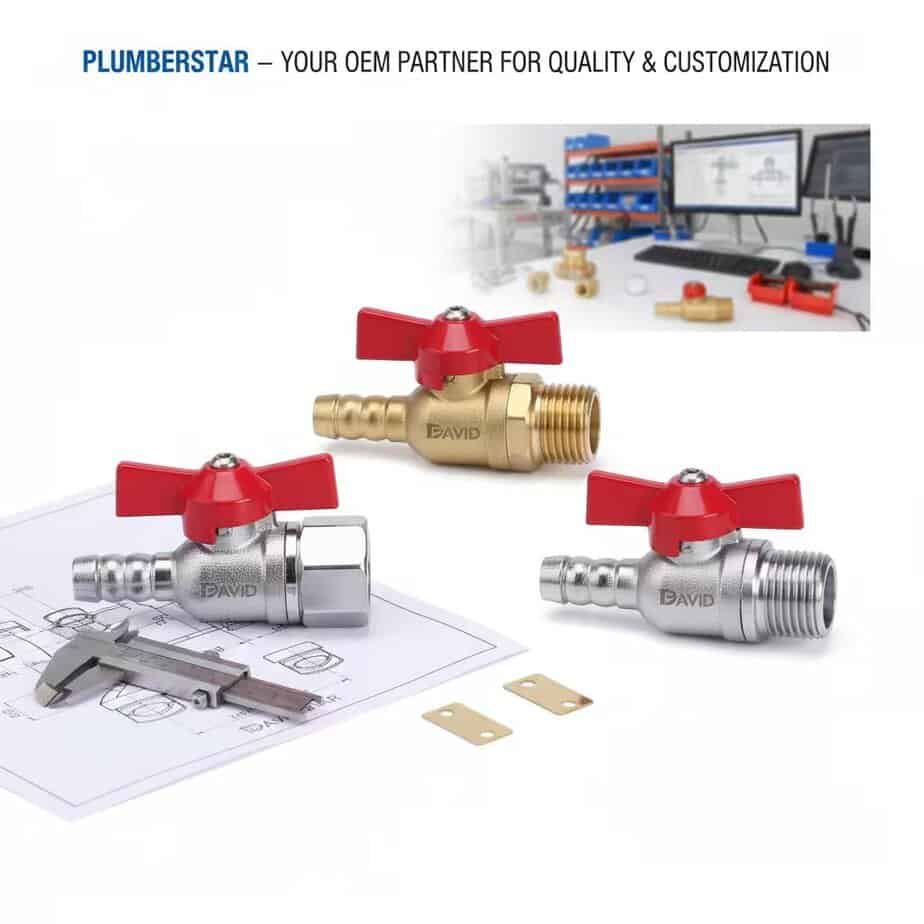
The hose joint gas ball valve is achieved through the ball core’s 90° rotation to achieve on-off control of the gas path. It is mainly used in gas pipelines. On one side, it is used to quickly connect a gas hose with a threaded pipe. The raised hose joint helps hold the hose tightly, which prevents gas leaks. On the other side, the ball valve has a full opening design, so gas can flow smoothly. It is easy to turn on and off, making gas use safer and more convenient.
The PEX Ball Valve With Drain is a dedicated pipeline valve integrating on-off control and drainage functions. It is compatible with push-to-connect or crimp connection methods. Featuring an integrated drain port and small-caliber drain valve on the valve body, it allows for rapid discharge of residual medium in the pipeline while the main medium flow is shut off. Boasting low opening and closing torque of the valve core, it enables quick on-off control of the main medium flow.
Model No.: JX-0449
Size: 1/2 “EXP Pex x 1/2 ” EXP Pex
Material: Lead Free DZR Forged Brass
With a Blue Long Lever handle
Valve Operation: Manual
Barb Crimp Ring Type
Standard: ASTM/NSF
A 90-degree quarter turn is achieved by opening or closing
Max working pressure: 400 psi
Max working temperature: 203°F
PTFE seat & stem
Midline Valve Full Port Ball Valve
The Midline Full Port Ball Valve has an inner hole that is the same size as the pipe, so water or gas can pass through easily with very little pressure loss. The ball inside can seal in both directions. The valve stem has a safety design to stop it from being pushed out. This valve is good for systems with large flow or with liquid or gas that contains small particles.
Model No.: JX-0420
Size: 1/2″, 3/4″
Material: Lead-free brass, C46500, CW510l
Item Height: 1-2 “
Connection: MIP x FIP
Working Pressure: 150 PSI
Working Temperature: -20-300°F
Standard: CSA, UPC
Inlet Connection Type: Full port
Outlet Connection Type: FIP
With a Steel Lever Handle with a rubber cover
Brass ball with brass stem
Sealing: Teflon(PTFE)
Parking: PTFE with brass nut
Full Port
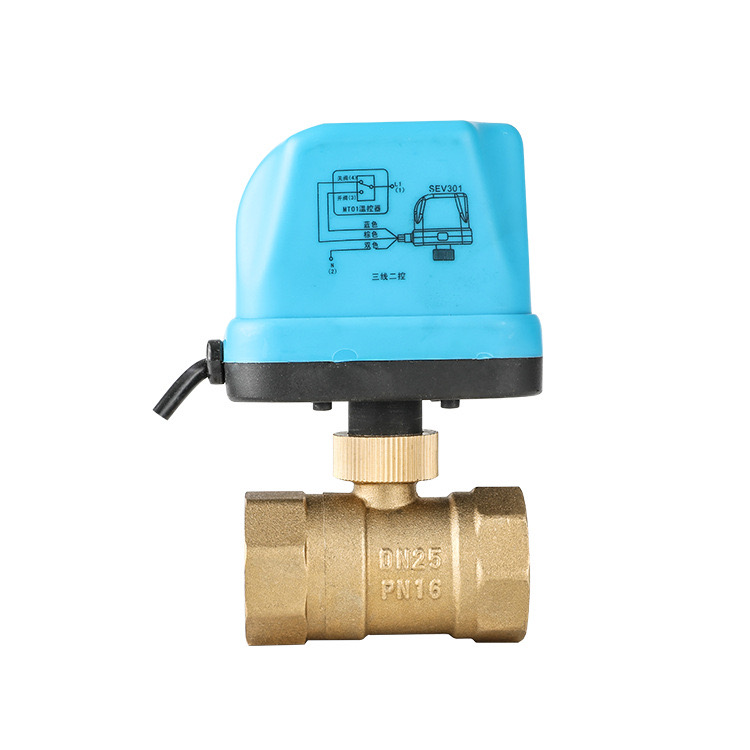
2-Way/3-Way Brass Electric Ball Valve
The 2-Way / 3-Way Brass Electric Ball Valve has two types. The 2-way type is used to turn the pipeline on or off and can seal in both directions. The 3-way type can split the flow, mix the flow, or change the flow direction. Inside, it uses a chrome-plated brass ball with PTFE seals to stop leaks. The electric motor turns the valve 90° to open or close it quickly. It also has limit switches and a manual handle for emergency use. Some models can stay in position or return to a set position when the power is off, and the protection level can reach IP65 or IP67.
Model No.: JX-0311
Specification: DN15- DN25
Material: Brass
Type (Channel Location): Two-way, Three-way
Connection Form: Thread
Applicable media: Air, Water, and Oil
Flow direction: One-way
Purpose: Influent water
Nominal Path: 10-50mm
Rated voltage: AC220V, DC24V, DC12V
Working temperature: 80-150°C
Working pressure: 0-1.0 MPa
Plastic Electric Actuator Control Ball Valve
The Plastic Electric Actuator Control Ball Valve has a valve body made from materials like PP, PVC, or UPVC, which are strong and do not rust easily. It is used in low-pressure systems, such as clean water, light chemical liquids, city water supply and drainage, and water treatment. Electric actuators enable valves to be controlled remotely and manually. This valve is often used in building water supply systems and swimming pool circulation systems, suitable for low pressure pipes where liquid corrosion is not strong.
Model No.: JX-0313
Valve size: DN15, DN20, DN25
Connection: BSP/BSPT
Valve structure: Two-way
Media: Hot/cold water
Pressure: PN10
Turn off: <7s
Lifetime: 70000 times on-off
Torque: 3N.m
Power supply voltage: DC5V, DC12V, DC24V, AC/DC 9V-24V
Consumable power: <6.5W
Condition temp: -15C°-50C°
Water temp: 2C°-90C°
Seat: PTFE, IP67
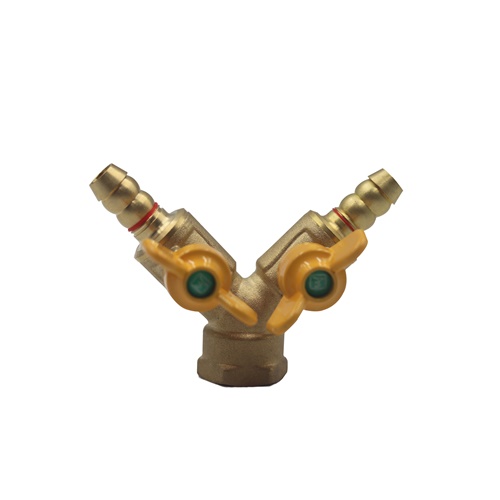
Y Shape 3-Way Shut off Ball Valve Fitting Hose Fuel Gas
The Y-shaped 3-way hose gas shut-off ball valve lets gas flow smoothly, so there is less pressure loss when gas passes through. The valve has a special hose connector, and the valve body forms a secure connection with gas delivery hoses to prevent gas leakage. Its 3-way valve core design enables gas path diversion, confluence, direction switching, and rapid on-off control. It is commonly used when a single gas source is shared by multiple devices, such as household gas stoves, gas water heaters, and small gas engines.
Model No.: JX-0429
Material: Brass, CW614N, CW617N
Size: 1/2″
Barb Outer Diameter: 11mm
Barb Length: 20mm
With two Aluminum handles
Easy for 90° rotation
Working pressure rating: 400 psi
Finishing: Sand-blasted
Seal material: PTFE
Max work temperature: -10-110℃
Medium: Gas
Suitable for PEX, Copper, and HDPE hose
Brass Ball Valve Drive Motor
The brass ball valve drive motor uses an efficient DC or AC motor. Featuring compact size, stable torque output, and fast response speed. It can accurately drive the ball valve core to perform a 90° rotation, achieving automatic on-off control and flow regulation of media in pipelines. This motor usually has a protection rating of IP54 or higher.
Model No.: JX-0302
Size: 1/2″, 3/4″, 1″, 1-1/4″, 1-1/2″, 2″
Material: Standard brass, CW617N
Finising: Sand blasted
Thread connection: BSP, BSPT, NPT
Action time: 15s
Drive power: 220VAC, 50-60HZ (can be customized 24V AC), DC24V
Medium temperature: 2 ℃ -95 ℃
Power: 6 W
Lead length: 50 cm (can be customized)
Medium: cold/hot water
Control: three-wire two control (can be customized three-line control)
Working pressure: 1.6MPa
Power consumption: 5VA
FAQs of Hose Joint Gas Ball Valve
1. What is the difference between a gas ball valve and a water ball valve?
Gas ball valves and water ball valves are different in three key ways: medium adaptability, safety level, and material design. You can’t use them interchangeably. Wrong use will create serious safety risks.
Gas ball valves are made for flammable and explosive gases like natural gas and LPG. The most important requirement is reliable sealing to prevent gas leaks and accidents. These products must pass special gas safety certifications. Their structure and materials have much higher safety standards.
Water ball valves are made for water systems. They focus on pressure resistance, anti-scaling, resistance to dirt buildup, and long-term stability. They don’t need explosion-proof performance.
Gas ball valves usually use high-performance sealing materials such as PTFE. They have good air-tightness and anti-aging performance. Valve bodies are often made of brass or cast iron, which work well with gas and have high heat resistance. This keeps them safe for long‑term use.
Water ball valves have sealing structures that can handle minerals and impurities in water. Valve bodies can be brass or engineering plastic. They must meet lead‑free and drinking water safety standards. Their main focus is water quality safety, not explosion protection.
The flow channel of gas ball valves is designed for smooth gas flow and low resistance. This reduces pressure loss and improves system stability. The flow channel of water ball valves focuses more on anti‑scaling and easy cleaning, for long‑term water use.
Risks of wrong use: Using a gas ball valve in a water system: Some materials are not meant for long‑term water contact. This may affect water quality or speed up part aging. Using a water ball valve in a gas system: Sealing and safety levels are not enough. Gas leaks are very likely to happen, causing serious danger.
From Answer The Home
2. Is the hose Joint gas ball valve a “full bore” design?
Plumberstar gas hose joint ball valve uses a full-bore structure. From the inner flow channel of the valve body,through the ball core opening, to the inlet and outlet ports, the inner diameter stays the same. It fully meets the safety and flow requirements of household, commercial, and other gas pipeline systems.
With the same nominal diameter, the full-bore design has stronger flow capacity than a reduced-bore ball valve. It stably supports the gas needs of high-power gas equipment, such as water heaters, wall-hung boilers, and gas stoves. It is especially good for long-distance delivery, multi-storey buildings, and centralized gas supply systems.
The full-bore structure also lowers the risk of dirt buildup and blockage. It makes pipeline cleaning and later maintenance easier. This further improves the safety and reliability of the gas system.
Every brass gas ball valve must pass diameter inspection, flow test, and air tightness test. This ensures the full-bore structure is stable and reliable, and meets international safety standards for gas valves.
3. Can the handle of the hose joint gas ball valve be customized?
Plumberstar gas hose joint ball valves offer customized handle services. We meet different needs for brands, markets, and installation scenarios. Just tell us your brand positioning, local usage habits, installation space, and operational requirements. We’ll give you handle customization solutions that are standardized and highly compatible.
We have many handle types for you to choose from. These include straight handles, butterfly handles, triangular handles, lever-type handles, extended handles, and short handles. They fit different operating spaces and usage habits.
We can adjust the handle length based on your actual installation conditions. This works for narrow installation spaces or when you need a labor-saving operation. We also support customizing 90° opening and closing angles and handling positioning directions. This ensures the operating directions after installation are uniform, nice-looking, and standardized.
You can pick different handle materials, depending on your usage environment and cost needs:
Plastic handles: PP / Nylon
Metal handles: Zinc alloy / Aluminum alloy
Stainless steel handles
Rubber-coated handles
We can also add your brand logo, product model, switch direction indicators (OPEN / CLOSE), and warning signs on the handle surface. We do this through laser engraving, mold engraving, or printing. You can also customize the handle color (for example, red handles for gas-specific use). This helps people identify the valve quickly and makes installation and use safer.
4. What is the MOQ for the hose joint gas ball valve?
The MOQ for a Hose Joint Gas Ball Valve depends on the valve size and how it will be used. For custom or special models, such as large sizes like DN40 or DN50, special thread types, or industrial valves with explosion-proof design, the usual MOQ is about 500 pieces.
For customers who work with us for a long time, or for large orders, the MOQ can be more flexible. For example, if the total order is more than 1,000 pieces, some special or non-standard models can be made with a lower MOQ. The final quantity is discussed and agreed on by both sides when the order is confirmed.
5. Can I return the incorrectly selected hose joint gas ball valve with hose connector?
If a Hose Joint Gas Ball Valve has problems because the customer chose the wrong model, the return or exchange will be handled based on the product condition and the cooperation situation. Our main rule is: if there is no quality problem, both sides solve it by discussion and protect each other’s interests.
If the product is not opened, not used, and the package and labels are complete, the customer can apply for a return or exchange within the agreed-upon time after delivery (usually 10–15 days). In this case, return or exchange is possible, but the customer needs to pay the two-way shipping cost and related fees, such as customs declaration and clearance. The product must also be in good condition and still suitable for resale.
If the product has been opened, installed, or used, or shows wear or damaged markings, returns are usually not accepted. Gas valves are safety products, and used items may affect safe use. However, we can offer other support, such as a discounted replacement, changing to another size, or help with resale solutions.
To reduce wrong selection, we provide clear selection guides before ordering, helping customers check pipe size, pressure, and gas type. For long-term partners or large orders, we can also offer sample testing. Return and exchange rules can be clearly written in the contract, so both sides know their rights and duties.
6. What is the advantage of Plumberstar’s hose joint gas ball valve?
The main advantages of Plumberstar hose fitting gas ball valves are strong materials, high safety, and wide usability.
The valve body is made of one-piece casting and forging, making it less prone to breaking. Inside, it uses PTFE sealing material, which can resist gas corrosion and wear. Compared with common cast iron or mixed copper valves, this design lasts much longer, with a service life more than 30% longer than the industry average.
The valve meets both CE and UL standards. It has an explosion-proof ball design and a double sealing structure to prevent gas leakage. Each valve is tested according to EN 12266, and the leakage level is almost zero. It can be safely used for natural gas, liquefied gas, and other gas types without extra selection.
The valve supports PT, NPT, and G threads, with sizes from DN08 to DN50. Special hose sizes can also be customized. The common “external thread + hose nipple” design has very accurate size control (±0.1 mm), fits many kinds of gas hoses, and can be installed easily without special tools.
7. Can we order a small batch of hose joint gas ball valves for market testing?
Plumberstar fully supports small-batch orders for gas hose connector ball valves—perfect for market testing and new product verification.
If you need them for new product promotion, channel testing, or end-customer verification, we accept small-batch trial orders. Our minimum order quantity (MOQ) is flexible, with no unreasonably high restrictions. This lets you test market response and check product compatibility without spending too much.
You can first apply for samples to fully test the product’s performance, size, and air tightness. Every gas hose connector ball valve goes through a 100% air pressure test before leaving the factory. The test pressure and inspection standards are higher than the industry average. After testing, we can give you complete test data and reports. We can also include these inspection reports with your goods. If you have special parameters or structural needs, we can make customized samples too. This ensures the products fully meet your target market and regulatory requirements.
Once your small-batch market test passes, you can easily switch to a large-batch stable supply. Our factory will reserve production capacity in advance and support a stable supply chain. This guarantees on-time delivery and consistent quality across every batch. Long-term cooperative customers get more competitive pricing, exclusive inventory support, and customized development services. It’s a smooth transition from market testing to large-scale production.
8. Do you produce the hose joint gas ball valve in your Plumberstar own factory?
Plumberstar has its own production base for sanitary ware and gas valves. We have standardized production workshops, high-precision CNC machining centers, automated assembly lines, and professional testing laboratories. We can handle the whole manufacturing process in one stop—from copper rod/stainless steel raw materials to finished valves.
For gas hose connector ball valves, we finish all key core processes in our own factory. This includes valve body forging, CNC turning, hole processing, seal assembly, and handle assembly. Our production process is highly independent and controllable. This ensures each process is stable and traceable.
Thanks to our own factory’s R&D and manufacturing advantages, Plumberstar can quickly optimize the structure and adjust parameters. We do this based on the gas regulations, installation habits, and hose interface types of different countries or regions. We make sure the products are safe and compliant first. Then we combine your customized needs with standardized production efficiently.