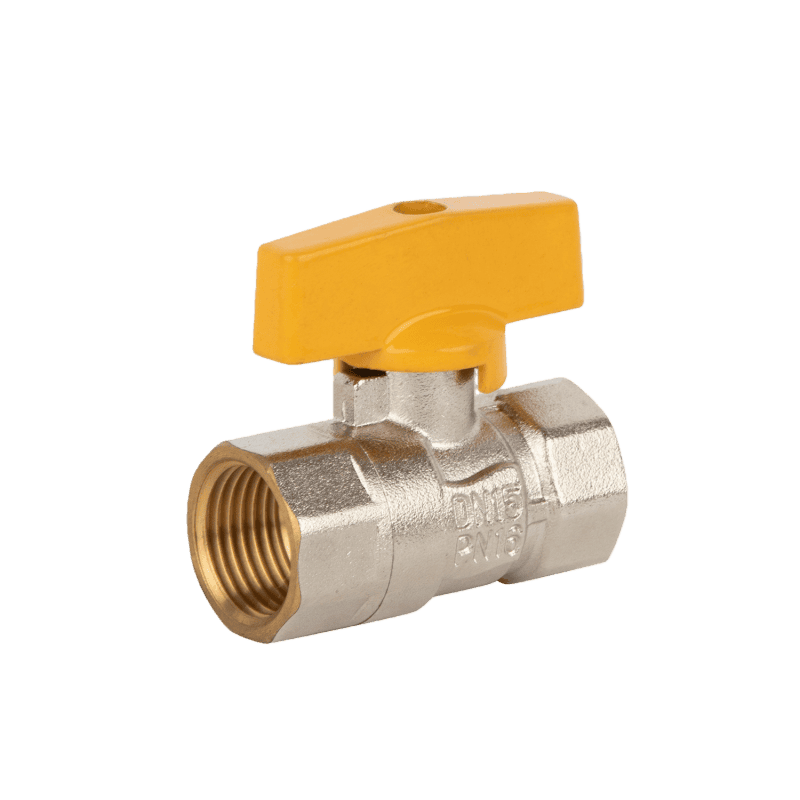
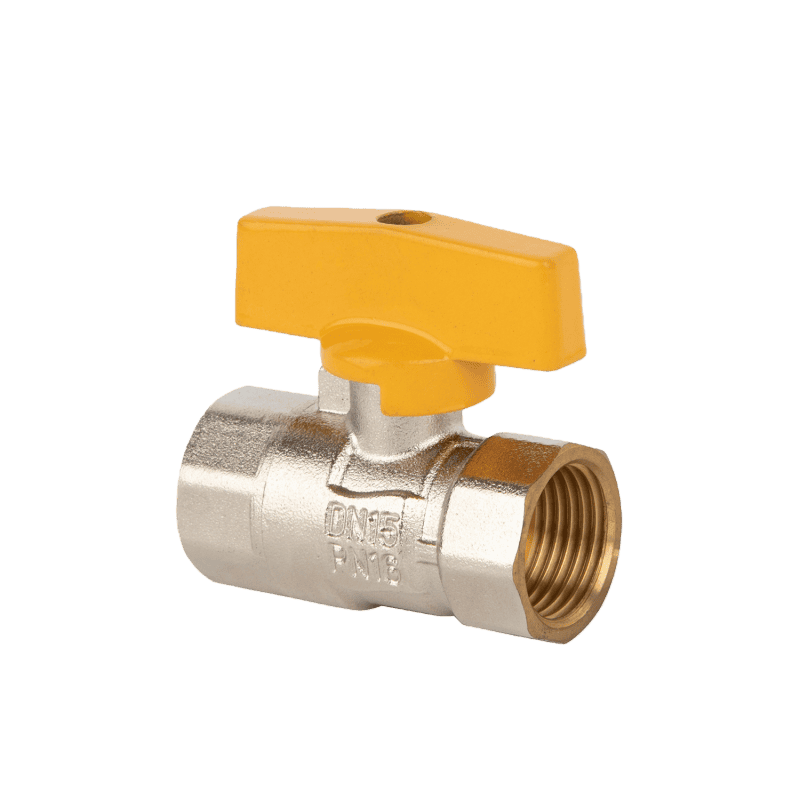
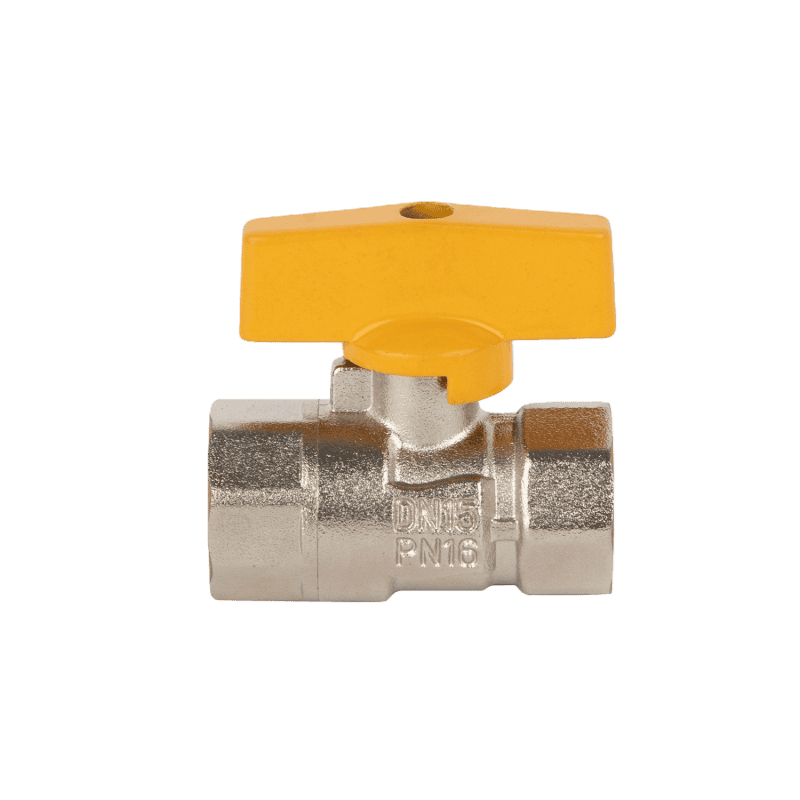
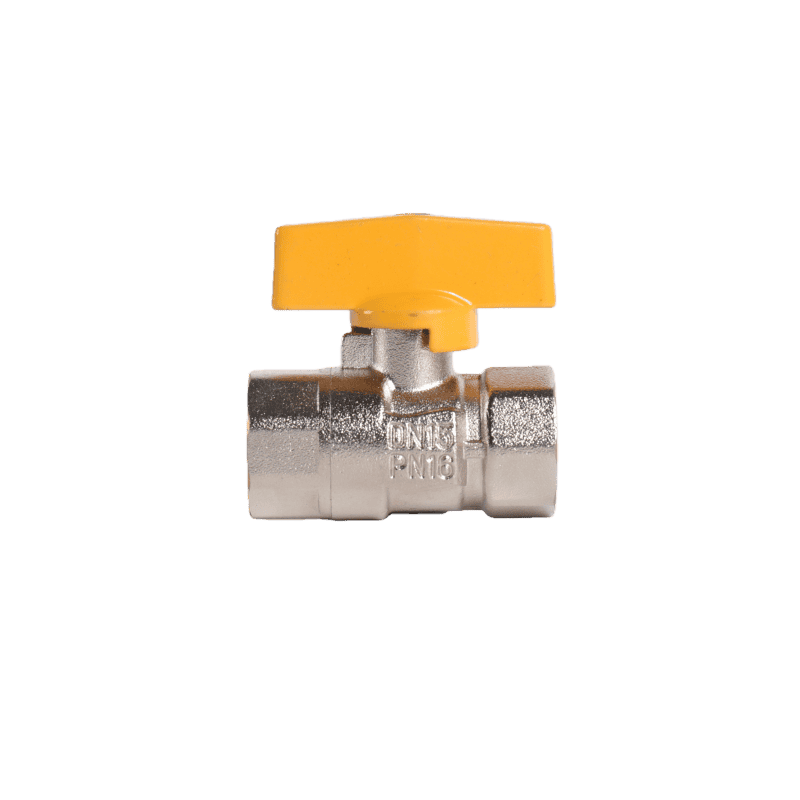
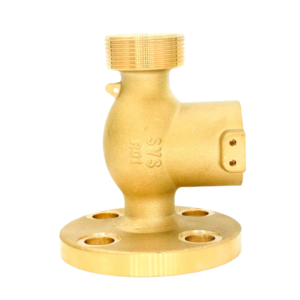
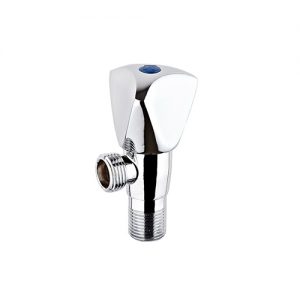
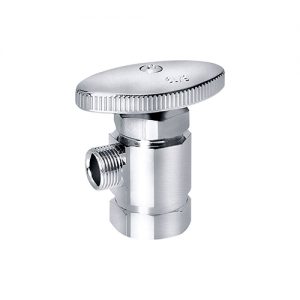
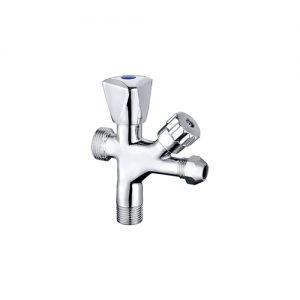
A gas ball valve equipped with an aluminum butterfly handle, made of lead-free brass. It is the core control accessory in the gas transmission system. With only 1/4 rotation, it can quickly open or cut off the gas supply, making the operation easy. The handle position also visually displays the valve switch state, providing convenience for users to check. This ensures not only smooth gas circulation but also quick and easy cut-off of the gas source during daily use or equipment maintenance.
Model No.: JX-10059
Size: 1/2″, 3/8″
Material: Lead-free brass, CW617N
A butterfly handle for on/off flow control
Max working pressure: 20 bar
Working temperature: -20 -110 °C
Finishing: Nickel-plated
PTFE/NBR seals
At 90 degrees, the valve opens or closes
Suitable for a wide variety of non-aggressive liquids and gases
This brass gas ball valve is a straight-through valve used to turn gas flow on and off in gas piping systems. It is made entirely of brass. One end has a quick-connect fitting for gas hoses, and the other end has a threaded port for connection to gas pipelines. The yellow handle on top allows quick and easy on-off operation. It is suitable for straight-line gas pipe layouts in both residential and commercial installations.
Model No.: JX-0428
Size: 1/2″
Material: Brass
Straight Through Type
Working temperature: -10℃-110℃
Application: GAS
Working pressure: 290psi
With an Aluminum Handle
One end features a hose connection
Stem O’ring: NBR
Ball seat: PTFE
M1/2″X F1/2″ Gas Ball Valve with Butterfly Handle
A gas ball valve with a butterfly handle, made of brass, is a basic control valve used in gas transmission systems. It is widely applied in residential gas pipelines, commercial kitchen equipment, industrial gas lines, and terminal connections such as gas water heaters and gas stoves. The valve is designed with one male thread and one female thread, making it easy to match standard gas pipelines or equipment interfaces of the same size. This valve offers reliable sealing performance and can effectively stop gas flow when closed. It is convenient for daily gas control and also makes equipment maintenance safer and easier. It is an essential component for safe and stable gas system operation.
Model No.: JX-0429
Size: M1/2″X F1/2″
Material: Brass, CW614N, CW510L
Finishing: Nickel-plated
Working pressure: PN20
Stem: Brass
Ball; Polished with chrome-plated
With a butterfly handle
Working temperature: -20-60℃
Standard: ACS
Body design: 2 PC
Used for a gas line
Seals material: PTFE
Stem seals material: FKM/NBR “O” ring
Handle material Aluminium
Standards EN 331
PTFE Seal Brass Gas Cock Valves
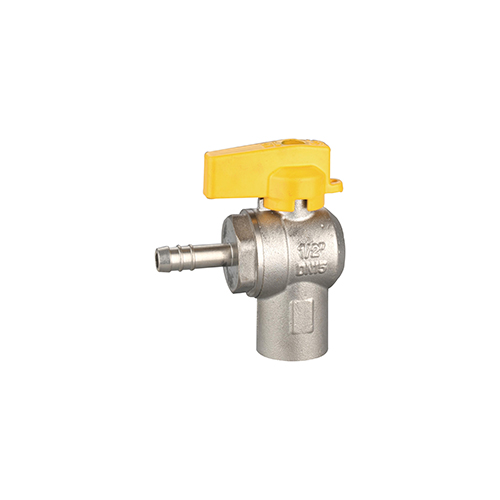
This brass gas cock valve features a brass body paired with a PTFE core seal and boasts a 90° right-angle structure. It comes with a quick-connect gas hose fitting on one end and a pipeline connection port on the other. The top-mounted yellow handle enables precise control of the on-off status through rotational operation. Ideal for corner layout applications in both residential and commercial gas piping systems, this valve combines two key functions: directional flow redirection and reliable gas on-off control.
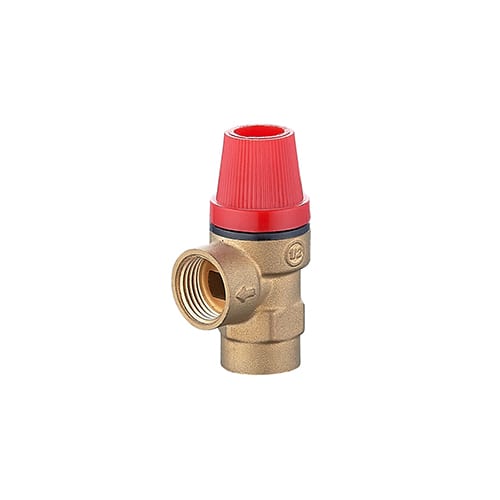
This brass pressure relief safety valve is a dedicated safety protection component engineered for boiler gas systems. Featuring a 90° right-angle body structure, it has a threaded port on one end for secure connection to boiler gas pipelines. When pipeline gas pressure exceeds the preset safety threshold, the valve opens automatically to release excess pressure. It is specifically designed for pressure safety protection applications in boiler gas systems.
Model No.: JX-0901
Size: 1/2″, 3/4″
Material: Brass
Straight Through Type
Automatic and Manual Pressure Relief
When system pressure is within ±0.3 bar of the set value, the internal piston automatically closes the valve downward.
Medium: Water
Working pressure: 3bar, 5bar, 6bar, 7bar, 8bar, 9bar
Working temperature:-10-120℃
Thread Type: G/BSP Thread
Knurled crank handle for easy grip hand
Turn the red steering wheel counterclockwise to open the plunger
Lead-free Brass Ball Valve FXM
This lead-free brass ball valve is an eco-friendly on-off control valve engineered for piping systems. Featuring a straight-through design, it comes with a male-threaded port on one end and a female-threaded port on the other. A top-mounted extended yellow handle for easy switching operation (90-degree rotation can be completed on and off). It is suitable for applications with strict environmental standards.
Model No.: JX-0420
Size: 1/2″, 3/4″
Material: Lead-free brass, C46500
Item Height: 1-2 “
Connection: MIP x FIP
Working Pressure: 150 PSI
Working Temperature: -20-300°F
Standard: CSA, UPC
Inlet Connection Type: Full port
Outlet Connection Type: FIP
With a Steel Lever Handle with a rubber cover
Brass ball with brass stem
Sealing: Teflon(PTFE)
Parking: PTFE with brass nut
1/4 turn Lead-free Press Ball Valve with PEX
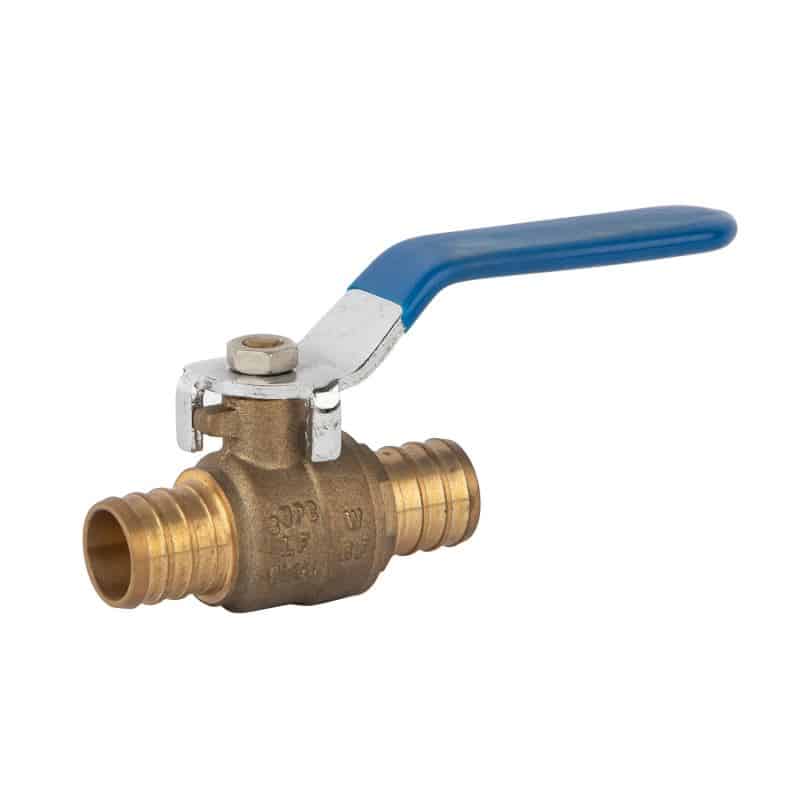
This lead-free PEX press ball valve is made from lead-free brass and is designed for use with PEX pipes. Both ends use crimp-style PEX connections, so no threading is needed. The valve connects to PEX pipes directly with standard crimping tools, making installation fast and simple. It is suitable for PEX water supply, drainage, and potable water systems, and meets the requirements for safe, environmentally friendly plumbing installations.
Model No.: JX-0449
Material: Lead Free DZR Forged Brass
Size: 1/2 “EXP Pex x 1/2 ” EXP Pex
With a Blue Long Lever handle
Valve Operation: Manual
Barb Crimp Ring Type
Standard: ASTM/NSF
A 90-degree quarter turn is achieved by opening or closing
Max working pressure: 400 psi
Max working temperature: 203°F
PTFE seat & stem
FAQs of Butterfly Gas Ball Valve
1. What are the butterfly gas ball valves’ main materials?
Plumberstar butterfly gas ball valves have main bodies made of brass (H59/H62) and stainless steel (304/316). Their seals are made of nitrile rubber (NBR) and fluororubber (FKM). These seals resist gas corrosion. The valve core is made of copper alloy or stainless steel. All materials have passed the gas contact safety test and meet the safety standards of gas valves, such as GB 15558.1 (national standard), EN 331 (Europe), and ANSI Z21.15 (USA). No harmful substances are precipitated.
2. Are raw materials traceable for gas ball valve production?
Raw material test data is archived. You can retrieve it for verification anytime.
Every batch of raw materials goes through strict IQC testing when entering the factory:
Brass ingots need spectroscopic analysis to confirm composition purity.
Stainless steel bars need tensile strength and corrosion resistance tests.
EPDM seals need gas medium resistance tests.
All test data is entered into Plumberstar’s traceability system at the same time. It’s linked to the raw material batch code. You or third parties can request these test reports anytime. This lets you verify that the raw materials meet gas valve production standards — like EN 331 and North American CSA certification requirements.
3. What is the sealing performance of the butterfly gas ball valve?
PTFE washer and rubber seal
Double seal structure-hard seal (metal to metal)+ soft seal (seal and valve core fit), gas leakage ≤0.01cm³/min (in accordance with ISO 5208 Class VI seal standard) Before each valve leaves the factory, air tightness test (1.5 times rated pressure for 30 minutes) is performed to ensure no gas leakage, and safety is guaranteed from both structure and detection.
4. What types of gas are butterfly gas ball valves suitable for?
It works for natural gas (NG), liquefied petroleum gas (LPG), artificial gas (CG), methane, and other common gases. It can also be used for non-corrosive, low viscosity gas or liquid (like air, inert gas, light oil). You need to specify the medium type in advance. This helps match the sealing material. For example, a corrosive medium needs fluororubber sealing.
5. How to select the butterfly gas ball valve size according to the gas flow?
The core of selection is to ensure that the valve diameter ≥ the gas pipeline diameter, and the valve flow coefficient (Cv value) meets the pipeline flow demand. General reference: DN15 is suitable for flow ≤5 m³/h, DN25 ≤ 15 m³/h, and DN50 ≤ 50 m³/h. If it is an industrial high-flow scenario, pipeline pressure and flow parameters can be provided. Plumberstar engineers assist in making accurate selections to avoid waste caused by insufficient flow or excessive valve usage.
6. What customization requirements are supported for butterfly gas ball valves?
Customization supports special alloy materials with anti-corrosion coatings, as well as large diameter (DN100 and above) specifications, thread and flange mixed connections, emergency shutdown, remote control, flow metering functions, surface treatments, and customer logo engraving on the exterior.
7.What is the warranty period for the butterfly gas ball valve?
Standard warranty period is 24 months (longer than the industry’s 12-month standard), starting from the customer acceptance date. It covers material defects (such as cracking, rust, and non-artificial damage), the valve manufacturing process issues (including loose sealing, opening and closing failure), and aging seals (with free replacement). Free new product replacement or maintenance is provided within the warranty period.
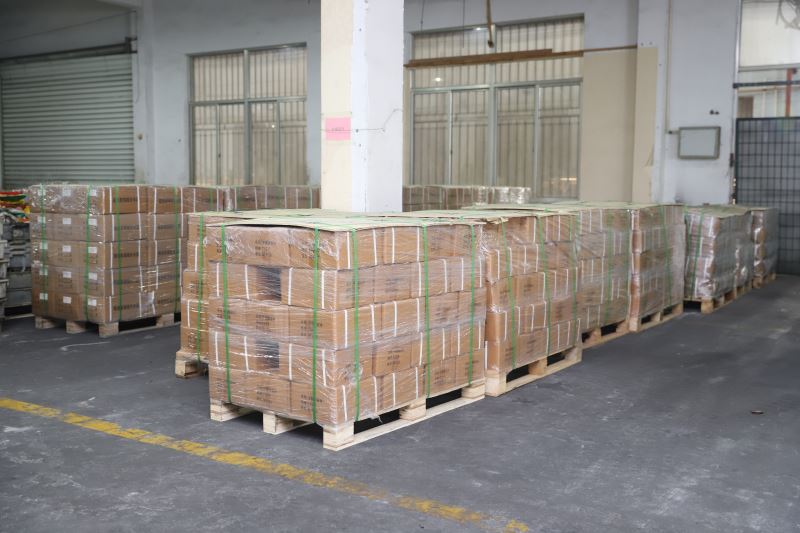
8. What is the packing method for the export gas ball valve?
Plumberstar packaging ensures product safety during transportation. It also meets customs clearance and storage requirements of different countries.
Here are the specific packaging methods:
1. Individual Inner Packaging: Anti-Scratch, Anti-Rust, Anti-Collision
Every gas butterfly valve is packaged separately:
Wrap the valve body surface with antistatic PE film. It isolates moisture and dust. This prevents rust and scratches on stainless steel and brass parts.
Add custom plastic protective sleeves to vulnerable parts. Things like valve stems and flanges are covered. This avoids collision deformation during transportation.
Put the single valve into a thickened corrugated box. The box is printed with the product model and specifications. Fill the box with buffer foam or pearl cotton. It fixes the product in place and prevents shaking and wear.
2. FCL Collective Packaging: Strengthen Logistics Pressure Resistance
Pack individually wrapped valves in batches:
Use 5-layer standard export corrugated boxes. Mark them clearly with Plumberstar brand logo, product name, quantity, gross/net weight, destination, and transportation warning signs (moisture proof, keep upright, fragile).
Stack the valves in the box layer by layer. Put cardboard partitions between layers. Fill the top and bottom with buffer bubble film. This ensures uniform stress on the box. It can resist extrusion and jolting during long-distance sea and land transportation.
For large-diameter gas butterfly valves, use extra plywood wooden boxes for packaging. Fumigate the wooden boxes and stamp the IPPC mark. This meets the quarantine requirements of Europe, America, Australia, and other countries. It prevents pests from being carried in wood packaging.
3. Customized Packaging Services: Meet Special Market Needs
We offer customized packaging solutions for different export market requirements:
For the EU market, packaging materials comply with the ROHS environmental standards. No fillers containing harmful substances like lead and mercury are used.
For high-temperature and high-humidity areas like the Middle East and Southeast Asia, put desiccant packs in the packaging boxes. This enhances the moisture-proof effect.
For customers with brand customization needs, print their LOGO and promotional text on the packaging boxes. This boosts brand recognition.
9. How to detect whether there is a gas leakage from the gas ball valve?
Detection method: 1. Soapy water detection: smear soapy water on the valve interface and the valve core. If bubbles are generated, it indicates leakage;2 Professional instrument detection: use a gas leakage detector (such as a combustible gas detector) to detect, and the leakage concentration shall be lower than 10% of the lower explosion limit. Regular inspection cycle: once every 6 months for home scenarios and once every 3 months for commercial/industrial scenarios to ensure safety.
10. How does the performance consistency of the gas ball valve support large projects?
Unified Performance Parameters: Ensure Efficient Large-Scale Project Construction
Large-scale engineering projects demand huge quantities of gas butterfly valves. Think urban gas pipeline network renovation, industrial park gas supply system construction — these projects often need thousands, even tens of thousands of valves. They have strict, unified requirements for valve opening and closing torque, sealing performance, and pressure rating.
Plumberstar gas butterfly valves are made on standardized production lines. The machining tolerance of core components — valve ball, valve seat, valve stem — is controlled within ±0.02mm. Every valve passes a pressure holding test (1.5 times the working pressure) and an air-tightness test before delivery. This ensures batch-to-batch opening and closing torque deviation is ≤5%, and sealing leakage rate is 0.
This performance consistency eliminates installation compatibility issues caused by valve parameter differences during construction. You don’t need to adjust pipe connection sizes or installation tools for different batches of valves. It greatly boosts on-site construction efficiency and cuts down project duration.
The later-stage operation and maintenance of large-scale projects involves regular valve maintenance and replacement. Performance consistency slashes operation and maintenance costs and difficulty significantly:
Universal spare parts: Unified performance parameters mean standby valves can directly replace faulty ones. No need for separate customization. This reduces the pressure of spare parts inventory.
Unified maintenance processes: Maintenance staff don’t need to adjust standards for different batches of valves. They can use standardized testing tools and processes. This improves maintenance efficiency.
Convenient fault tracing: If an individual valve malfunctions, you can quickly check the cause via the product traceability code. Find out if it’s a production batch issue or an on-site condition problem. Avoid confusion caused by performance differences that lead to faulty results. Shorten fault handling time.
For large-scale projects, Plumberstar also provides full-batch performance test reports. These reports seamlessly align with project acceptance criteria, enabling customers to successfully complete project delivery.