What’s A Needle Valve?
The needle valve is the flow and pressure regulating valve. Sometimes, it is also known as the plunger valve. Yet, it helps control the fluid’s flow and pressure moving inner the tube lines. The actuation and change cycle of this valve is so good. Yet, that’s why it provides accurate regulation over the fluid stream. Yet, the needle valve applies for high pressure and low stream rate. The working process is less or more like the piston check valve. The only contrast is the size of the piston used in the needle valve, which is thinner.
What are the Needle Body Designs?
The needle valve consists of three main parts. These parts are;
- The stem and stem tip
- The valve body and seat
- The bonnet and packaging
In various cases, the needle valve is small enough for their bodies. Yet, it machines directly from the square bar stock and hex. The configuration involves L-shaped and Z-shaped streamways via the body.
Sometimes, it refers to the angle or globe pattern, respectively. The stem includes fine threads to permit a micro-meter. Yet, it is like changing the needle relative to the seat. Yet, locking means is offered via the set screw or inner lockout. It is on the stem to hold the vibration from altering the valve location. The scale involves allowing proper changing of the stream rate. Yet, the producers will set the curve to display the linear connection. This linear will be in the flow coefficient and turns of the stem.
The tip of the stem itself is tapered and long or slighter, blunt, and short. Yet, it relies on the planned application. Yet, the seat is tampered with to match the needle’s taper. The tapered stem tips work for an adaptable purpose. Yet, blunt vee point stem tips offer a complete stream with some stem rotations. The vee contains point tips that offer leakage-free shutoff in small orifice valves.
Sometimes, the selection of the material is made as well with metal for a long lifespan. Yet, the non-turns stem tips apply to stop the annoying of the seat and stem.

What is Packing
Packing in the bonnet keeps up with the rotation-free pivot of the stem. Graphite, O-rings, or PTFE materials are used for Packing. They are packing strain change through a gland nut or Packing. Once in a while, two-piece stems separate the stem strings from the media. It keeps any string lubricant from spilling into the process fluids.
The bonnet is sometimes shaped as an essential piece of the valve body. Another part is strung into the body or held with a nut in different conditions. In settings where fugitive emanations are a concern, a back seat is provided against which the stem seals when the valve is completely opened. Most plans involve keeping the head from being kept out of the valve.
Needle valves work the brutal way, yet controlled forms are accessible. Needle valves give positive shutoff. Yet, it is used as a turned-down valve. All other affordable valves are attainable if this is not metering, which is the primary need. Care should be taken while shutting a needle valve. Yet, it is workable to damage the stem tip or the seat if the rotation is applied extra.
Material for Needle Valve Manufacturing
The needle valve build of
- Bronze
- Stainless steel
- brass.
Yet, the valve seat design from
- CPVC
- PTFE
- PVC
- or thermoplastic materials
The needle valve housing material is specified according to its use. However, the most common valve housing materials are stainless steel and brass. This material is due to its wide range of chemical resistance. Yet, the needle valve housing is also built from other materials according to their end-use.
Brass
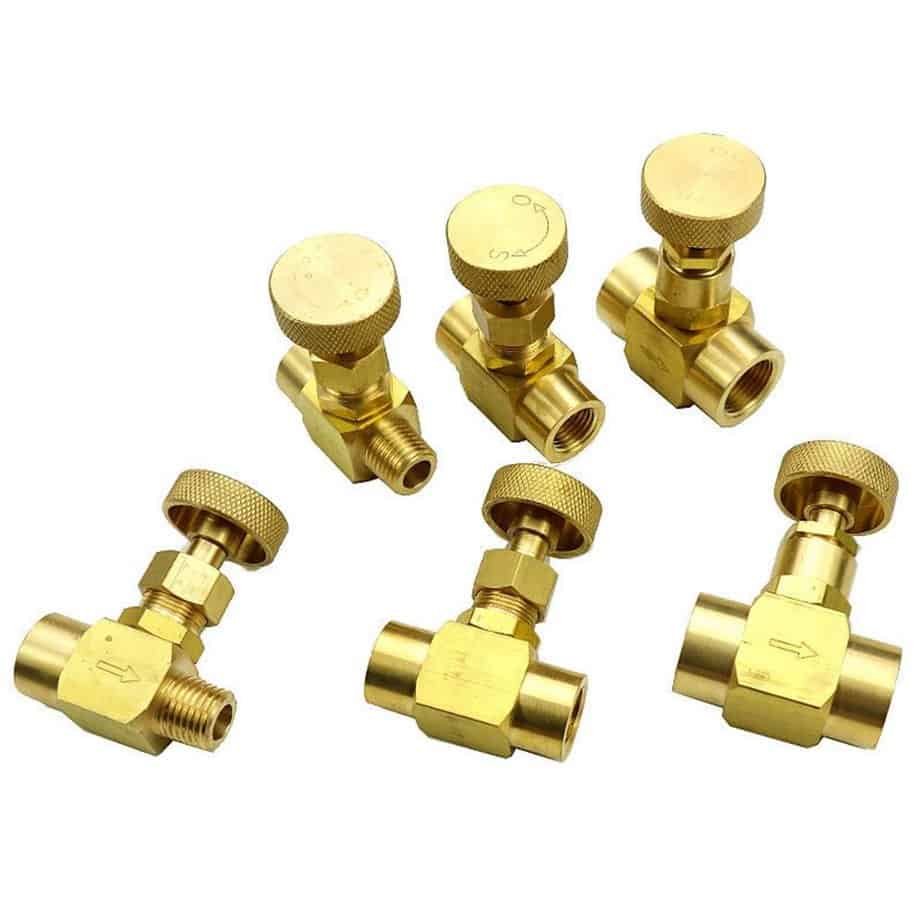
The brass needle valve is suitable for
- drinking water,
- hydraulic system
- gas piping
- high-temperature applications.
Yet, the brass material is ideal for non-corrosive and neutral media. That’s why the primary application of this material is for drinking water. The brass needle valve does not apply to;
- distilled water
- chlorides
- seawater and acids.
Stainless Steel
Another material used for manufacturing needle valves is stainless steel. The valve manufactured from this material has good chemical resistance for any media. The material can resist high pressure and temperature. Yet, it is durable. It applies to corrosive and aggressive media like salt water. Yet, it will rust unless the stainless steel is exposed to seawater.
Plastic
The plastic needle valve is applied to adjust pure and corrosive fluids finely. Yet, it cannot resist high pressure and temperature. It is used for applications under 60 centigrade.

Exceptional and Specialist Quality Material
For some needle valves, only suitable quality alloys will be used. The excellent material must be where highly corrosive elements are controlled. Among the alloys, such as Inconel, are those made to withstand high and robust corrosive elements. These alloys have various properties.
Yet, these offer your needle valves high resistance to cracking and corrosion. It reduces the maintenance price and offers better lifespan services. These alloys are available in various end connections and sizes. Yet, these apply to vapors, liquids, gases, and other industrial pipeline services.
Types of Needle Valves
· Angle Needle Valve
· Motorized needle valve
1) Angle needle valve:
Rather than being in line, this needle valve turns the stream from the inlet at an angle of 90 degrees. This type of valve works the same, but the rise of 90 degrees permits better framework integration.

2) Motorized needle valve
A pneumatic or electric actuator links to and rotates the plunger in these valves. This valve can be worked remotely and applied in a closed-loop system. The timer is also set to keep control of the flow rate accuracy.
What are the parts of the needle valve?
- Body
- Bonnet
- Gland
- Handle
- Handle screw
- Nut
- Packing
- Set screw
- stem
Body
The significant piece of a needle valve is the valve body, also called the shell. The body is the system that holds all the components together. Yet, it serves as a significant part of a valve assembly. A valve’s body, or initial tension obstruction, withstands the liquid strain loads from linked pipes.
Bonnet
The bonnet is the part of the valve that shuts the opening. A tension-bearing piece holds the strain of the liquid. Yet, it runs through the valve with the body as its service loads. A strung stud and nuts have it set up. It serves as a help for the organ, built of Bronze for this situation. The bonnet is made of material similar to the valve body.
Glands
In valves, the packing organ is a part of the valve that is injected into the bonnet. It keeps up with the stem packing structure. For the valve’s smooth activity, the highest point of the packing organ is used with the base bearing set of the stem connector.
Handle
A handle controls a valve from the outer valve body. Automatically controlled valves often lack handles, but a stop-check valve may have one to substitute for mechanized control.
Set Screw
A set screw is a screw that is used to secure an item inside or against another object, utilizing friction or pressure. For example, it joins a pulley or a shaft to another shaft. A set screw used without a nut (to separate it from a fastener) is not a good way into a strung opening penetrated in only one of the two items to be secured. A set screw is threaded and headless along its length, permitting it to sit inside the opening. In this condition, it is known as a blind screw or grub screw.
Stem
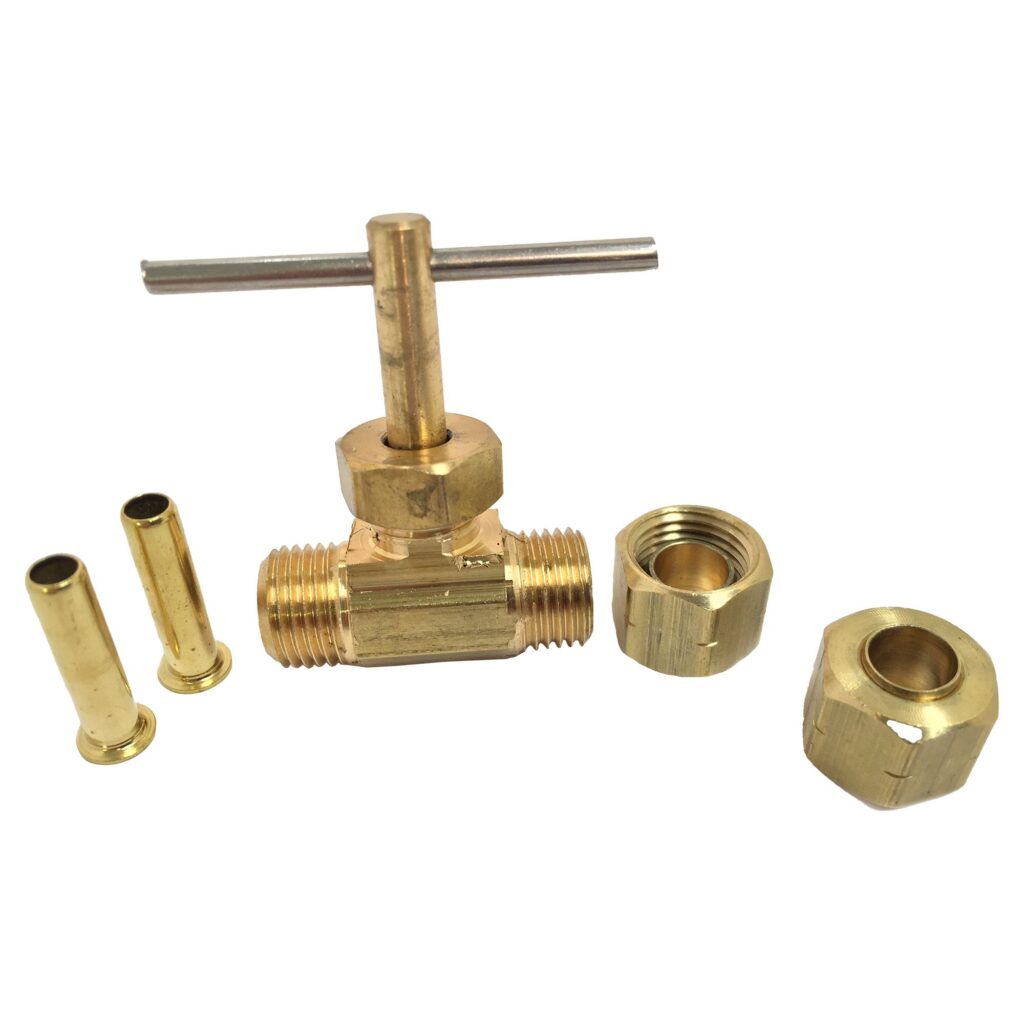
The stem passes turning movement from the hand wheel onto the fitting. Yet, the power screw deciphers the hand wheel’s rotational motion upward. It sets the plate in its seat and hinders the stream opening. The valve’s stem is linked to the hand wheel through four level edges at the top.
I am yet, screwing into the power screw and getting it into place with a nut afterward. At the base, the plug is secured into the stem and connected to the plate stem nut. Yet, the power screw will apply torsional pressures on the branch.
Dimension Standards of Needle Valves
| Size | H | L | W |
| 1/8 inches | 80 | 56 | 60 |
| ¼ inches | 80 | 56 | 60 |
| 3/8 inches | 80 | 56 | 60 |
| ½ inches | 81 | 58 | 60 |
| ¾ inches | 85 | 62 | 60 |
| 1 inch | 100 | 70 | 70 |
Pressure Rating of Needle Valves
| Size | Media Temperature | Media Pressure |
| 1/8 inches | -20˚C to 230˚C | 0 to 408 bar |
| ¼ inches | -20˚C to 230˚C | 0 to 408 bar |
| 3/8 inches | -20˚C to 230˚C | 0 to 408 bar |
| ½ inches | -20˚C to 230˚C | 0 to 408 bar |
| ¾ inches | -20˚C to 230˚C | 0 to 408 bar |
| 1 inch | -20˚C to 230˚C | 0 to 408 bar |
Does the Needle Valve Control the Pressure?
The needle valve works when the handle is turned on. Yet, the stem is pivoting and lifts the needle from the seat. It permits the liquid to move through the heart. The needle position selects the stream rate. The actual change in needle depth for each turn is very negligible. This permits more precision as the needle raises or lowers by minor degrees.
The working pressure of the needle valve is from 5000-10,000 PSI. Needle valve working tension changes as per the temperature. High temperature lessens working pressure. Yet, the alternate way round, lower temperatures induce working stress.
Stainless steel and carbon steel are the most applied materials for needle valves. Needle valves comprise steel as this material is impervious to most types of;
- resistance
- chemical changes
- and corrosion.
It will last for quite a long time. No replacement is required, and low valve maintenance is needed.
Applications of the Needle Valve
The most common use of the needle valve is to maintain the stream. It helps to protect weak devices from any damage caused by fluctuations in the pressure of gases and liquids that pass. It is suitable for frameworks that apply less dense and lighter materials with a nominal stream rate. It applied in
- chemical processing
- low-pressure hydraulic systems
- And other liquid and gas services.
Based on their materials, it also applies to high temperatures and oxygen. Opting for the needle valve built with the material that suits the service needs is essential. This ensures the valve’s longer lifespan. Yet, it keeps the frameworks running safely and smoothly.
From Swagelok
How Does a Needle Valve Work?
It can work either automatically or manually. The automatically operated valve links to the air connector or hydraulic motor, which help to close or open the valve automatically. The air actuator or hydraulic aid sets the position of the plunger according to the external data fed or timer in the framework, which were both collected during the monitoring process.
The manually operated needle valve applies a hand wheel to close or open the disc. When the handle rotates clockwise, the plunger lifts to open the valve, yet this plunger permits the fluid to pass through it. So, when the handle turns anticlockwise, the direction of the plunger rotates close to the seat. This direction reduces the fluid’s stream rate and stops the fluid’s stream.
Both automatically and manually worked needle valves offer control of the fluid stream rate. The hand-wheel thread takes various rotations to set the position of the plunger from the seat. Finally, the needle valve can aid in keeping the stream rate of the fluid in the framework.
From Sagacity Basic Tech Series
How do you inspect or test the needle valve?
The valve inner pressure is increased at the opening of the valve. Detect and note the primary valve pressure. You can also record the other related valve property values and requirements. Continue to increase the valve inlet pressure to the valve discharge. Check the valve action. Try to note the open height and emission pressure. Afterward, gradually decrease the inner pressure till the valve shuts off. Note the movement of the needle valve and record the pressure. Repeat the test to identify the action of the characteristic needle valve. The conditions such as
- valve temperature
- ambient temperature
- back pressure
- installation condition
Medium conditions should be near the normal working conditions under the discharge pressure. Seal the surface seepage according to need.