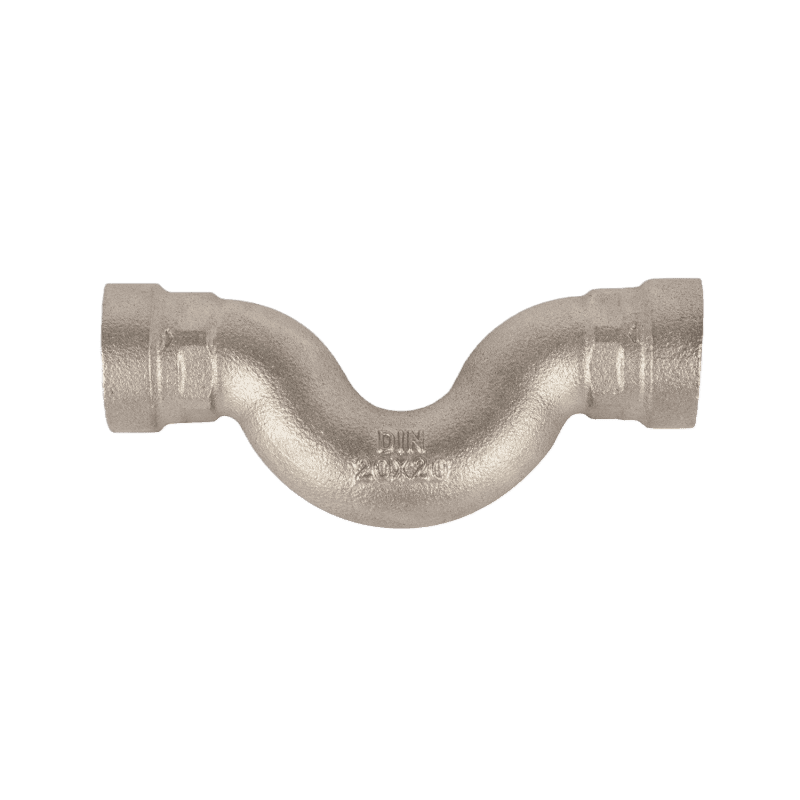
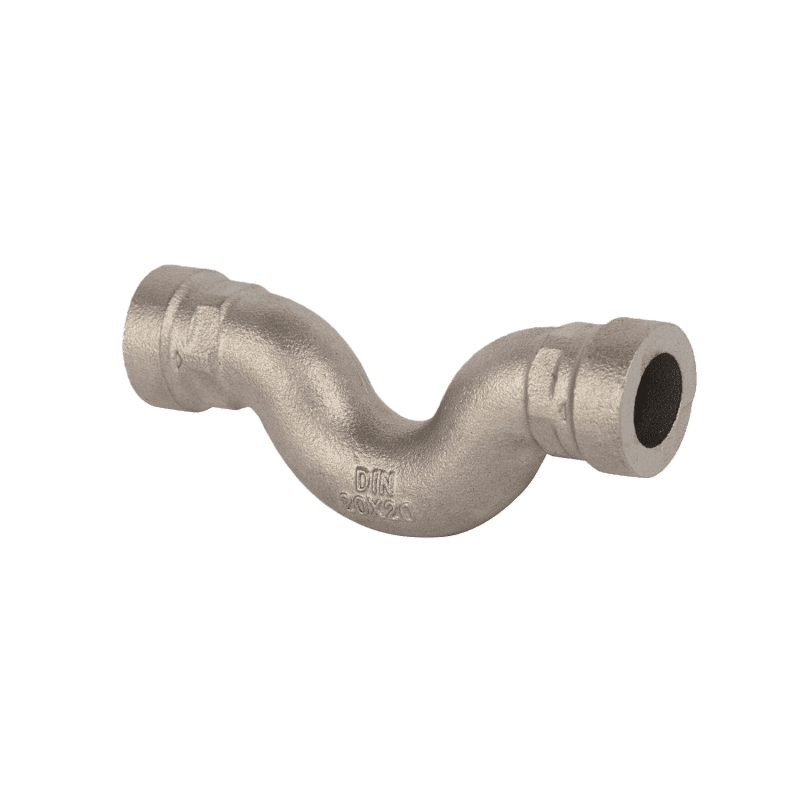
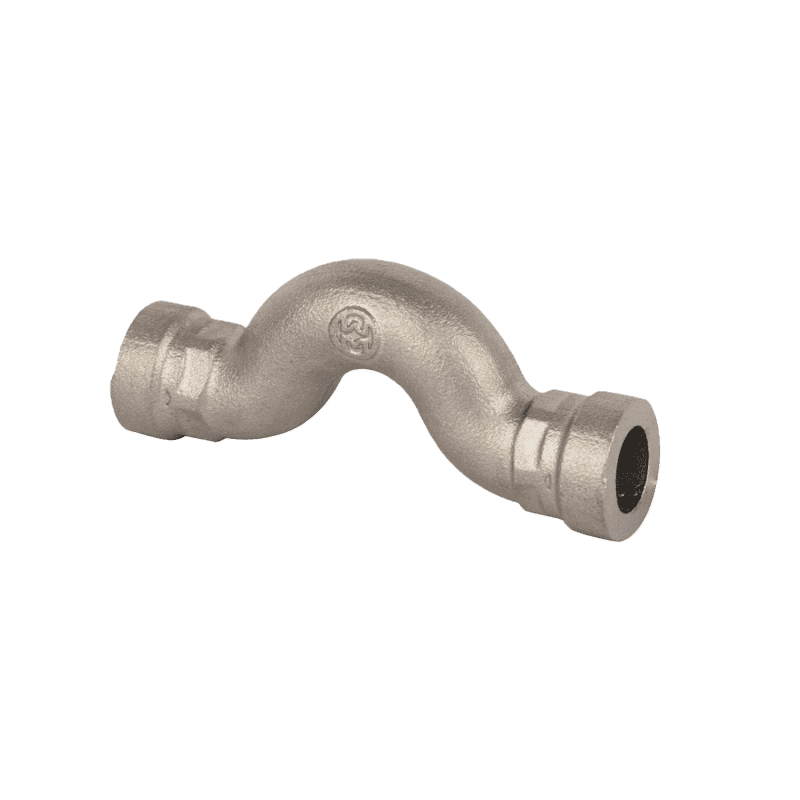
Parameters of Stainless Steel Transition Curve Pipe Fitting
Stainless steel Transition Curve Pipe Fitting is used for smooth transition and sealing connection of different pipe diameters, angles, or connection methods in piping systems. Its special design makes the fluid flow easier, stops liquids from getting stuck, and keeps the system working well. It is a key part to ensure the tightness, stability, and service life of the pipeline system.
Model No.: JX-10083
Material: Stainless steel 304/316, Malleable cast iron
Finishing: Hot-Dip Galvanized (HDG)
Size: 1/2″ x 1/2″ , 1/2″ x 1″ , 3/4″ x 3/4″ , 3/4″ x 1″
Suitable for water, gas, steam, oil and other general hydraulic applications
The Bronze Self-Tapping Ring Belt comes with joint nuts. It is made to sit on a pipe. It is mainly used in piping systems and machine assembly, especially when the material is soft or when threads wear out easily.It makes threads stronger, seals better, and keeps connections tight. This fixes weak threads in soft materials and stops threads from slipping or bending during use. The self-tapping design lets it easily go into the material and form a strong, stable connection.
Model No.: JX-0876
Material: Brass/Bronze Top saddle, bottom saddle, stainless steel bolts, nuts, and washers, and NBR or EPDM o-ring
Finishing: Sand blasted, Rough Brass (RB)
Temperature: -10˚C-120˚C
Thread connection: BSP, NPT
Size: 2-1/2″, 3″, 4″, 6″, 8”, 10″, 12”
Connection: Female
Packing: Bulk
O-Ring: EPDM
Working pressure: 16bar (1.6mpa)
Standard: BS 1400 LG2
Brass Split Ring Clamp
A brass open ring clamp is a pipe fixing fitting with an open ring structure. The core is used for positioning and fastening pipes in the pipeline system. Its opening design can be easily clamped onto the outer wall of pipes to accommodate pipes of different diameters. The pipeline can be fixed to the wall, support, and other basic structures to prevent displacement or loosening due to vibration and fluid impact.
Model No.: JX-0871
Material: Brass, Lead-free brass, CW510L
Finishing: Sand blasted
Temperature: -10˚C-120˚C
Thread connection: BSP, NPT
Size: 2-1/2″, 3″, 4″, 6″, 8”, 10″, 12”
Connection: Female
Working Pressure: 16bar (1.6MPa)
Key Applications: Marine piping systems, potable water lines, fuel lines, hydraulic systems, air conditioning lines, and chemical processing equipment
Load capacity: 150-750 lbs
MOQ: 1000pcs
Standard: EPDM, WRAS
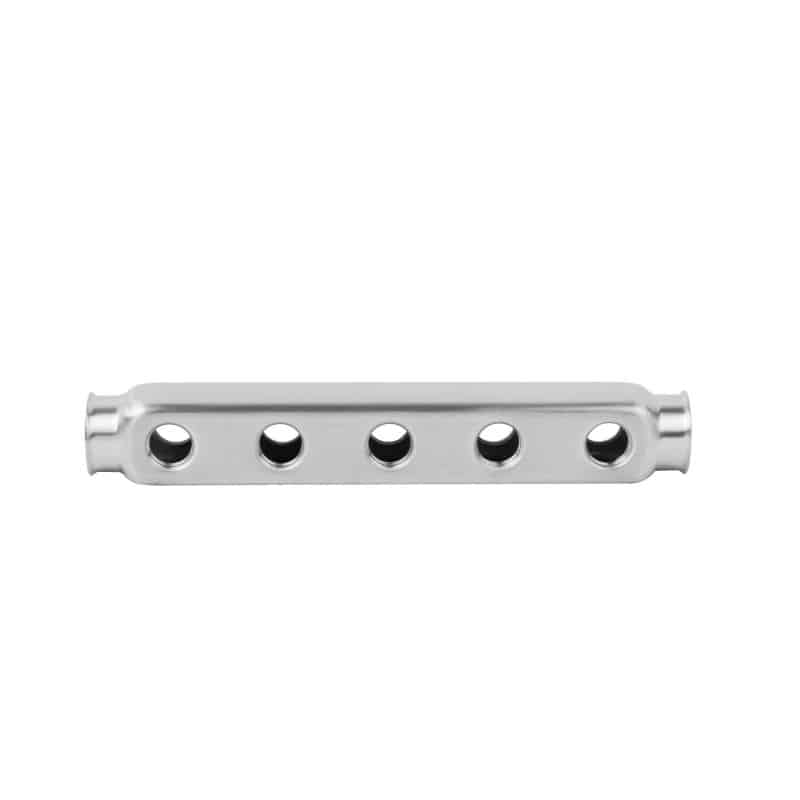
Stainless Steel 304 Manifold Pipe Body
The Stainless Steel 304 Manifold Pipe Body has many built-in connections. It can send fluids to different places, join them together, or split them. It works with water, gas, and weakly corrosive liquids. The design spreads fluid from the main pipe evenly to the branch pipes. This makes the system tighter, more stable, and it works better.
Model No.: JX-0863
Material: Stainless steel AISI 304L and SS316
Finishing: Polishing
Main connection thread: 1″F
Thread connection: BSP, NPT
Working pressure:150 PSI
Lateral connections female thread ISO 228/1 of 1/2″
Maximum working temperature 110°C
Maximum working pressure 10 bar
Testing Pressure: 0.8 MPa, 100% testing
Thread: G, BSP, NPT
Branch distance: 50/55mm
PVC Pipe Connector
PVC pipe connectors are often used in B2B situations, like drainage, HVAC, construction, and industrial fluid systems. They help join PVC pipes to each other or to other equipment. Using threads, sockets, or glue, they make a sealed and strong pipeline that stops leaks and works reliably.
Model No.: JX-0759
Material: PVC
Finishing: Original
Size: 1/2″-2″
Temperature: -1˚C-55˚C
Thread connection: BSP, NPT
Working pressure: PN10
Color: Gray
Connector Type: Union
NSF approved for use with potable water
Standard: ISO 4427, CE
Application: Water supply, water draining, farming, irrigation, Aquaculture, water treatment, and other fields
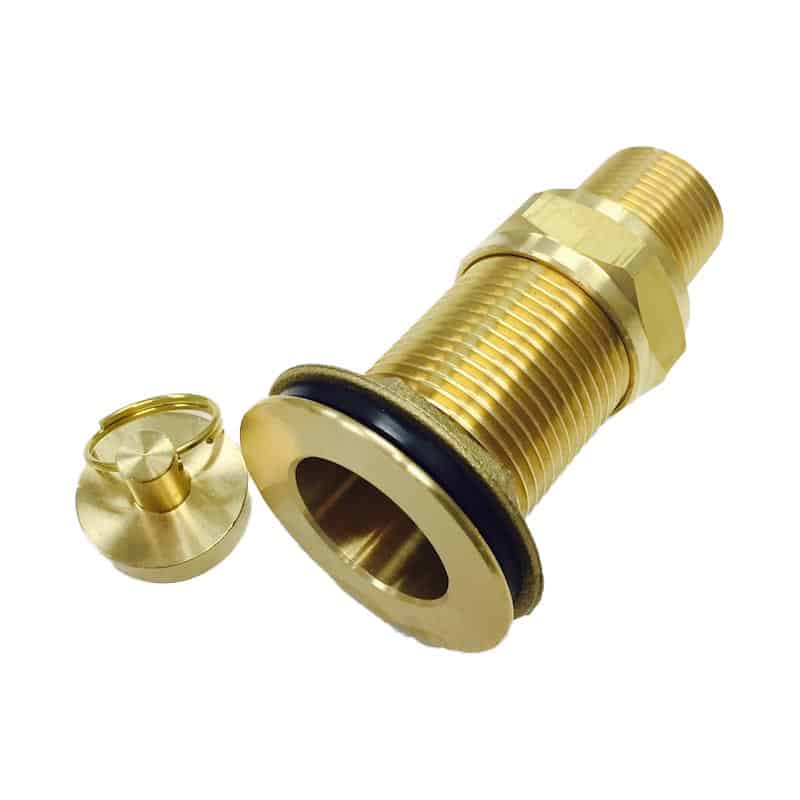
Sink Plug with Brass Stopper Insert
The sink plug, featuring a brass valve core, consists of a movable brass valve core and a plug body. Water storage and drainage control of the sink can be achieved by pressing or pulling the brass valve core, which quickly seals the drain port to store water and reverses the operation to open the drain. And at the same time, it can adapt to the drain port of most standard-sized sinks.
Model No.: JX-0811
Material: Brass, CW617N
Size: 3/4” Male I.P.S. Outlet Coupling
Flange: 1-7/8″
Overall Length: 3-1/4”
Connector type: Flange
Medium: Water
Inlet Opening: 1-1/16″
Working temperature range of -10-120℃
Pressure range of 0.1 to 10 bar
Wall thickness: 1-90mm
O-Ring: EPDM
Toilet Drain Connector Assembly
The Toilet Drain Connector Assembly is used to achieve precise docking and sealing fastening of the toilet drain outlet and the wall/ground sewage pipeline in toilet installation and maintenance scenarios. It works with different toilet models and pipe sizes, filling the gap between the toilet and pipe. Some models can stretch or adjust angles. It is often used in home bathrooms or when renovating many apartments, making sure the toilet drains smoothly.
Model No.: JX-0805
Material: Brass and Rubber
Dowels consist of brass lock nuts, rubber washers, and metal washers for use with urinals with a 1-1/4 in. Inlets
For Use with Series: American Standard, Sloan, Zurn
Used for toilet repair
Type: Closet Spud
Includes a brass locknut, rubber washer, and a metal washer for a secure and tight seal
FAQs of Transition Curve Pipe Fitting
1. What’s the difference between transition curve pipe fitting and transition curve fitting?
Transition curve pipe fittings are mainly integral arc-shaped pipe sections. They are usually longer, with a gentler curve and smoother transition.
These products are mostly used in pipeline systems that need low fluid resistance, such as water supply and drainage, heating, ventilation, and other fluid transport projects. During installation, they help keep the flow stable and reduce pressure loss.
The term “transition curve fitting” is a broader, more common expression. It generally refers to all pipe fittings with an arc transition structure. It includes long-radius elbows, as well as short-radius elbows and small-arc joints.
This simpler term is often used in daily communication, order confirmation, and quotations. It covers a wider range of products.
In short, the first type is mainly integral arc pipes, longer and gently curved. It suits systems that need a smooth flow direction. The second type means all kinds of arc transition joints, including compact ones. It is better for limited space or quick connection situations.
From Pipestock
2. Can transition curve pipe fitting be used on soft substrates?
Plumberstar transition curve pipe fittings can be used on soft base materials. You just need to install and reinforce them properly.
We will give you professional installation advice and supporting solutions. They fit different working conditions, keeping your pipeline system stable and safe for long use.
For such cases, we suggest adding reinforcement during installation: reinforcement base, fixing brackets, adapter splints, or pre-embedded parts. This transfers the pipe fitting’s force to the load-bearing structure .Don’t let the soft base bear all the weight.
If reinforcement is done right, the arc transition pipe fittings can work normally on soft bases. The soft base won’t affect the pipe’s strength, sealing, or fluid transport.
Our arc transition pipe fittings are made of stainless steel. They are solid, corrosion-resistant, and have even stress. The soft base won’t change their performance. The key is using the right fixing method.
Whether it’s civil water supply, heating, or light industrial pipelines, Plumberstar can provide suitable installation parts and technical guidance. We ensure standardized, firm, and reliable installation on soft base materials.
3. Can a transition curve pipe fitting be installed or removed under pressure?
Never install or disassemble transition curve pipe fittings under pressure. This is a safety rule for using the product. It’s also a basic requirement to keep the pipeline system stable.
Arc transition pipe fittings are used to connect pipelines smoothly. No matter if it’s butt welding, threading, or crimping, you need to position, fasten, or seal the joint when installing or disassembling.
If there’s pressure inside the pipeline, the medium will spray out when you take it apart. This causes leaks and messes up the site. It can also cause scalds, frostbite, or hurt workers. It’s very dangerous.
Working under pressure also makes the joint hard to seal properly. The pipe fittings will bear uneven force. This can lead to deformation, leakage, or even breakage later. It seriously shortens the pipeline’s service life and affects its sealing.
You must close the front valve first. Relieve the pipeline pressure and empty the medium. Make sure there’s no pressure at all. Then you can install, replace, or disassemble the arc transition pipe fittings.
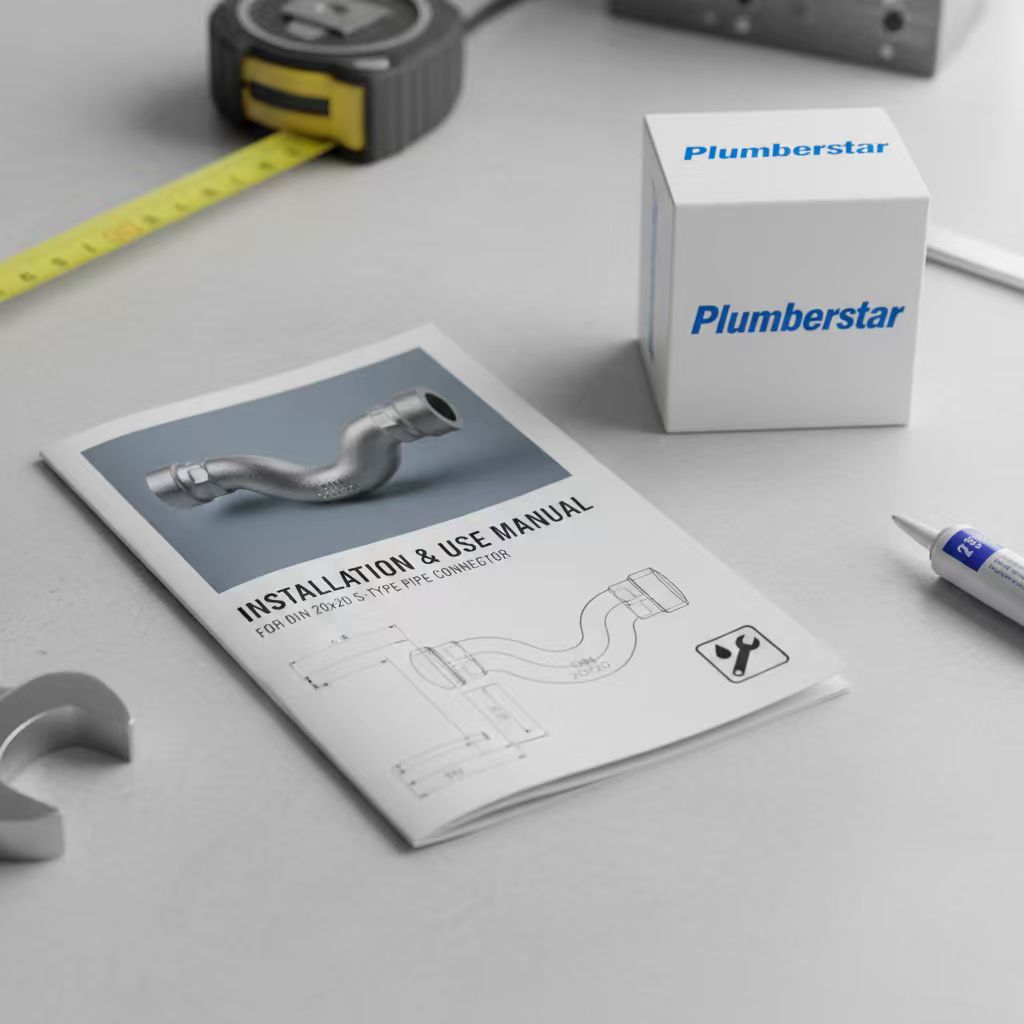
4. Can you provide transition curve pipe fitting installation instructions?
Of course, Plumberstar can provide professional, complete installation instructions for transition curve pipe fittings. They are ready to use right away. We also support customization to fit your product size, connection type, usage scenario, and export standards.
For different connection methods — butt welding, threading, crimping, flange connection, and more —we add detailed steps and key points in the instructions. This ensures proper installation, tight sealing, and reasonable force bearing. It avoids later problems such as leaks, loosening, or strange noises caused by improper installation.
We provide installation instructions in Chinese and English. We can add other languages if you need. You can choose printed or electronic versions. Printed ones go with your goods easily; electronic ones are good for online display.
For OEM customers who need brand customization, we can add your logo, company info, and contact details to the instructions. This keeps your materials consistent and branded.
5. Does transition curve pipe fitting support small-batch trial orders?
Plumberstar is a professional valve and pipe fitting factory. We support small-batch trial orders for new customers, distributors, and project buyers, with flexible policies. This lets you fully check product adaptability, quality, and installation effect before bulk purchase.
For standard products like regular 304/316 stainless steel arc transition fittings: MOQ: 1000 pieces. We support mixed sizes, angles, and connection types (thread/flange/weld). This makes trial orders more flexible and lowers your inventory pressure
For non-standard or customized products: Special radius, reduced diameter, special material, or surface treatment. We accept small batches of 500–1000 pieces. The exact quantity depends on the structure and process
Before the formal trial order, we can provide 1–5 free samples (shipping by you). For material testing, size check, and installation trial. Make sure the product fits your needs
All trial order products use the same standard as mass production. We provide material reports, size inspection reports, and factory certificates. Quality is reliable and traceable. We also offer full technical support: installation guidance, sealing advice, and on-site optimization.
If you’re satisfied with the trial order,later bulk orders will get tiered discounts. We also support in-depth OEM/ODM cooperation to help you grow your market.
6. Can we visit the production line of the transition curve pipe fitting?
Plumberstar sincerely welcomes you to visit our transition curve pipe fitting production line. Our factory is open for visits all year round. You can check the production process, quality control, and production capacity on site, so cooperation is more transparent and reliable.
You can focus on the key production steps: bending and forming, non-destructive testing, pressure testing, etc.
To arrange a visit, please apply 3–7 working days in advance. We will coordinate production, plan the route, and ensure safety.
Whether you are a distributor, buyer, engineering client, or foreign trade partner, we support one-on-one meetings and on-site factory checks for bulk orders.
If you can’t come in person, we can arrange a high-definition live video tour of the factory. For key customers, our technical engineers can accompany and explain the whole process. We will clearly explain the key processes and quality control.
Through on-site or online visits,we let every partner fully understand our production strength and quality system. This builds a solid base for long-term stable cooperation.