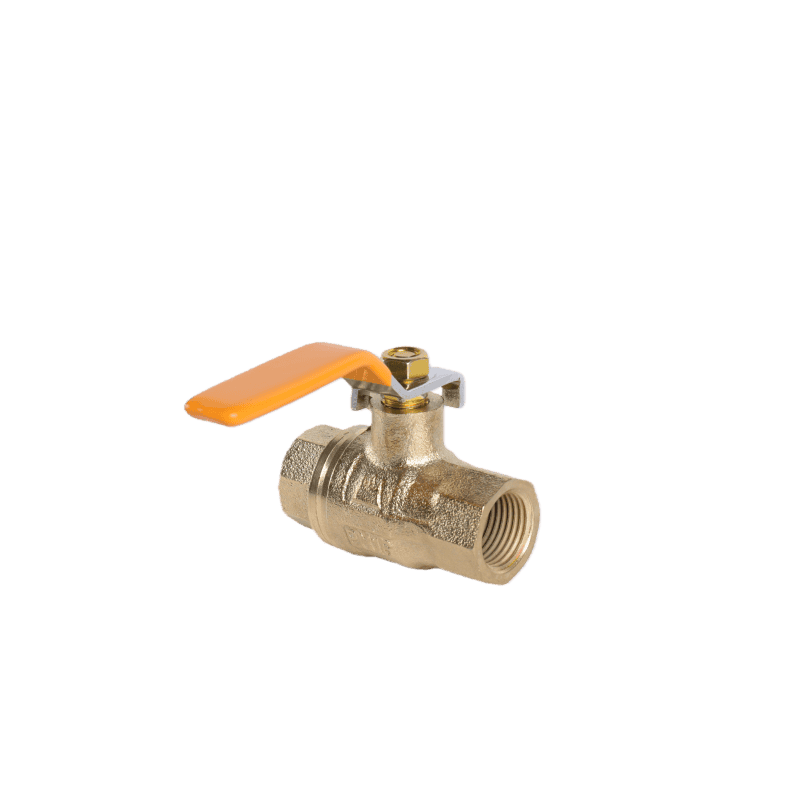
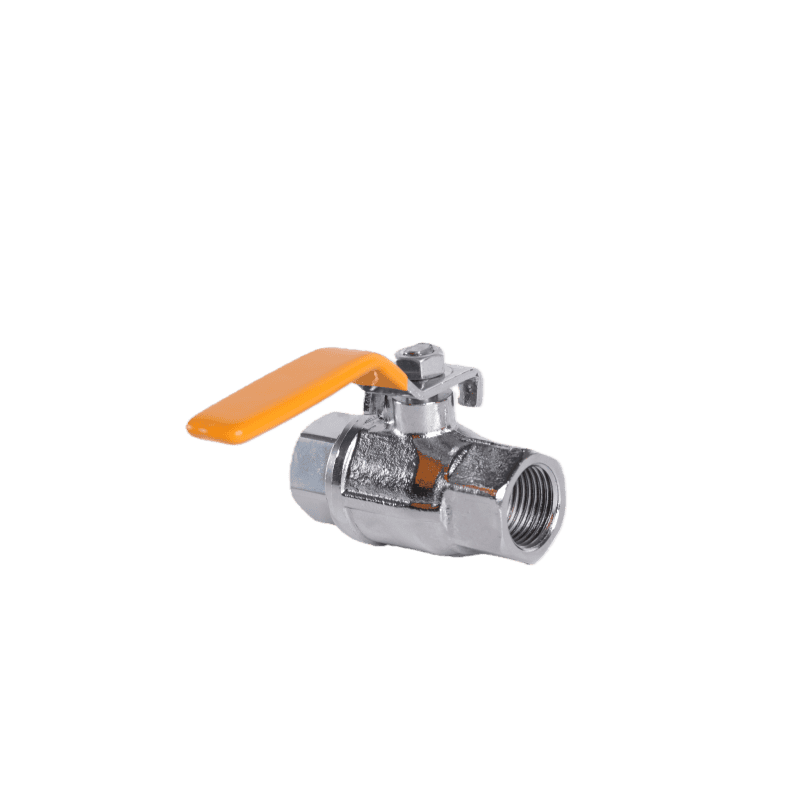
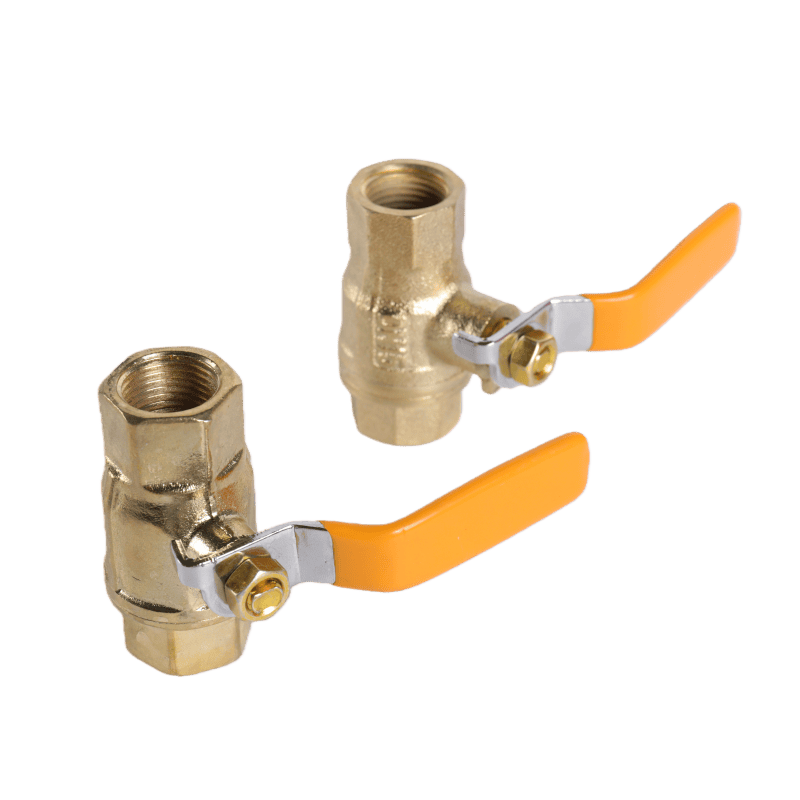
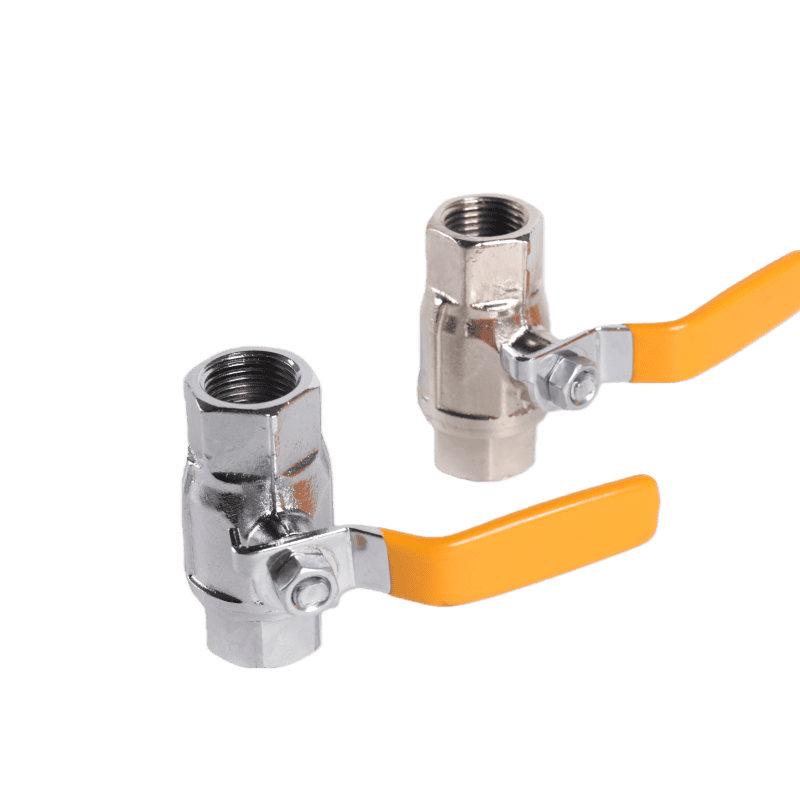
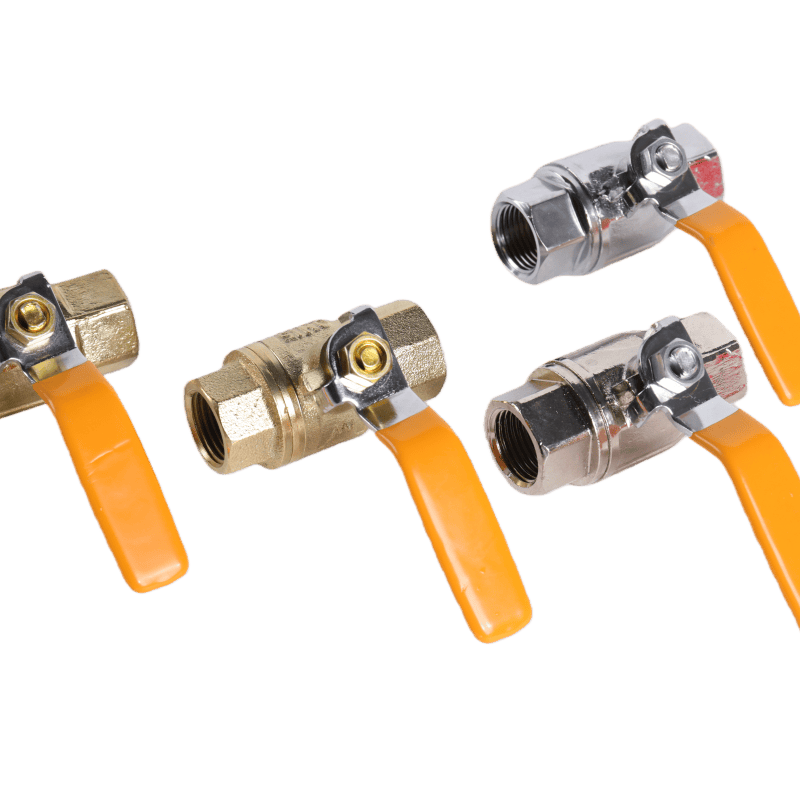
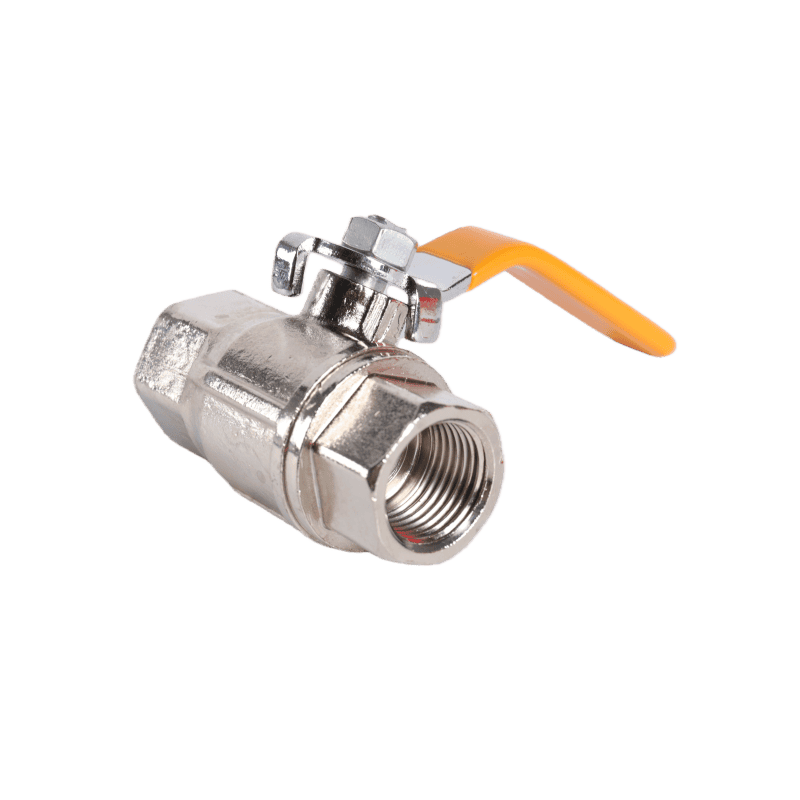
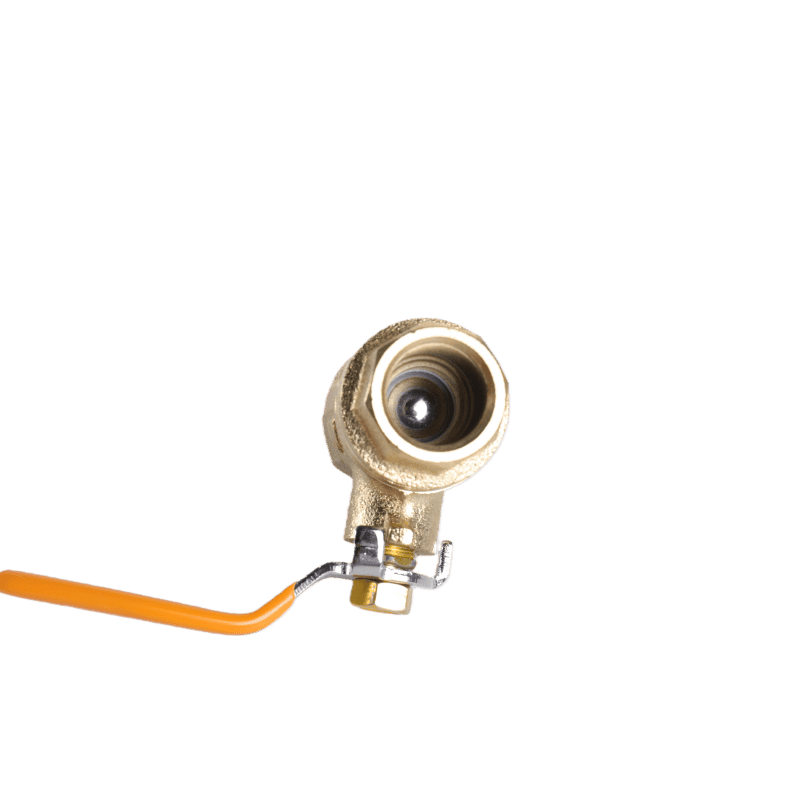
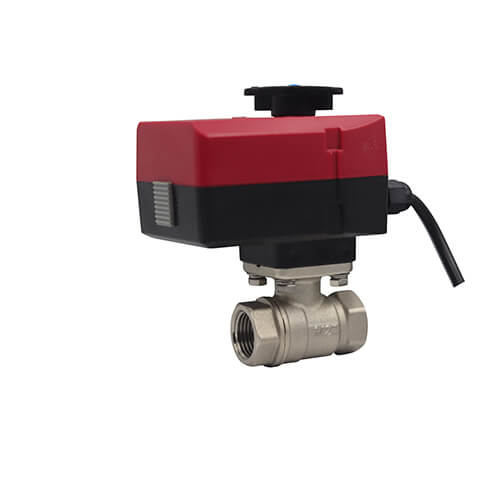
The Two-Piece Steel Ball Valve features low opening and closing torque for effortless operation, enabling rapid shut-off and on-demand flow activation of media in pipelines. The valve stem is designed to stay in place and will not be pushed out by pressure, which makes it safer to use in factories. This valve is mainly used to control on and off flow in pipes that work under medium or high pressure.
Model No.: JX-10057
Size: 1/2 “-2”
Solder end connections comply with ANSI/ASME B16.18
The 3-Way Threaded Zone Valve is used to guide liquid or gas in different directions inside a pipe system. It can split one flow into two paths, bring two flows together, or change the flow direction. Featuring a threaded connection structure, it delivers superior sealing performance and is compatible with most standard pipe diameters for seamless piping connections. It can be used for water, oil, or gas. The valve can be operated by hand or fitted with an electric control, making it easy to turn the flow on or off or control it either nearby or from a distance.
Model No.: JX-0305
Size: 1″, 1/2″, 3/4″
Material: CW617N
Finish: Sand blasted
Thread connection: BSP, NPT
Medium temperature: 2 ℃ -95 ℃
Driving model: Electric/Manual with position indicator
Pressure: PN16
Torque:12 Nm
Internally threaded
Direct-coupled universal bonnet
Manual override with hex wrench
Flow Capacity (Cv): 4.1
3 Way Stainless Steel Motorized Ball Valve
The 3 Way Stainless Steel Motorized Ball Valve uses an L-port design. It can work with different voltages and also has a manual handle for hand operation. This valve is used to guide liquid in a pipe, such as letting the flow go one way, join together, or change direction. It can turn the flow 90° between two paths. The electric motor allows remote and automatic control, making the system easier to use and more accurate.
Model No.: JX-0304
Size: 1″, 1/2″, 3/4″, 3/8″
Valve body material: SS304, SS316
Connection: threaded connection (BSPP, NPT)
Action time: 15s
Drive Power: 220VAC, 24V,AC/DC
Medium temperature: 2 ℃ -95 ℃
Body pressure: PN20
Nominal diameter:12 (mm)
Seal Material: FKM&PTFE
Working medium: Water, air, other media
Nominal pressure: 1.0MPa
Full copper and stainless steel gears are used
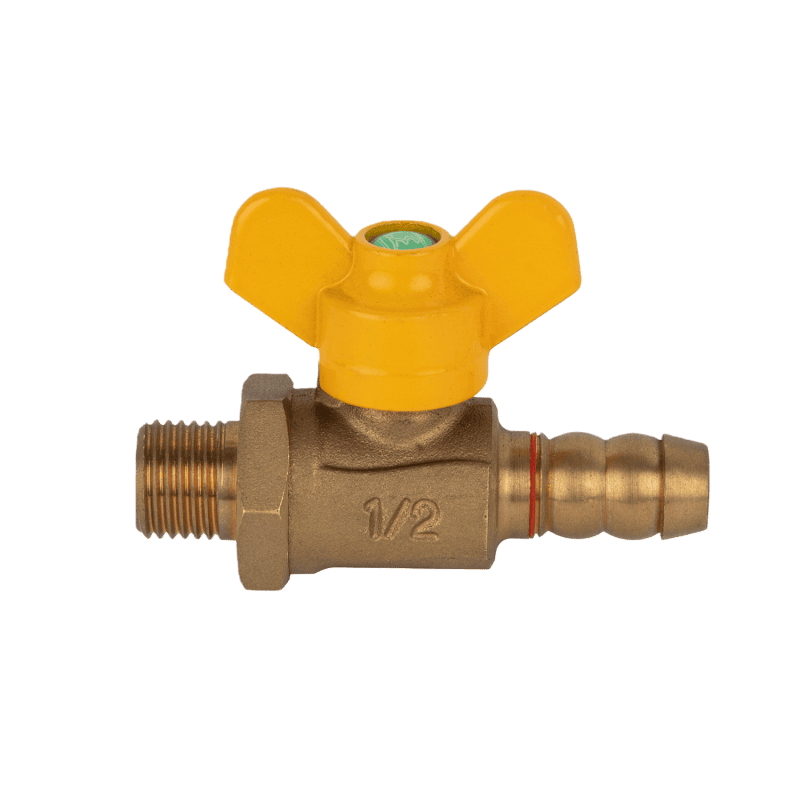
PEX Gas Cut-Off Valve
The PEX gas cut-off valve is used with PEX pipes and can be connected by push-fit or crimp-type joints. It is made to stop gas safely and help prevent leaks. The valve turns easily, so users can quickly turn the gas on or off when needed. If required, it can also be made with a simple lock to stop wrong operation, and clear signs to show whether the valve is open or closed.
Model No.: JX-10071
Size: 1/2″
Full bore
With an aluminum butterfly handle
Ball material: Brass, CW617N, CW614N
Brass seat material: PTFE
Steam: Brass
Include an NBR “O”-ring
Working pressure: 290psi
Working temperature: -10-110℃
Low turning torque
Finishing: Original brass
Forged brass body
OD tube: 8mm
Suitable for Gases (Air / LPG)
EN331 Standard
Brass Ball Valves Butterfly Handle M/F
Brass Ball Valves Butterfly Handle M/F are manual quick controls for the fluid in the pipeline. You just turn the butterfly handle a quarter turn to fully open or close the valve. It fits well in small spaces. This valve is often used in home water pipes, heating and cooling systems, small farm irrigation, and small factory or shop pipes that carry clean, non-corrosive liquids.
Model No: JX-0404
Size: 1/2″-3/4″
Material: C37700, CW602N, CW617N, CW510L
Finishing: Sand blasted, Sand blasted, and Nickel plated
Handle: Aluminum butterfly handle with green color
Brass stem with natural finish
Brass ball polished with chrom-plated finishing
Lifetime: 150000 times On-Off
Temperature: -10˚C-110˚C
Thread connection: BSP, NPT
Working pressure: PN25, PN40
Media: Water, Seawater
Standard: ISO9001, EN
Motorized Electric Brass Globe Valve
Motorized Electric Brass Globe Valve is equipped with an electric actuator. It adopts a lifting disc structure inside. An electric actuator can support remote control, automatic adjustment, and some models are equipped with a manual emergency operation function. It can adjust fluid flow step by step or linearly. The electric control mode can be connected to the automatic control system.
Working medium: water, oil, non-corrosive and non-flammable gas
Nominal pressure: 1.6MPa
Electric Actuator Brass Ball Motorized Valve
Electric Actuator Brass Ball Motorized Valve can access various control signals, support remote control and automatic linkage, automatic on-off control and simple flow regulation of the fluid in the pipeline, not only can the electric actuator accurately drive the spool to complete the rapid opening and closing of the valve, to achieve timely opening and closing of the pipeline medium, but also can adjust the spool angle according to the control signal to adapt to different flow requirements.
Model No.: JX-0312
Size: 1″, 1/2″, 3/4″
Material: CW617N
Finising: Sand blasted, Nickel plated
Thread connection: BSP, NPT
Action time: 15s
Medium temperature: 15 ℃ -95 ℃
Voltage: 220VAC, 24V AC/DC
Power: 60W
Cable Length: 300mm / 11.8in
Working Time: 25-30 seconds
Torque: 12 Nm
Medium: Water, Air, etc.
Closing Differential Pressure: ≤ 0.6MPa
Nominal Pressure: PN16-PN20
Standard: ISO228, ISO 5211
Shell material: ABS
FAQs of Two-Piece Ball Valve
1. What is the difference between 1-piece, 2-piece, and 3-piece ball valves?
The 1-piece ball valve body has an integral structure with no obvious detachable parts. It features a compact structure, low cost, and convenient installation. However, it needs to be completely removed for disassembly and maintenance, and is suitable for small-diameter and low-pressure pipelines.
The 2-piece ball valve consists of a valve body and two parts of the valve cover, which are connected by threads or flanges, ensuring structural stability and facilitating certain maintenance convenience. The valve cover can be removed separately to replace internal seals and other accessories. It is suitable for multiple medium and low-pressure fluid scenarios. It is a commonly used type for civil and small commercial use.
The 3-piece ball valve body is composed of three parts: the left valve body, the right valve body, and the middle valve seat, which are connected by bolts. It is not necessary to dismantle the connection between the whole valve and pipeline during disassembly and maintenance. It can be directly opened to access the middle part, allowing for the replacement of core parts, such as the valve core and valve seat.
From DuraChoice
2. What are the advantages of two-piece ball valves over other valves?
One-piece ball valves have a fully closed, single-piece body. The ball and seat are pushed into the valve through a necking process. This design is compact and low-cost, but the inner diameter is usually smaller than the pipe. It creates pressure loss and reduces flow efficiency. If the seat or seal wears out, you can’t repair it. You have to cut the whole valve out and replace it, which raises maintenance costs.
Three-piece ball valves have two end caps and a separate middle body. The middle section can be taken off the line. The structure is more complex, and the cost is much higher than two-piece valves. It has two sealing surfaces, so there’s one more possible leak point than two-piece valves. It also needs stricter installation and maintenance.
Two-piece ball valves are made of a main body and one end cover. The structure is simple, with a good balance of performance.
Standard two-piece ball valves are full-bore. When open, the inner channel matches the pipe size. Fluid flows smoothly, with almost no pressure loss. It works for most industrial and civil systems, with a simple design and a better price.
It only has one connection point. Possible external leak points are half those of three-piece valves, so it’s more reliable long-term.
The two-piece structure gives customers real performance and stability at a better price. You don’t pay extra for unnecessary repair features. This directly improves project profit margins.
3. What pressure testing standards do you follow for the 2-piece ball valve?
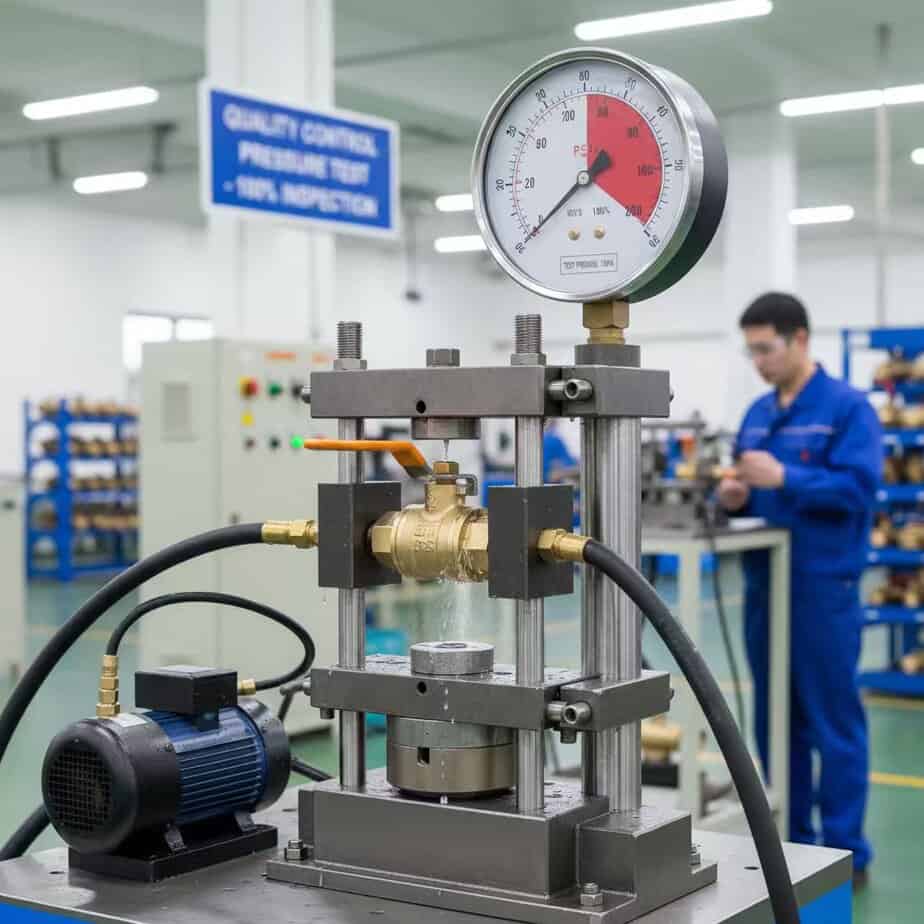
Plumberstar two-piece ball valve pressure tests are conducted strictly in accordance with API 598. We test key items like shell strength and sealing performance. This makes sure that delivered products are safe and reliable.
To check the valve shell is strong enough, we do this:Put the valve in a half-open position. Inject water pressure inside. The pressure is at least 1.5 times the valve’s maximum rated working pressure. Under this high pressure, we check closely for leaks where the valve body and cover connect. We make sure there’s no rupture or external leakage.
To test the valve’s sealing performance: Fully close the valve seat from one end. Check if the other end leaks. Then apply pressure from the opposite end. Repeat the test. This ensures perfect two-way sealing.
For special uses or high-demand custom orders, we also do air pressure tests. Air molecules are much smaller than water molecules. This test can find tiny leaks that water pressure tests can’t detect.
What’s more, Plumberstar can provide a pressure test report for every batch of your order.
4. Can you provide MTRs for two-piece ball valve raw materials?
Plumberstar two-piece ball valves come with a complete, standard raw material MTR (Material Test Report). All materials are from qualified, long-term cooperative steel mills. Each batch of steel has an original material report when entering the factory. After warehousing, it is linked to the production batch in the system. This ensures the material source is clear, the data is real, and batches can be traced.
On this basis, we can provide original material confirmation certificates. They are based on material heat numbers and test data, and match product batch numbers and order numbers one by one. These certificates can be shipped with the goods and used for project acceptance and filing.
For projects needing higher certification, we can help arrange third-party testing, such as SGS, BV, TÜV, and Intertek. They do spectral material analysis and issue independent reports, improving project compliance and international recognition.
All pressure-bearing and core parts are under material traceability management. Each MTR has a unique heat number and production batch number. This forms a fully traceable system from raw materials to finished products.
Before shipment, we can provide a PDF electronic MTR in advance for your inspection, customs clearance, or filing. Original paper certificates are included in the goods. Each batch and order includes complete, standard documents.
5. Can two-piece ball valves provide different handle options?
Plumberstar two-piece ball valves offer flexible handle configurations. You can choose different handle styles, structures, materials, and operation methods. Just pick based on your installation space, usage frequency, operating habits, appearance needs, and export standards.
All handles are designed and made to our factory’s structural standards. They have enough strength, lock reliably, and open/close smoothly. They won’t affect the valve’s sealing or pressure resistance.
An in-line (straight) handle is the most common standard type. It opens and closes quickly at 90°, with a simple structure and easy operation. It works for most pipeline systems, small equipment, and regular engineering projects.
Curved/Butterfly handle has a bigger grip area. It feels more comfortable to use and won’t slip easily. It’s good for frequent opening/closing, and for humid or oily environments.
The extended handle provides more operating torque. It’s suitable for large-diameter or high-pressure valves. It also works well when the valve is installed deep or has limited operating space, making it easier to use.
The foldable handle can be folded and stored. It saves installation space and prevents collision damage. It’s ideal for tight areas—like inside cabinets, equipment cavities, or narrow pipe wells.
Lockable handle lets you add a padlock. This stops wrong operation or unauthorized opening/closing. It’s used in places with high safety needs, such as engine rooms, fire protection systems, and industrial pipelines.
We also support brand customization for handles. You can emboss logos on metal handles or silk-screen them on plastic-dipped sleeves. Logos are clear, durable, and won’t fall off. All customization is part of our standard production process. It won’t delay delivery or affect bulk supply stability.
6. How long is the warranty period for two-piece steel ball valves?
Two-piece steel ball valve custom models or products that reach a specific pressure level can be guaranteed for a period of 2 years.
Other models that meet CE, ISO, and other high standards, as well as those used for special conditions or products with long-term cooperation orders in large quantities, may have a warranty period of up to 3 years.
High-end models with special actuators even come with a 5-year special actuator warranty. The specific duration will usually be further defined in the trade contract in conjunction with the customer’s needs.
7. Are your two-piece ball valves manufactured in your factory?
Yes, the body and bonnet are manufactured in our own factory. Our manufacturer also produces Stem and PTFE(Teflon). But the Level handle/butterfly handle and ball are sourced from outside partners.