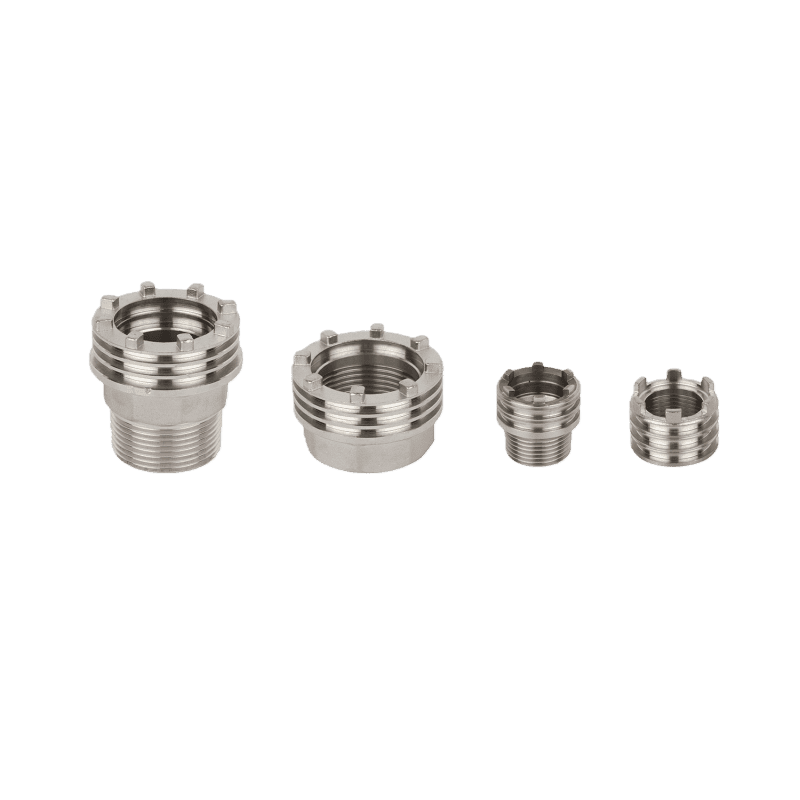
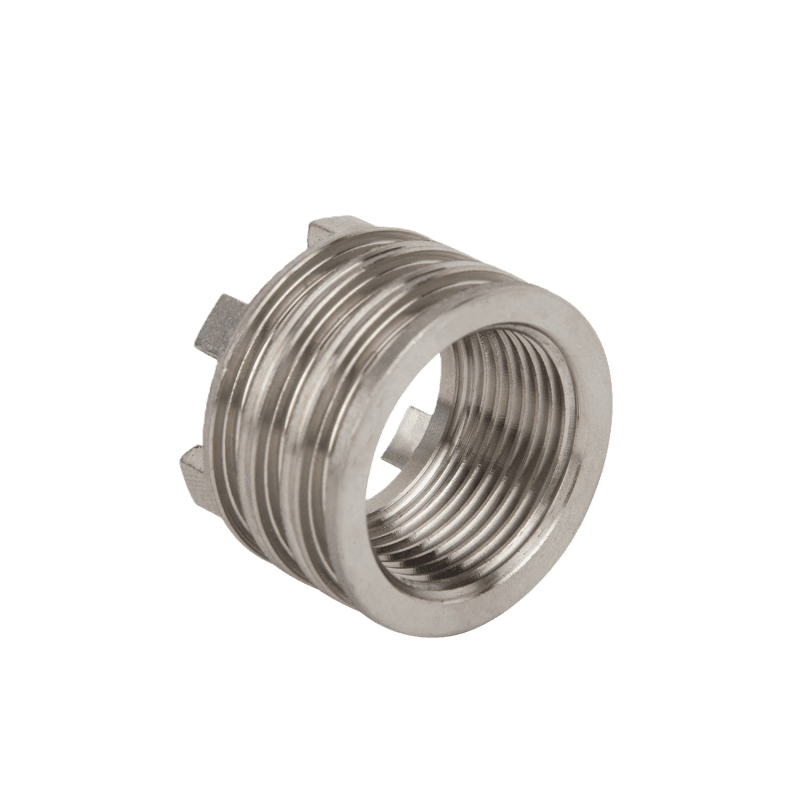
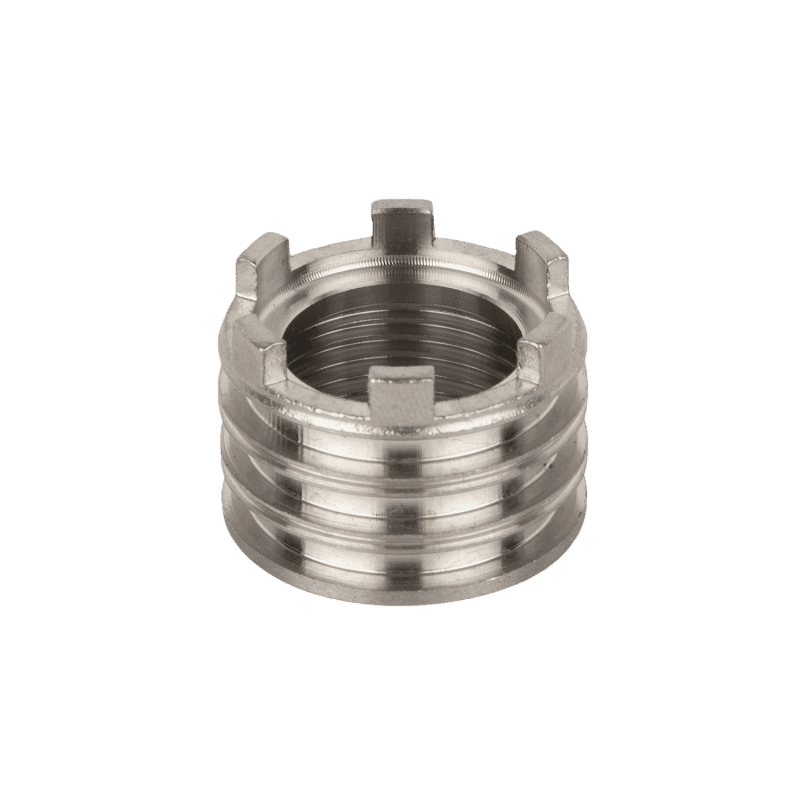
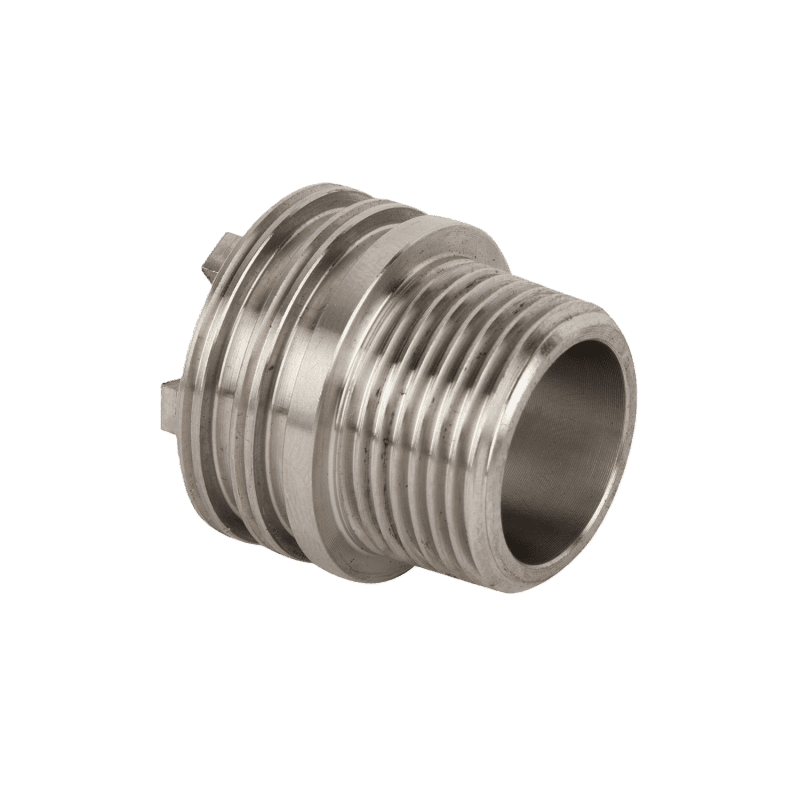
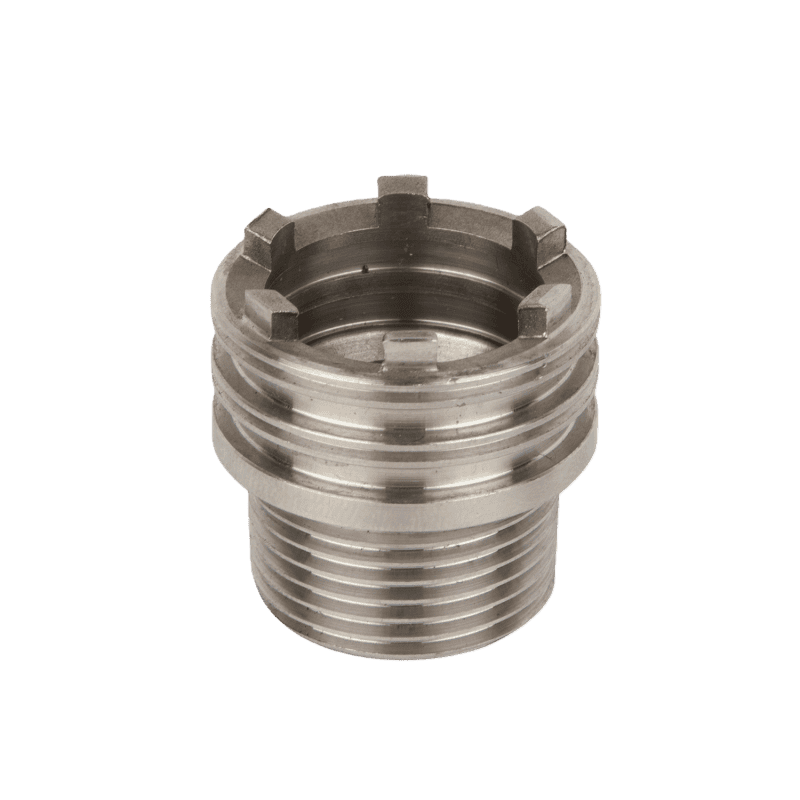
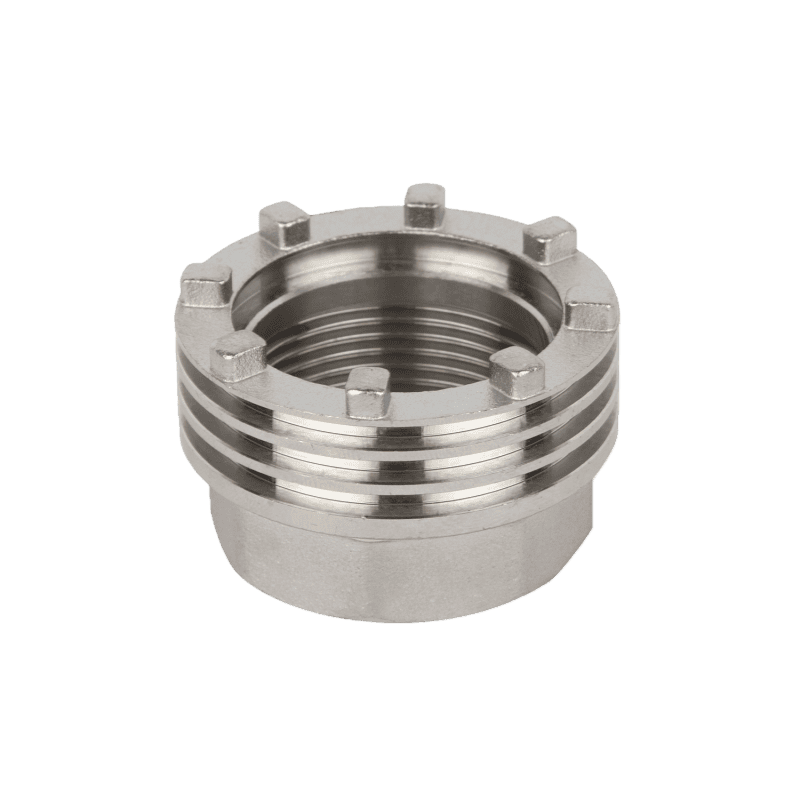
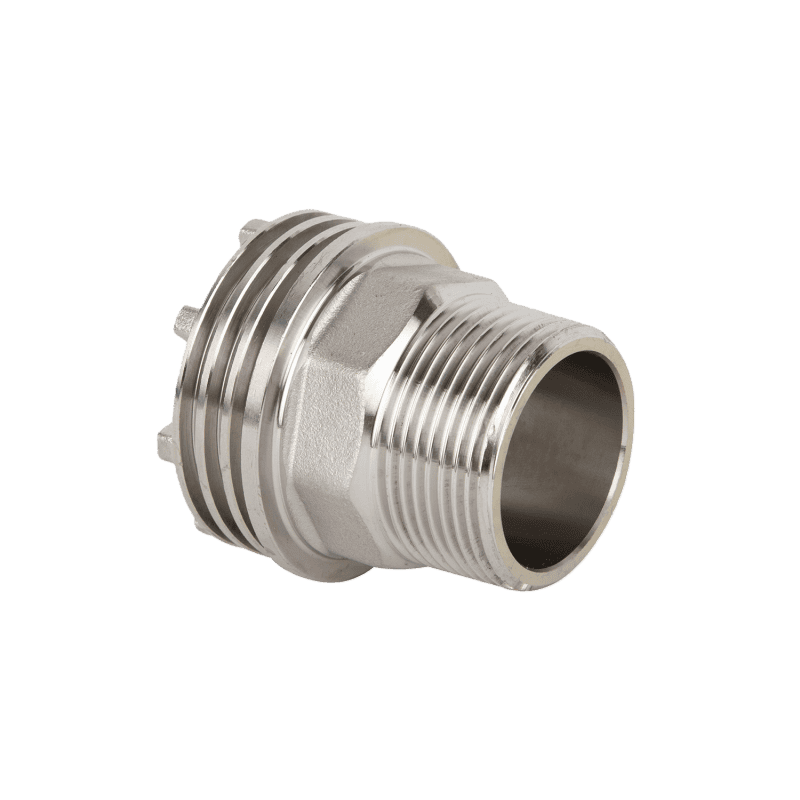
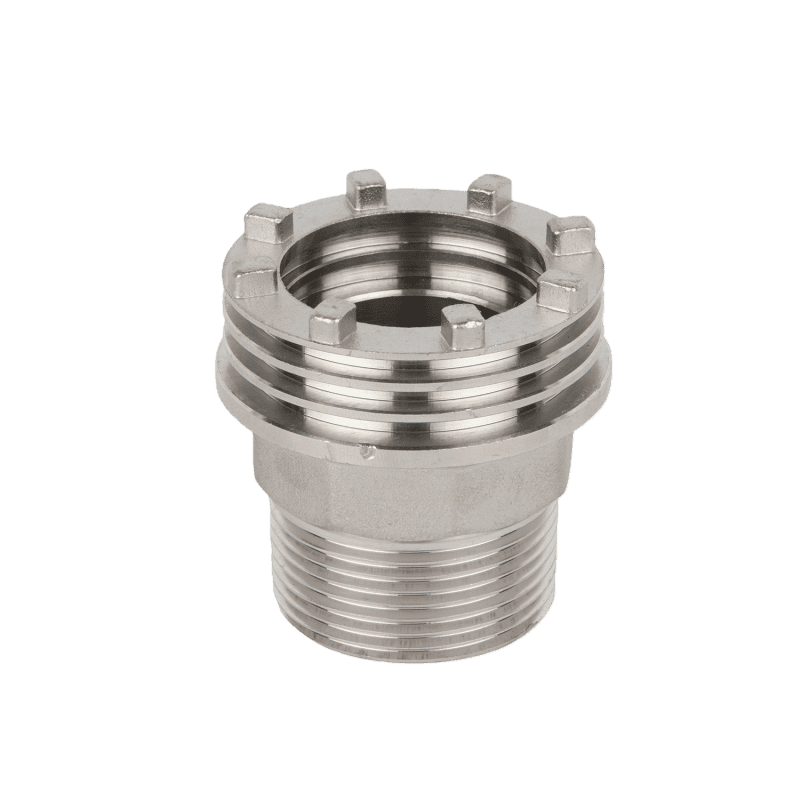
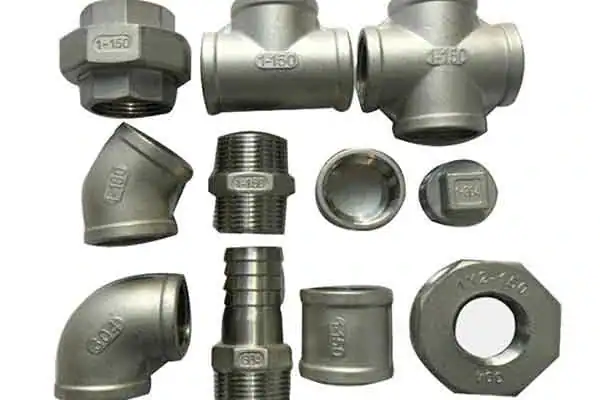
This stainless steel insert for PPR fittings is a specialized reinforcement component engineered to boost the connection strength of PPR piping systems. Featuring a sleeve-like structure, it is designed to be embedded inside PPR pipes. During the hot-melt connection of PPR pipes and fittings, the insert reinforces the rigidity of the pipe’s threaded ends or ports. This prevents connection loosening or leakage caused by stress-induced deformation of the PPR material. Making it ideal for applications where enhanced PPR pipe connection strength is required.
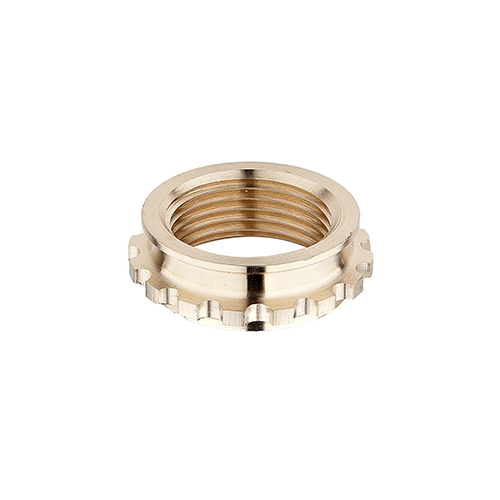
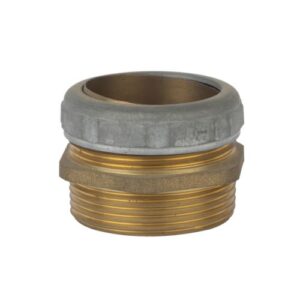
This DZR female threaded brass insert is made of brass and is designed to provide a stable female thread when embedded into plastic pipe fittings, valve bodies, or hardware bases. It allows easy and accurate connection with pipes, fittings, or equipment that use male threads. The outer surface usually has grooves or knurled lines. By reinforcing the threaded area, the insert greatly improves pressure resistance and reduces deformation at the joint.
Model No.: JX-0812
Material: DZR brass, CW602N
Size: 1/2″-1″
Forget brass
Standard: ASME, ANSI, WaterMark
Standard wall thickness
Angle: 180 degrees
Connection: BSP
Working Temperature: 1°C – 120°C
Type: Sprocket Type
Max working Pressure Rating: 1600kPa
Air Conditioner Access Valve
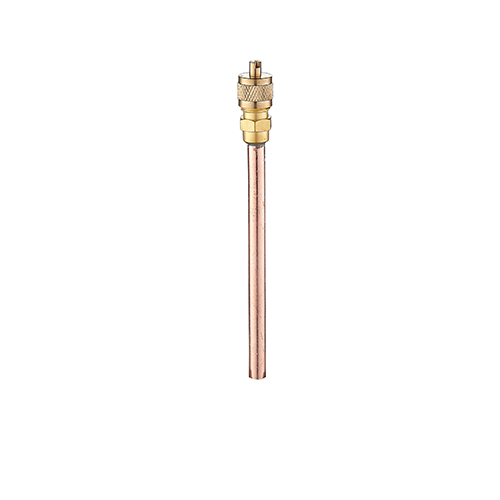
This maintenance valve is made specially for air conditioning systems. It’s a core tool accessory for AC installation, maintenance, and refrigerant management. Its main job is to provide a safe interface. You can use it for refrigerant charging, recovery, pressure testing, and system evacuation in AC refrigeration pipelines. It can handle the low-temperature, high-pressure working conditions of refrigerant media. It also prevents refrigerant leakage. It’s usually installed at the high and low-pressure pipeline ports of AC outdoor units. It comes with a switchable valve core and standard interfaces. These fit professional tools like refrigerant gauges, charging hoses, and recovery machines.
Model No.: JX-0808
Size: 1/4″
Material: Brass&Copper
Finishing: Original
Valve Head Length: 25mm
Valve Stem Length: 100mm
OD: 6mm
Type: Refrigeration Access Valves
Working pressure: 3.4 MPa
Application: Suitable for refrigerators, air conditioners, and refrigeration compressors
Each valve is equipped with a spool and a spool remover
Gasket: NBR
Air compressor brass check valve
This brass check valve is specially designed for air compressors. It’s a core protective part that prevents compressed air from flowing back in air compression systems. Its main job is to ensure compressed air flows in one direction only. When the air compressor is working, Compressed air pushes the valve disc open due to the pressure. It then flows smoothly into the air storage tank or the following pipelines. When the air compressor stops or the system pressure drops, the valve disc closes automatically. It’s driven by reverse pressure and the elasticity of the spring. This completely blocks compressed air from flowing back to the main unit of the air compressor. It avoids problems such as reverse rotation damage, lubricating oil loss, or difficulty starting caused by reverse airflow.
Model No.: JX-0877
Size: 1/2″, 3/4″
Material: Lead-free brass, bronze
Finishing: Sand-blasted
Working temperature: -10-110˚C
Spare Type: Compressor Kit
Medium: Air
Connection: NPT
Cast Brass Pipe Clamp
Application: Regulated Air Systems
2-year warranty
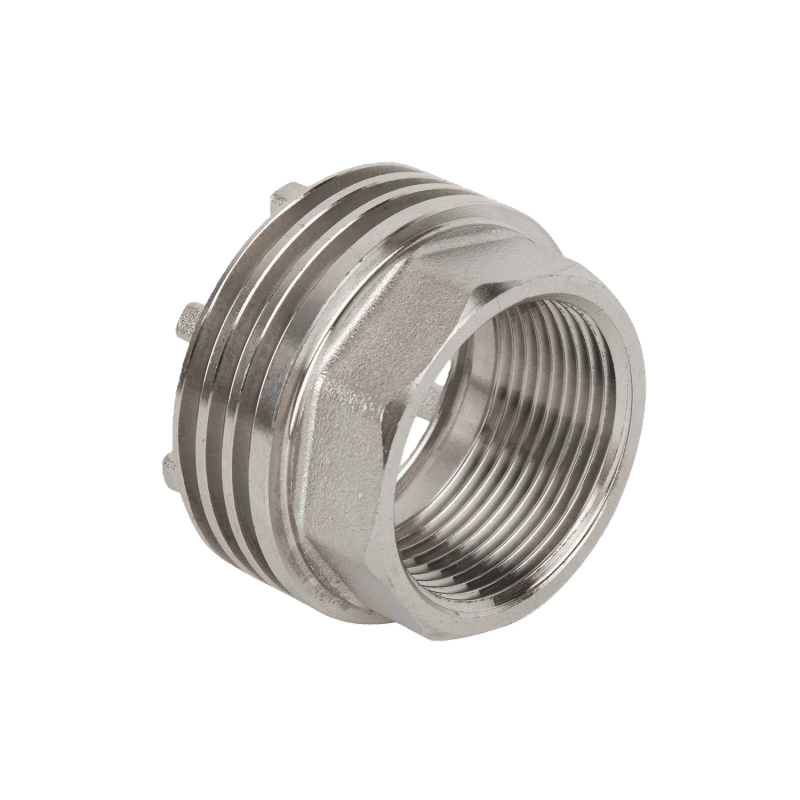
Pipe Union Female Reducing Bushing Brass Insert
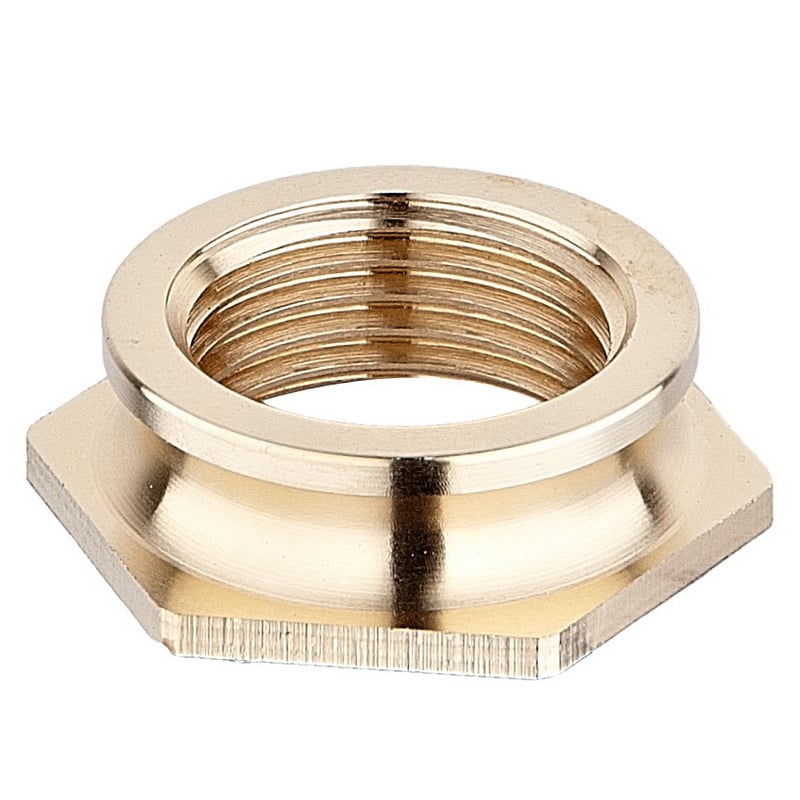
This brass female reducer is used to connect pipes of different sizes in a piping system. It allows large and small male-threaded pipes, valves, or equipment ports to be joined through different internal thread sizes on each end. The outer body is shaped with a hex or octagonal profile. It fits common thread standards such as BSPP, NPT, and G threads. This fitting maintains a secure and easy-to-service connection.
Model No.: JX-0811
Size: 1/2″
Material: Brass
Finishing: Natural, Chrome plated, custom
Thread: G, BSP, BSPT,
External hex joint
Standard: ASME, ANSI
Forget brass
Angle: 180 degrees
Range: Equal Union, Equal Elbow, Equal Tee, Female Elbow, Female Tee
OEM/ODM is available
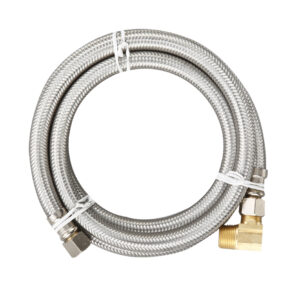
Washing Machine Outlet Box
This washing machine outlet box is designed for washing machine installations in homes, such as kitchens and balconies. It combines a copper water hammer absorber with a brass 1/4-turn valve. The built-in brass valve allows the water supply to be turned on or off with a simple 90-degree turn. The copper water hammer absorber reduces sudden pressure spikes when the machine starts or stops. It helps protect the inlet hose and pipe connections from pressure damage.
Model No.: JX-0925
Size: 1/2″X3/4″
Material: Lead-free brass
Inlet: 1/2 “push-fit connection
Outlet: 3/4 ” MHT connection
1/4-turn for hot and cold supply
With water hammer arrestors
Features a Snap-on Frame
Both Central and Side Drain Design
Compatible with Expanding Fitting System
Automatic air vent plumbing
This automatic air vent plumbing is the core exhaust fitting in the pipeline of water supply and drainage, HVAC heating, and the hot water circulation system. A float-type or piston-type automatic control structure is adopted inside. Its core purpose is to automatically exhaust the air generated in the pipeline system. (Including residual air during installation and dissolved gas during water flow operation).
Model No.: JX-0901
Size: 1/2″, 3/4″
Material: Brass, CW510L, CW617N
Finishing: Sand-blasted
With a filter device
Medium: Water
Type: Vent valve
Connection: BSP/NPT
Working temperature: -10-110˚C
Working pressure: 1.6MPa
Seal material: PTFE
2-year warrnaty
FAQs of PPR Stainless Steel Insert
1. What is the difference between PPR stainless steel inserts and brass inserts?
Brass inserts are made of copper‑zinc alloy. They work stably in normal cold and hot water and municipal tap water. But in acidic water, high chlorine, soft water, or coastal salt spray, they can easily lose zinc, corrode, and rust. Long‑term use may cause leaks and lower strength.
Stainless steel inserts are much better at resisting acid, alkali, chloride, and oxidation. They don’t lose zinc. They fit better in systems that need strong corrosion resistance and long life. Stainless steel is harder and stronger than brass. It handles installation torque, pipeline stress, and water hammer better. It won’t easily strip threads, crack, or deform.
Brass is softer. It can strip inner threads or round openings if over‑tightened or taken apart many times. Long‑term stress can also cause small deformations and affect sealing.
When bonded with PPR, stainless steel expands and contracts more like PPR. During hot and cold cycles, they move together. They are less likely to loosen, separate, or leak.
Brass and PPR expand very differently. After long‑term hot and cold use, gaps can form between the brass insert and the PPR. This creates a risk of leaking.
Brass inserts are easier to make and cost less. They are the common choice for home decoration and normal HVAC projects.
Stainless steel inserts cost more for materials and processing. But they last longer, are more corrosion‑resistant, and safer in the long run.
2. PPR stainless steel insert stamping process is divided into which steps?
Plumberstar PPR stainless steel inserts are made with multi-station continuous stamping. The whole process is highly automatic and standardized. We control every step strictly, from the stainless steel strip to the finished insert.
We put qualified stainless steel coils into an automatic feeder. The steel strip goes through a leveler to remove stress. This keeps the later stamping stable and stops distortion.
Then the servo feeder positions the material accurately. It moves at a fixed step every time. This makes sure each stamping position is consistent. The steel strip is stretched and pre-formed by the mold. It turns from flat into the basic cup or sleeve shape of the insert. This step sets the overall shape and even wall thickness.
After forming, we cut and shape the edges. We remove extra material and fix the inner/outer walls and ports. Height, outer diameter, and inner diameter all stay within tolerance.
Next, we stamp reinforcing ribs or engaging teeth on the outer wall. These include anti-slip teeth, grooves, or ring patterns. They help the insert lock tightly with PPR after injection molding. We then pre-process the threaded end. We thicken, compress, or chamfer the area to be tapped. This strengthens the thread and avoids cracking or deformation later.
Finally, the inserts are automatically cut off from the steel strip. They are collected and sent to the next steps: tapping, cleaning, deburring, and appearance inspection.
The whole stamping line runs automatically. We use mold monitoring and random size checks. This ensures consistent, stable quality in mass production.
From OneMonroe
3. Can you customize stainless steel inserts according to our PPR pipe fittings?
You just need to provide detailed drawings, existing samples, or even basic ideas and key size requirements. Our engineers will communicate with you one-on-one. We will fully understand your needs, including usage scene, pressure level, installation way, and working environment.
We will also give you practical structure optimization suggestions. This makes sure the design works well, is easy to produce, and keeps costs under control.
Before making the mold, we will build a complete 3D model of the insert. We put it into the PPR fitting model for assembly simulation and interference check. We verify size matching, fit tolerance, wall thickness, and injection feasibility. This ensures the stainless steel insert and PPR part match perfectly.
We only start making the mold after you confirm the final 3D model. As soon as the mold is ready, we produce the first batch of samples and send them to you by express. We will only start mass production after you confirm that the sample structure, size, and performance are all okay.
We will number, file, and store your exclusive molds separately. This ensures stable and continuous production for your later large orders. We provide long-term support for your market supply.
4. How to control the roundness error of the insert in the production process?
Plumberstar controls the roundness of PPR stainless steel inserts through multiple precise steps. We cover every stage: raw material inspection, stamping, shaping, heat treatment, and finished product checking. Each step uses fixed parameters and special tools to keep roundness stable and up to standard.
During stamping, we use high-precision continuous molds. The mold cavity is finely ground and polished. We strictly control the alignment and roundness of the punch and mold. This keeps the insert round right from the start.
We also use multi-step stretching and gradual forming. It avoids out-of-round, off-center, or uneven wall thickness caused by one-time heavy deformation. This lowers the risk of shape problems early on.
After forming, we add a special shaping and roundness correction step. We use matching inner and outer shaping molds for a second, precise pressing. It fixes small oval or local deformation from stamping. This makes sure the inner and outer circles are concentric and perfectly round.
The production line also has automatic positioning and clamping tools. They prevent deformation from squeezing or collision during feeding, stamping, and moving. This further reduces out-of-round issues.
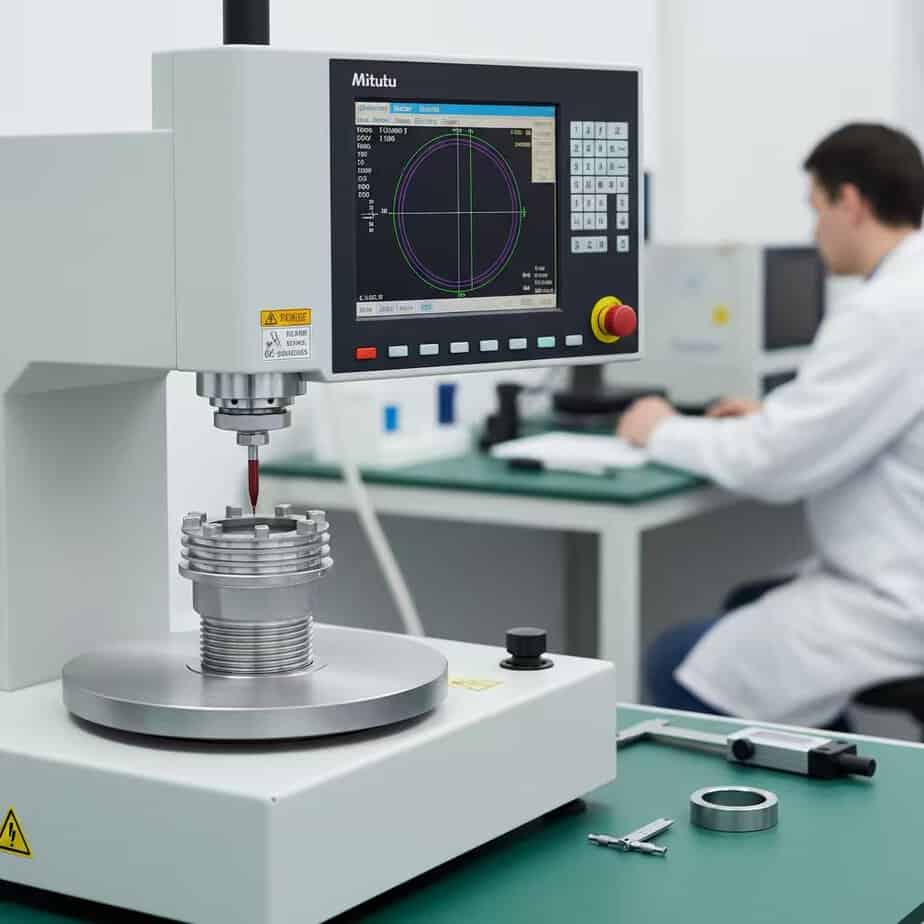
For quality inspection, our experienced workers use pneumatic gauges, high-precision inner diameter gauges, ring gauges, and roundness testers. They check every batch. We track roundness data in real time and analyze trends. This helps us warn of problems early and improve the process continuously.
Stable dimensions and roundness give a good foundation for later PPR injection molding. It ensures good concentricity and sealing performance.
5. Can you provide a sample for the PPR stainless steel Insert?
All our samples are qualified products. They use the same material, mold, craftsmanship, and production line as bulk orders. You can use them directly for testing, assembly checks, and trial production.
Plumberstar lets you apply for single‑spec samples or mixed multi‑spec samples. This makes it easy to test and compare different models at the same time.
For customers with special needs, such as non‑standard sizes, special thread profiles, or custom structures, we can make custom samples based on your drawings or requirements.
We support express shipping or your own designated logistics. Samples are free; you only need to pay the freight. For specially customized samples, we charge a small fee. This fee will be fully refunded or deducted from your later official order.
6.Can you provide a one-stop package solution for the PPR stainless steel insert?
Plumberstar offers one-stop solutions for PPR stainless steel inserts. We cover everything: custom development, mass production, full-process quality control, and complete technical documents. We also handle packaging, shipping, and technical support. We work with you from design to delivery.
For product development, we offer many stainless steel insert options. This includes internal threads, external threads, reducing structures, non-standard sizes, anti-slip tees, and special threads. We base it on your PPR fitting specs, pressure levels, and installation scenes.
Whether you need standard models or custom molds (from your drawings or samples), we can match them precisely and optimize the structure. We cover both standard and non-standard parts.
For packaging and logistics, we have different options. This includes neutral packaging, brand custom color boxes, export reinforced cartons, and moisture-proof, shock-proof packaging.
We can print your logo, product parameters, outer box marks, and labels as you need. For shipping, we support full containers, LCL, small batches, and multiple batches. We help you optimize inventory and logistics plans.
We also provide full technical support. This includes tips for PPR injection molding with stainless steel inserts, injection mold matching, and anti-rotation/anti-delamination improvements.