
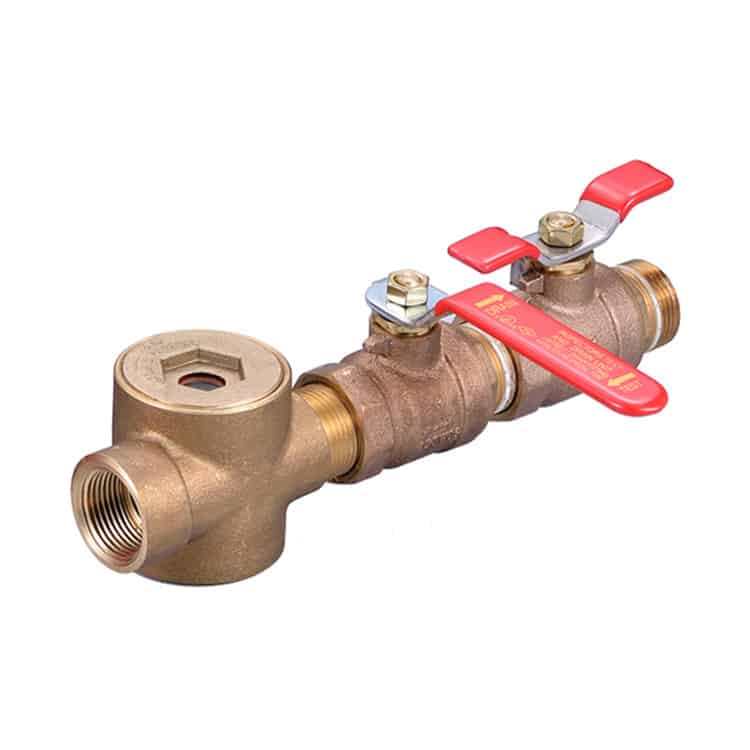
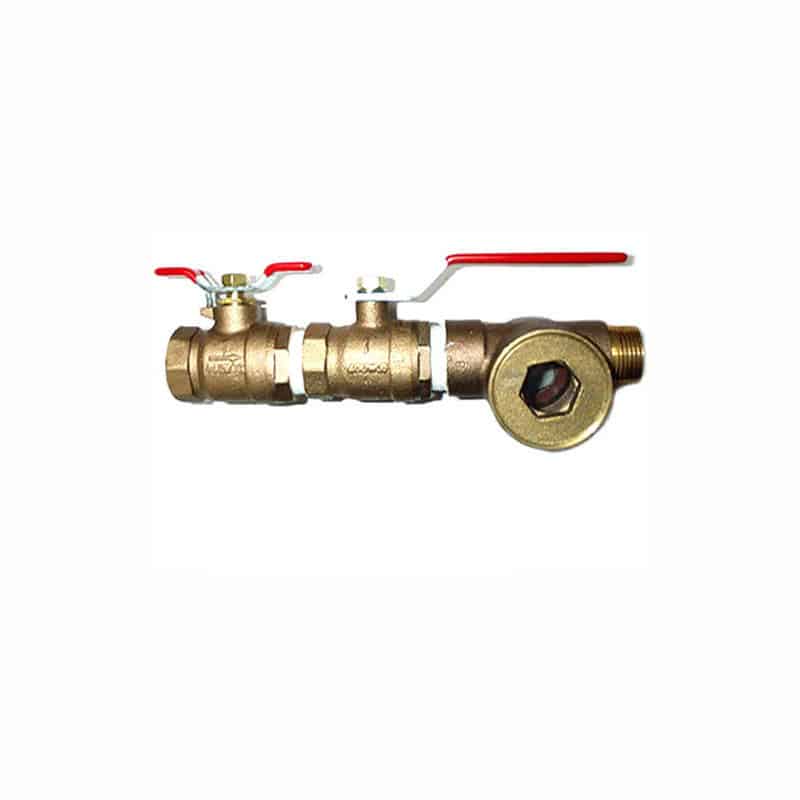
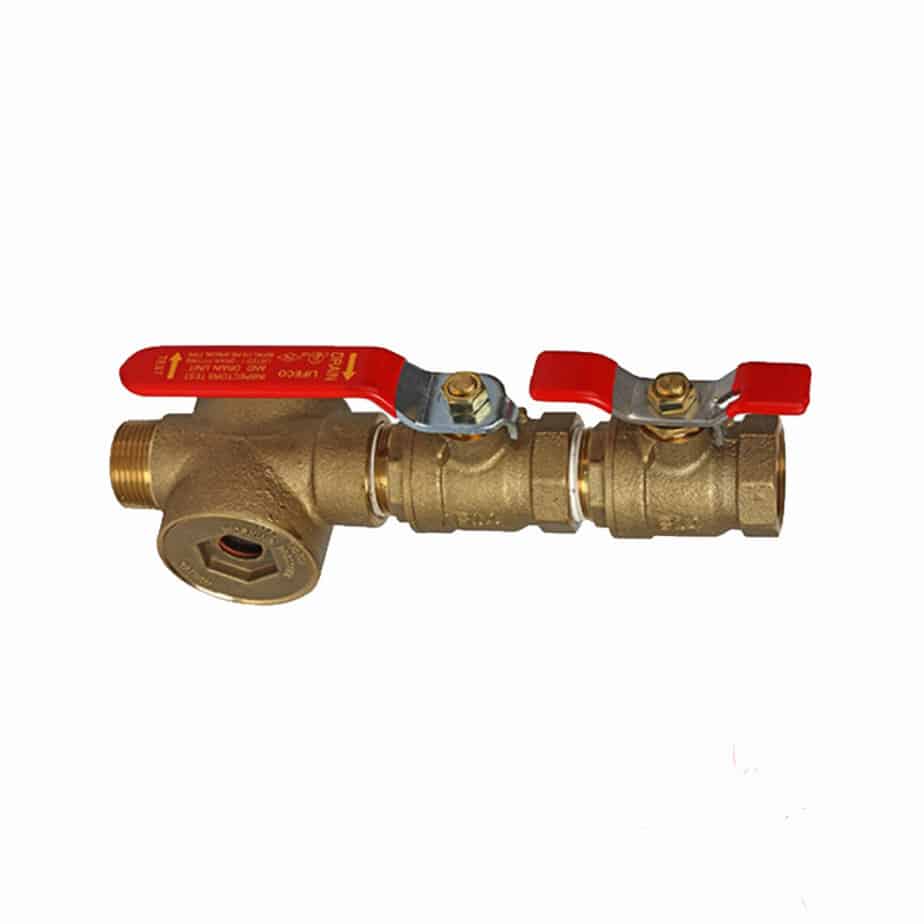

Fire Inspector Test & Drain Valve
JX-0954
- Also available in 1″ or 1 1/4″ & 2″ N.P.T. sizes
- Single Inlet – Single Outlet – completely assembled.
- Operational positions: Test (1/2″ orifice), drain, and (optional) closed place.
- Lightweight and compact design
- Quality brass and stainless steel construction; Teflon seats
- 175 Psi. rating
- 1″ Fire Inspector Test & Drain valve with Sight Glass and Sign 1/2″ Orifice
Introduction: Introduce the article and explain what a fire inspector is.
A fire inspector is a professional responsible for ensuring that a building meets all the necessary safety codes concerning fire prevention. They inspect everything from the alarm system to the materials used in construction. They also work with the fire department to ensure they are aware of any potential hazards in the event of a fire.
The Brass Test: Explain what is involved in the brass test and why it is done.
There have been notable incidents in the past year where fires have broken out in buildings after something went wrong with the fire suppression systems. In many of these cases, it was later discovered that one of the main culprits was a malfunctioning fire inspector brass test and drain valve. This is an important safety device to prevent water from flooding the building in the event of a fire. If this valve fails, water can pour into the building and create dangerous conditions.
Drain Valve: Discuss the function of the drain valve and how it is used.
The purpose of a drain valve is to drain the fluid from the system. This valve is used to release the pressure in the design and allow easy fluid removal. It is important to use the drain valve when changing or flushing the fluid to avoid injuries.
Conclusion: Summarize the article and explain what readers can take away from it.
The article ” Conclusion Summarize the article and explain what readers can take away from it.” by Christine Rosen discusses the importance of taking a step back and analyzing the role of technology in our lives. Rosen argues that we need to be aware of how much we rely on technology and how it impacts our daily lives. She provides several examples of how technology has become embedded in our lives and how it isn’t easy to live without it. Rosen concludes her article with a warning that we should not become too reliant on technology because it can negatively affect our social, emotional, and physical well-being.
Readers can take away from this article that they should be mindful of how much technology they use in their lives. They should ask themselves if they are using technology to connect with others or if they are using it to avoid social interaction.
FAQs
1. How does this Fire Inspector Test & Drain valve simplify the inspector’s testing procedures?
This Fire Inspector Test & Drain valve combines a test port, drain path, and sight window inside one valve body. You do not fit many separate valves and orifice plates on site. It cuts down much assembly work for inspectors. This valve has three working settings: closed, test, and drain. The handle uses a 90-degree quick-open structure. You see the handle position and know the valve state right away. You do not need extra checks to confirm on or off status. The operation is easy and clear.
Flip the valve to test mode. The inner fixed orifice copies the water flow of one sprinkler head precisely. You check flow switches, water motor gongs, and pressure sensors. You confirm that these parts activate alarms correctly no extra temporary sprinkler parts are needed. Some versions have sight windows so that inspectors can watch the water flow directly. They record static and residual pressure at the same time. You finish the whole system test in one go. You do not take apart and reconnect pipe sections.
2. Can this Fire Inspector Test & Drain valve be used for fire sprinkler systems?
Yes! This Fire Inspector Test & Drain valve is made for fire sprinkler systems. It’s the dedicated valve you use for system acceptance checks and regular pipe network patrols. There is a calibrated orifice inside, built to copy the water flow from one single sprinkler head.
When you run a test, only a small volume of water comes out. You won’t drain large volumes of water from the whole sprinkler piping, so no big puddles build up on site. We often ship these valves to fire contractors who need quick, on-site tests without dragging out water pumps for cleanup.
3. What sizes are available for this Fire Inspector Test & Drain valve?

Plumberstar’s Fire Inspector Test & Drain valve has 1-inch (DN25) NPT threaded type as our main ready stock item. We also have other size choices. They are 3/4 inch, 1-1/4 inch and 1-1/2 inch. You can pick NPT or BSP thread connections. Each size valve body comes with calibrated orifices. These orifices fit sprinklers with matching K-factors. The valve meets NFPA sprinkler system test rules.
4. Why choose a single-piece body design for the Fire Inspector Test & Drain valve?
The one-piece valve body design cuts the number of joints. It brings down leak risks. Split valve bodies use many threaded or flange sections for assembly. These joints sit under fire pipe pressure year after year; they tend to seep water. The integrally cast valve body has no middle joints. It has a stronger overall structure. It holds pressure more reliably. It works well for fire sprinkler systems that keep constant pressure all year.
The inner flow path of the integrated valve body is shaped in one casting. The inner orifice sits in a more precise position. It controls the test water flow steadily. Pressure and flow readings stay accurate during fire inspections. No test errors come from a misaligned assembly. The integrated valve body also has a tighter shape. It occupies less space. Installers can fit it into small spaces at sprinkler system ends. Split valve bodies stack many separate parts together. Their total length becomes longer.
5. What is the lead time for a container-load Fire Inspector Test & Drain valve order of mixed sizes?
The Fire Inspector Test & Drain valve full container orders can mix standard sizes. Sizes include 3/4″, 1″, 1-1/4″, 1-1/2″. No changes to valve body, LOGO, or packaging. Standard lead time is 35 days.
Mixed-size orders need batch assembly. We run hydrostatic leak tests for each size. Mixed orders need extra working days for sorting and inspection. Your order includes non-standard large bore sizes like 2 inches. Lead time for mixed full container shipments becomes 45 days.
Raw materials get tight in peak production seasons. Workshop production slots fill up fast. Lead time may increase by up to 7 days. We will tell you early and lock the production plan. Give us quantity numbers for every size when you place your order. We check stock status. Items already in stock go into production first. We can talk about partial shipments.
