
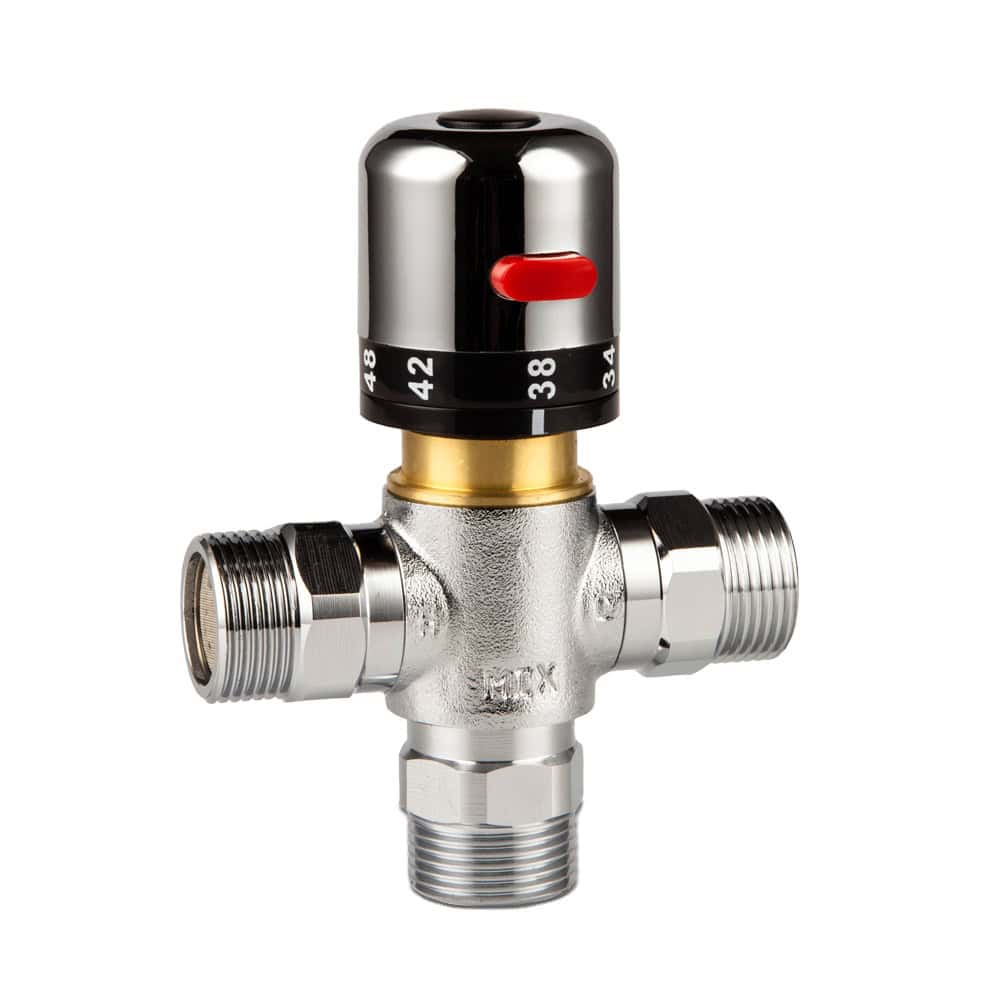
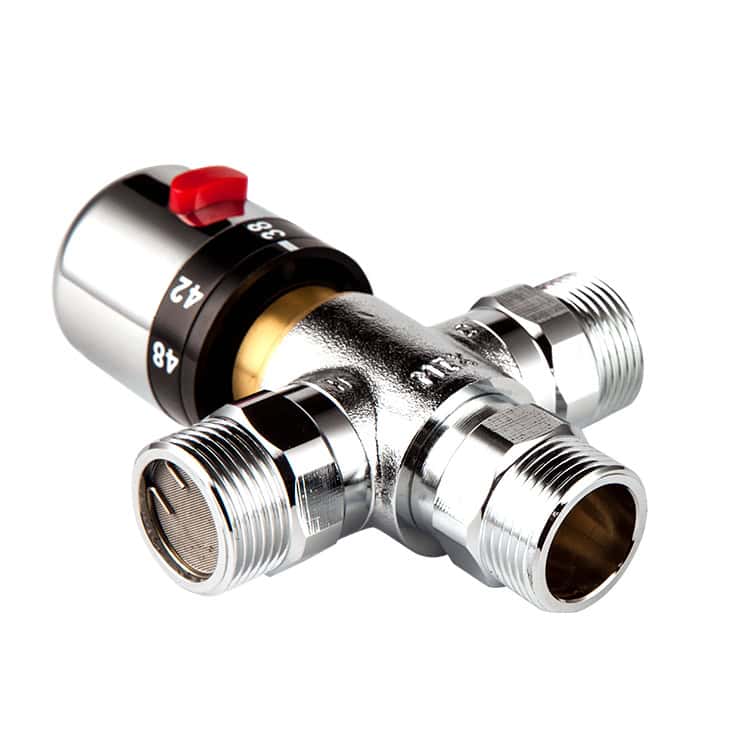

Water Temperature Control Valve /Thermostatic Mixing Valve
JX-0306
- 3 Way body; DN15-DN25 ( 1/2″ – 1 “)
- Driving model: Electric/Manual with position indicator
- Temperature Inlet Cold Water: 5-29°c, Inlet Hot Water: 50-95°c, Mixing Water: 35-45°c,
- Adjustment Accuracy: ±2°c
- Brass materials with nickel-plated,
- ABS handle+Stainless steel spring,
- The thickness of chrome plating Nickel ≥ 8μm, chrome ≥ 0.2μm
- Water flow:67L/min in 1 Bar Water Pressure
— Available panel (surface) mounted where the valve needs to be easily accessed, or inline where it is less accessible
— 1/2″ 3/4″ and 1″ BSP connections
— Provides easy-to-adjust maximum temperature control to help prevent scalding
— Can be used to supply water to any outlet (bathroom taps, showers, or kitchen taps)
— Panel mount version supplied with chrome panel mount faceplate
Body Material: Premium Solid Brass
-Connection: 1/2″ NPT tapered threads, American plumbing standards
-Inlet Cold Water Temperature Requirement: 34-84°F
-Inlet Hot Water Temperature Requirement: 113-210°F
-Outlet Water Temperature: 68-122 °F
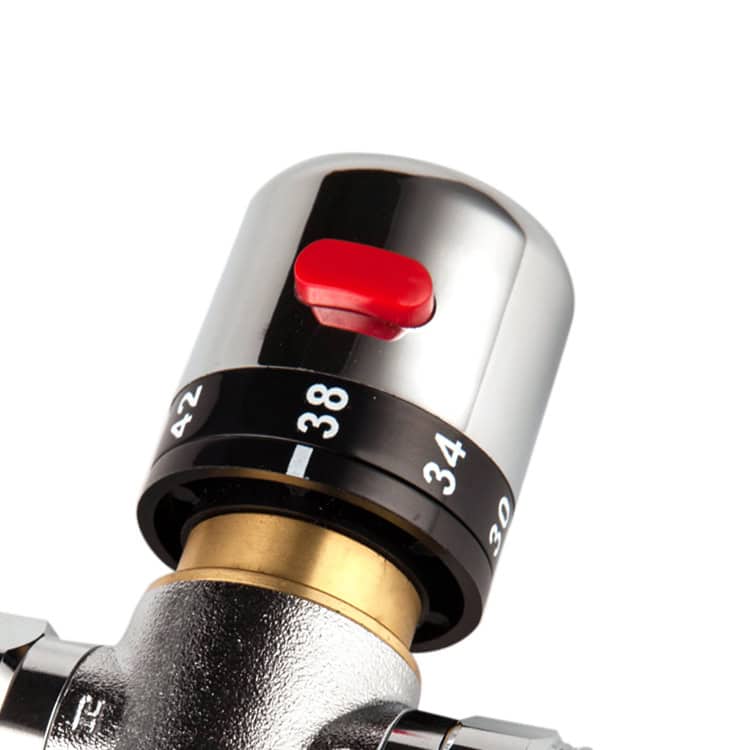
-Notice: press the red knob and adjust the temperature
1x Thermostatic Mixing Valve,3X G1/2 to 1/2NPT adapters
| Position | Min | 1 | 2 | 3 | 4 | 5 | 6 | 7 | Max |
| Temperature /℃ | – | 30 | 34 | 39 | 43 | 47 | 51 | 55 | – |
A water temperature control valve is a device that can control hot and cold water, usually needed in many households for washing dishes and taking showers. It’s also one of the most popular valves because it can save energy by mixing hot and cold water at an optimal temperature. The thermostatic Mixing Valve has been designed with modern technology so that you can adjust the flow rate of water coming through your faucet. The valve will then turn on or off depending on how much hot or cold water is required, meaning that you’ll get just as much warm or cool water as you need, but not excess supply!

A thermostatic Mixing Valve is a device that can be used to control hot and cold water, which is usually needed in many households for washing dishes and taking showers. It’s also one of the most popular valves because it can save energy by mixing hot and cold water at an optimal temperature. The thermostatic Mixing Valve has been designed with modern technology so that you can adjust the flow rate of water coming through your faucet. The valve will then turn on or off depending on how much hot or cold water is required, meaning that you’ll get just as much warm or cool water as you need but not excess supply! One of the best features of a Thermostatic Mixing Valve is that it is straightforward to install. The installation usually takes less than an hour and can be completed by anyone with some basic plumbing skills. You will need to shut off the water supply, remove the old valve, and replace it with the new one. After that, you’ll need to reattach the water supply and turn on the faucet!
FAQs
1. Does the thermostatic mixing valve come with a temperature lock function?

This thermostatic mixing valve has a temperature lock, and there is a red button right on its control knob. Just push down this red button with your finger and turn the knob to change the temperature; the lock will click back on when you let go after picking the temperature you want. The valve is set to 38°C at the factory, which prevents the knob from being turned by mistake and keeps you from getting burned by hot water.
2. What internal thermostatic element material is available for this thermostatic mixing valve?
Our thermostatic mixing valve uses a wax-type temperature sensor sealed inside a brass shell. It can run continuously in water up to 95℃ and keeps the temperature steady within ±2℃. This sensor type is widely used in most residential and commercial thermostatic mixing valves on the market. We also offer another option built with shape-memory alloy, with a nickel-titanium sensing element held by a stainless-steel support frame. It responds faster when water pressure suddenly changes than the wax cartridge, so it’s great for systems with big pressure swings, such as solar hot water systems. This alloy sensor will wear out sooner if it runs for long at temperatures over 70℃; it does not last as long as the wax style and costs more.
3. What international standards does the thermostatic mixing valve meet?
Plumberstar thermostatic mixing valve meets EN1111 (PN10) and EN1287. These are standards for low-pressure thermostatic mixing valves. Covering all required tests for anti-scald protection, steady temperature control, and safety shutoff when the cold or hot water supply is cut off. We built its structure to match the anti-scald rules in ASSE 1070, and it has an internal shutoff feature that activates if the cold water supply fails. We make this product under the ISO 9001 quality system, and every production batch undergoes hydrostatic pressure and thermal shock sample checks before shipment. We can supply the TMV2 version if your project sells into the UK market. You can tell us which standards your target market needs when you place your order, and we will send over the matching test reports and certificates.
4. What is the max working pressure of this thermostatic mixing valve?
This thermostatic mixing valve has a 10 bar maximum static pressure rating. Its body can hold this static pressure briefly without leaking or deforming. For best performance, keep operating pressure between 1.0 and 5.0 bar, as 5 bar is the maximum continuous dynamic pressure to keep temperature control stable. Pressures higher than that can upset the internal wax thermostatic cartridge and check valves. The outlet water temperature will drift past the ±2℃ accuracy range, and the anti-scald safety shutoff might fail to trigger properly.
5. Is this thermostatic mixing valve compatible with tankless water heaters?
This thermostatic mixing valve is not suitable for instant electric water heaters. These heaters have no water tank, and they turn on heating right away once they sense running water. The mixing valve feeds cold water in to bring down the final outlet temperature, and this cuts the flow passing through the instant heater. The heater will keep turning on and off over and over, and this throws off the temperature sensor. The outlet water swings between hot and cold.
