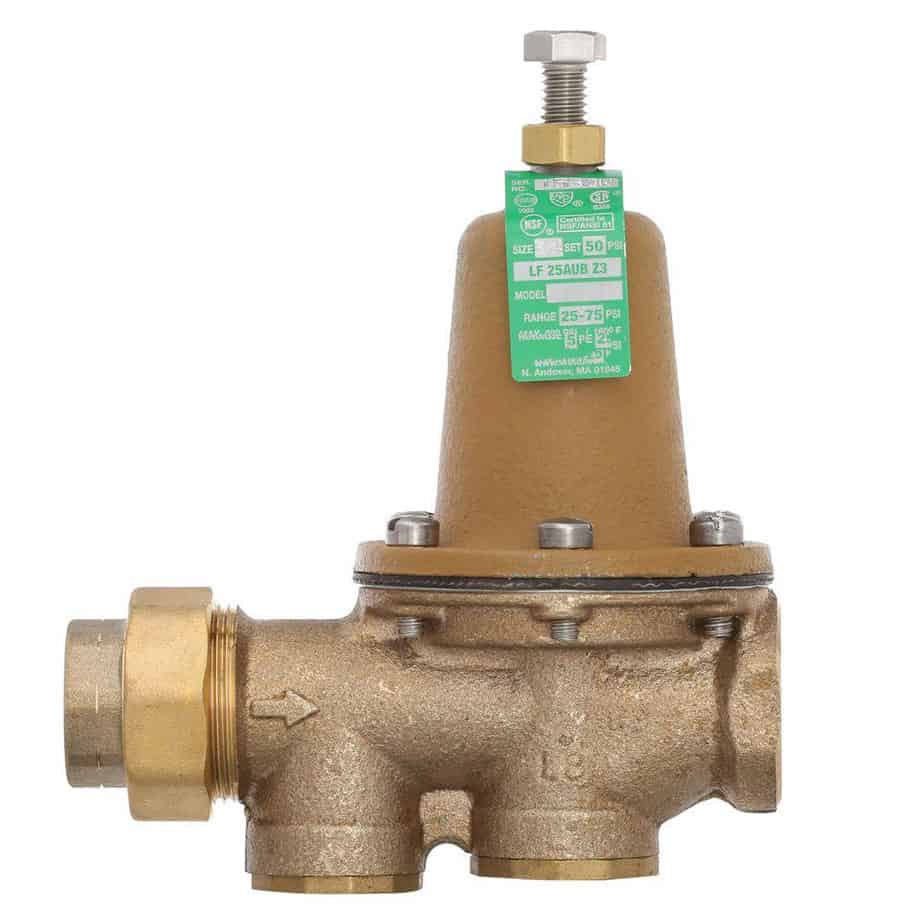
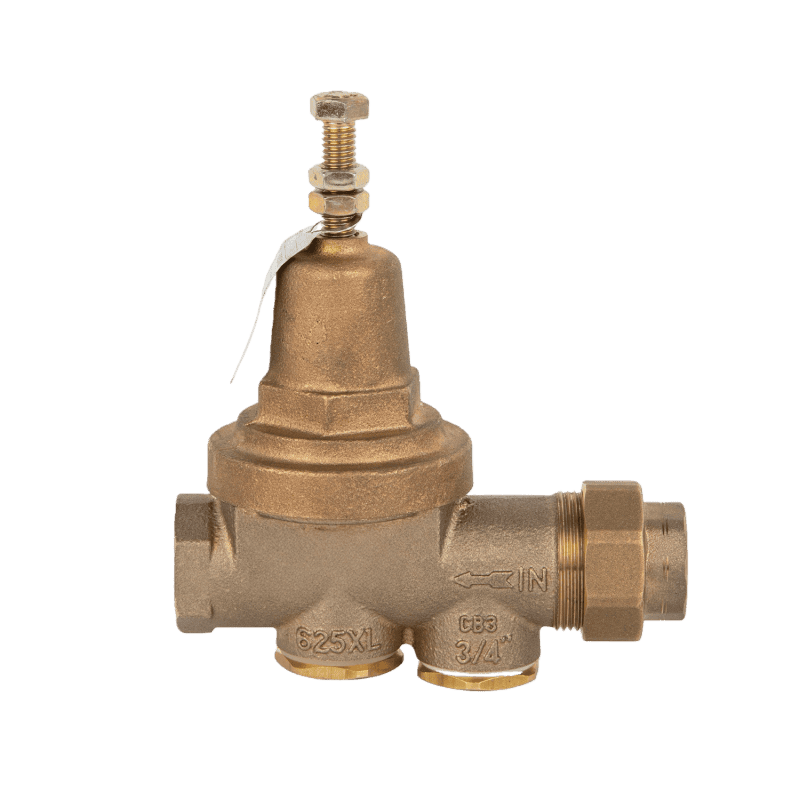
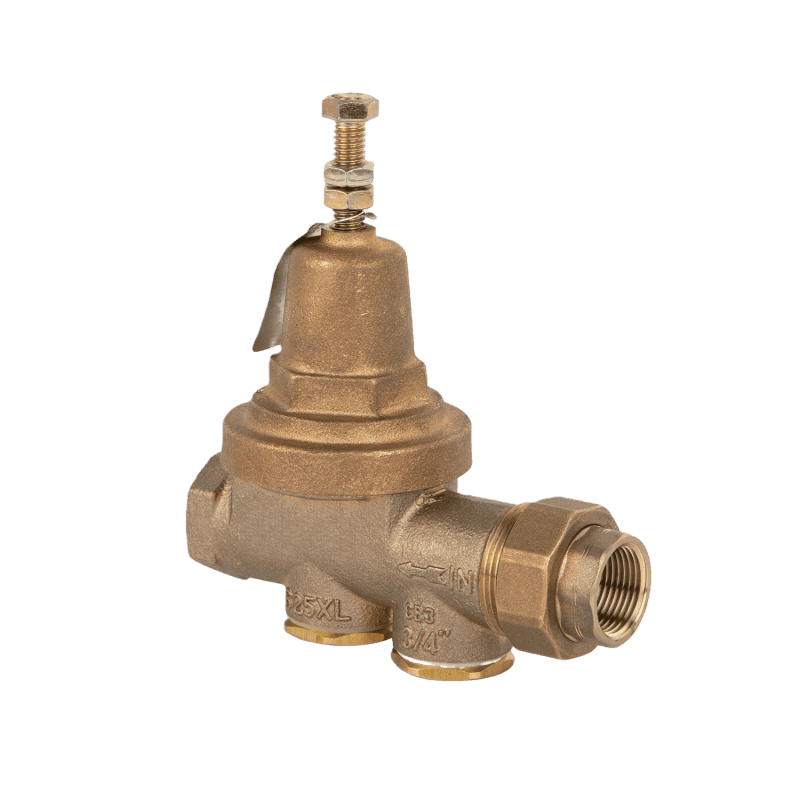
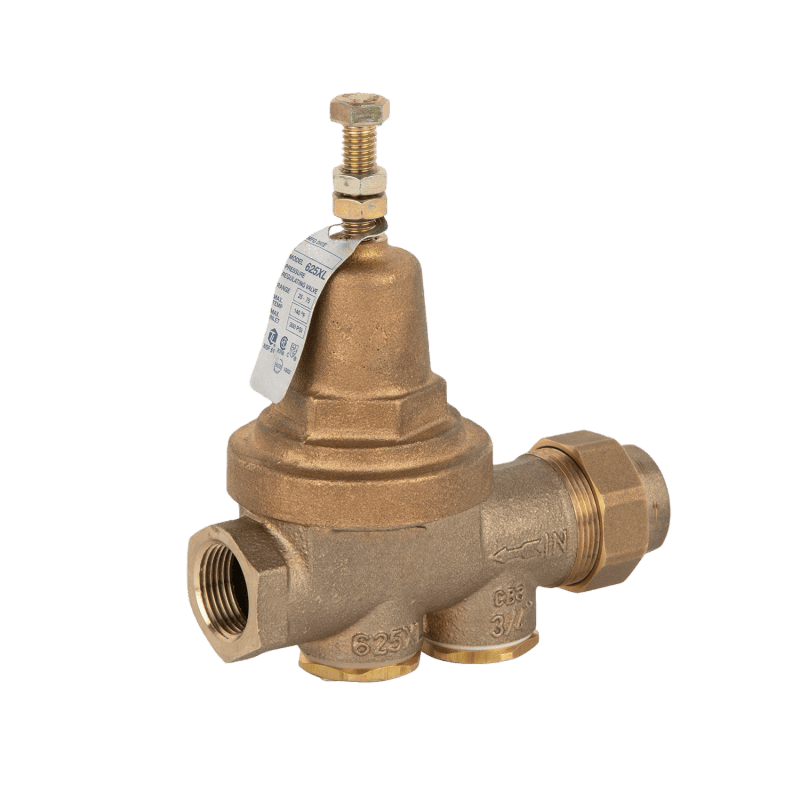
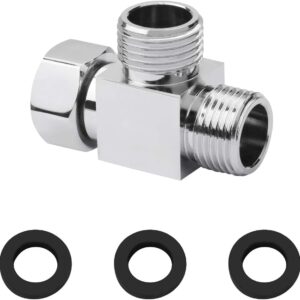
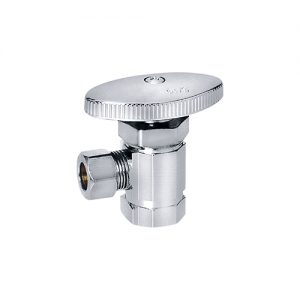
Parameters of Female Threaded Water Pressure Reducing Valve
An internal thread water pressure relief valve is used to control the water pressure in the pipeline. It can be connected directly to pipes, water meters, or devices with matching threads, requiring no additional parts. Pressure relief spool in the valve body reduces high water pressure to safe levels. The user can turn the adjustment knob to set the desired pressure.
High-flow water regulators are often used in large pipes to control the flow of water and help stabilize water pressure. There is a flow control spool in the valve body, which can be automatically or manually controlled according to demand. It connects easily to different pipes using flanges or threads. This regulator is often used where a lot of water is needed and helps the system run smoothly and safely.
Model No.: JX-0950
Size: 3/4″
Material: Brass, Lead-free brass, CW510L
Finising: Sand blasted
Thread connection: NPT
Working pressure: 50 PSI
It will regulate the water pressure coming into the RV
Provides protection to water lines and pumps
Preset pressure outlet pressure
Standard: IAPMO, NSF
Includes a rubber washer with a stainless steel strainer
Female Swivel garden hose thread inlet with extra-large grips
With a filter-style hose washer
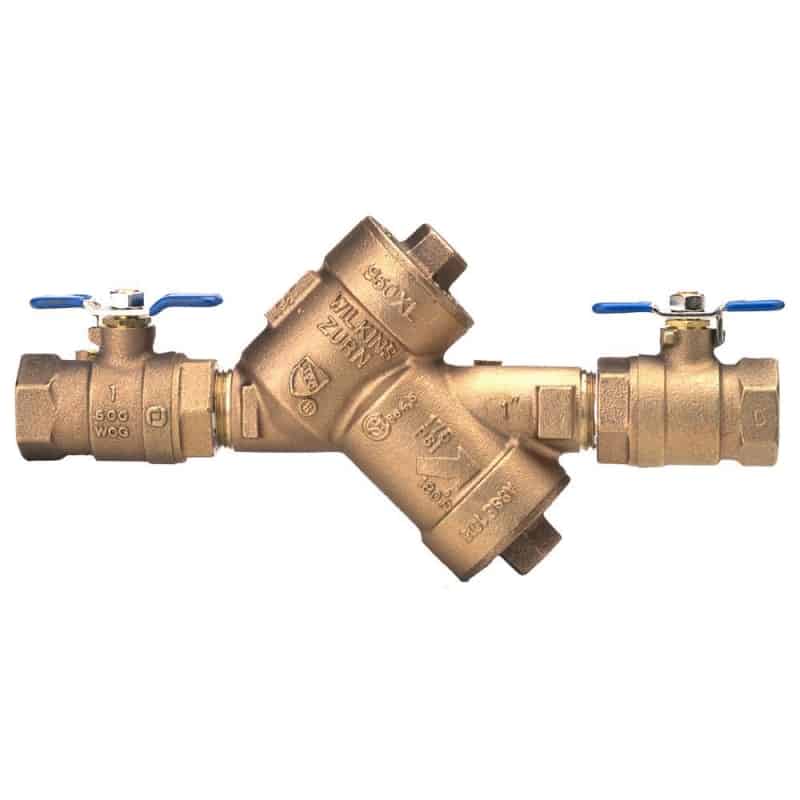
Double Check Valve Backflow Preventer
Double Check Valve Backflow Preventer is a safety protection valve installed in the pipeline system. It usually consists of two independent check valves, a pressure relief device in the middle chamber, and a test port. Its job is to stop dirty or unsafe water from flowing back through the pipe. This helps keep clean water from getting polluted and protects the system from mixing with contaminated water.
It includes corrosion-resistant stainless steel springs, fasteners, and ball valve handles
Finising: Sand blasted
Thread connection: NPT
Inlet connection type: Full port
Max. Working Pressure: 175 PSI
Protecting against back-siphonage and backpressure without compromising water flow efficiency
Features seat rings and silicone seal rings
Max. Operating Temperature: 180°F
End Connections: Threaded ANSI B1.20.1
Elastomers: FDA-approved silicone and Buna Nitrile for superior sealing.
Lead-Free NSF61 Compliant
RV Water Pressure Regulator with Gauge
RV water pressure regulator with pressure gauge When the external water pressure is too high or unstable, the regulator will reduce it to a safe range. This prevents damage to the tank, pipes and tank components of the RV. The pressure gauge can directly observe the current water pressure. The regulator uses standard RV threads, allowing it to connect to most RV water pipes and systems.
Model No.: JX-0908
Connector size: DN20
Material: Lead-free Brass, CW510L
Maximum range: 16 kg/cm²
Water pressure: 0.05-0.8MPa 7.25-116psi
Inlet pressure: 1.6MPa / 232psi
Pressure reducer with pressure gauge adopts a piston structure
Maximum pressure range of 1.6MPa
Uses: Water, oil, gas
There is a pressure adjustment knob in the top cover
It can be installed in front of most tap water equipment
Pressure Balancing Shower Valve
The pressure balance shower valve has an intelligent valve element inside. It can feel the change of hot and cold water pressure, and adjust it at the same time to quickly stabilize the outlet temperature. The product is compatible with a variety of shower terminals, including overhead showers, handheld showers, and side showers, and can be mounted in walls or surface mounts.
Model No.: JX-0952
Size: 1/2″
Product Dimensions: 7 x 7 x 6 inches
Material: Brass, Lead-free brass, CW510L
Finising: Sand blasted
Thread connection: NPT
Working pressure: 16 bar
Connection type: Pex
Number of ports: Four ports
1/2 inch CC connection with 1/4 turn stop
Valve meets ASSE performance requirements
Mechanical cleaning filter
Mechanical cleaning filter intercepts solid particle impurities in water or other fluid media. When the impurities trapped on the surface of the filter reach a certain amount, and the pressure difference between the inlet and outlet rises to the set value, the driving mechanism will drive the scraper or start the backwashing impeller. It uses a scraper or backwash to clean the filter screen. The dirt is then washed away and flows out through the drain outlet, so the filter can keep working normally.
Model No.: JX-0912
Size: 1/2″, 3/4″, 1″
Material: CW617N, Lead free brass, CW510L
Finishing: Sand blasted and nickel plated
Connection: NPT, BSP(G)
Medium: Water
Max working pressure: 16bar
Working temperatures: 2-90℃
Filter accuracy: 100 microns
The medical-grade 316 stainless steel mesh filter
Filter flow rate: 70 L/min
Features: Backflush
O-ring seal: EPDM
Water Heater Safety Relief Valve
The water heater safety relief valve has a spring inside and a pressure release outlet to keep the water heater safe. When the internal water pressure of water heater rises due to heating and exceeds the safe pressure value, the valve will automatically open the pressure relief channel. It releases extra pressure and some hot water through the drain to protect the water heater. This helps prevent the tank from swelling, rupturing or causing safety problems.
Model No.: JX-0920
Size: 1/2 inch x 1/2 inch internal thread x male thread
Material: CW617N, Lead-free brass, CW510L
Finising: Sand blasted, Nickel plated
Thread connection: BSP, NPT
Working pressure: 1.5 bar, 10 bar, 3 bar, 6 bar, 8 bar
Outlet connection type: Male Thread
Standard: CE, ASME, ASTM, MSS SP 72
Maximum operating temperature: -10 ~ 120 °C
Application: Suitable for domestic water heaters and most commercial scenarios
Plastic Handle
This brass water heater pressure relief valve can only let water in, not out.
FAQs of Water Pressure Reducing Valve
1. How to adjust your Water Pressure Reducing Valve?
When using the water pressure-reducing valve, adjustment is controlled by the knob on the top or side of the valve. Close the water plant and downstream stop valve, open the stop valve in front of the valve so that water can flow in, and let the pressure in the pipe stabilize.
Clockwise turning increases outlet pressure, and counterclockwise turning decreases the pressure. During adjustment, continue to monitor the pressure gauge immediately behind the valve until the target pressure is reached. After adjusting, it is held for 1-2 minutes to check whether the pressure is stable. Confirming that there is no fluctuation, the downstream stop valve and water equipment are slowly opened to check whether the state of the water flow is normal. If there is still pressure deviation, redo all the above steps to perform fine-tuning. Pay attention to making gentle adjustments and avoid damaging the valve or pipeline due to sudden pressure changes.
From Watts Water
2. How to produce a water pressure reducing valve?
Design & Production Process of water pressure reducing valve
Design: To design a thermostatic valve, we first confirm the operating flow rate, pressure, and temperature required for the actual application conditions.
Material Selection: Plumberstar’s pressure-reducing valves mainly use brass and lead-free brass as core materials. Stainless steel material options are now under development.
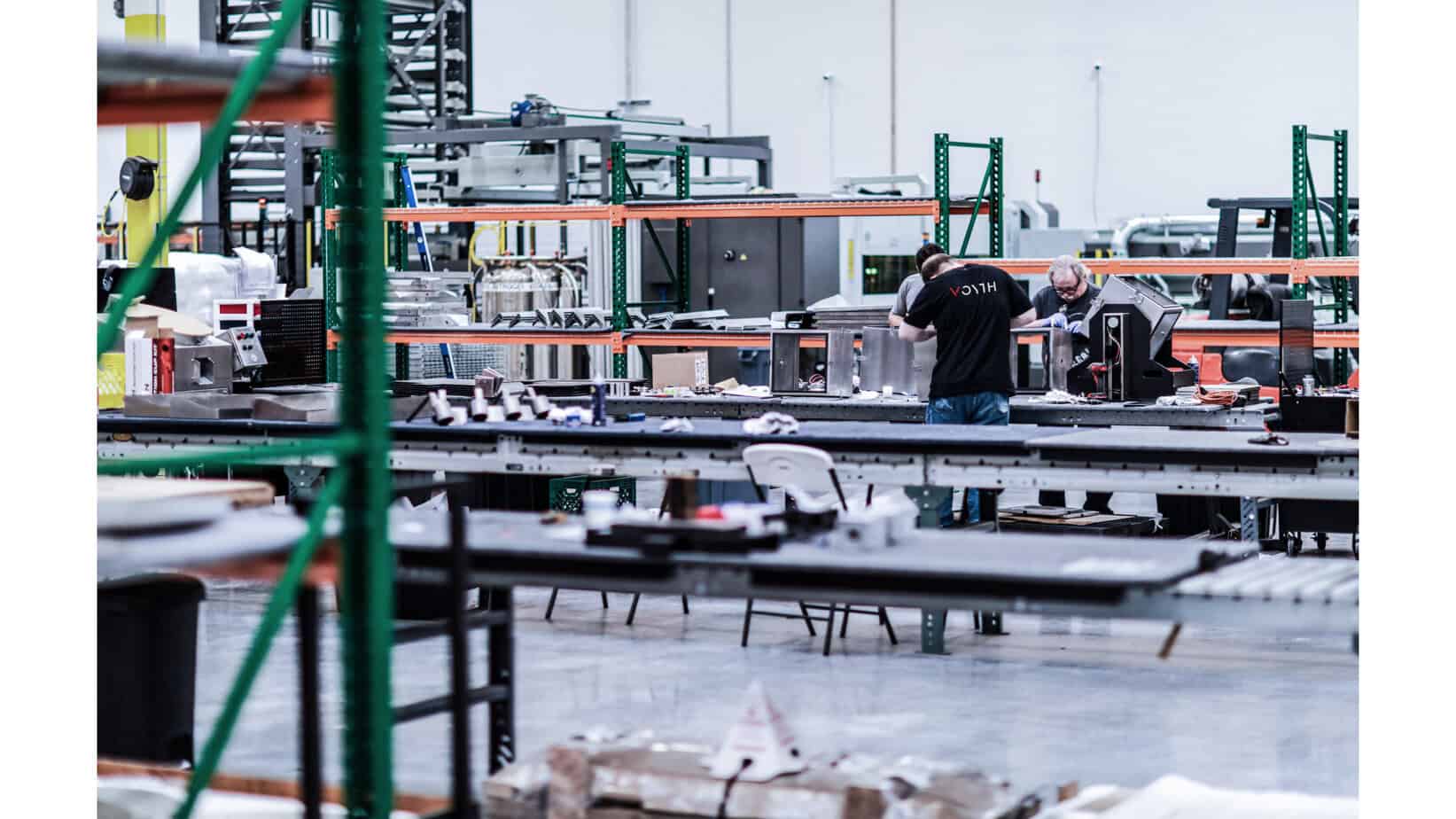
Machining: We have over 80 automatic robotic CNC machine tools and more than 150 traditional high-precision CNC machine tools. All this equipment ensures our mass production capacity for pressure-reducing valves, while guaranteeing product precision and on-time delivery.
Assembly: There are 5 assembly lines in our factory at present. Each line is set up in two rows, with about 15 workers per row. Every worker is responsible for assembling a single component. And each assembly line is equipped with two quality inspectors who conduct patrol inspections throughout the process.
Testing: Plumberstar has an independent laboratory that carries out a closed-loop testing process. The tests include leak testing, function testing, life cycle testing, pressure testing, flow testing, temperature testing, torque testing, material analysis, and salt spray testing. Various valve testing equipment is also installed in the production workshop for on-site staff to use.
Quality Inspection: For Plumberstar’s pressure-reducing valves and other similar valves, our quality control covers incoming material inspection, warehousing inspection, and processing inspection. Besides these regular checks, we do a 100% self-inspection for leaks and pressure on every product right after assembly. We also conduct final quality assurance inspections based on the AQL sampling ratio and provide formal inspection reports to all customers.
3. Does the water pressure reducing valve support custom packaging?
We offer full packaging customization services, covering everything from outer packaging to inner protection.
Brand Logo Customization
Color box customization: Just provide your logo, brand color (Pantone number), and design ideas. Our partnered professional packaging factory will handle full-color printing, creating retail or engineering color boxes with strong brand recognition.
Packaging Information & Instruction Printing
Clear key info display: Product model, interface size, working pressure range, and certification marks like WaterMark and CE can all be printed directly on the outer box. This lets distributors and end customers quickly check product specs at a glance.
Inner Protection & Structural Design
Custom inner lining: We make eco-friendly pulp molded or EPE foam linings based on the pressure-reducing valve’s shape. The lining fits the product perfectly, effectively preventing collision and damage—even after long sea shipping and multiple handlings.
Accessory partition design: If the product comes with accessories like pressure gauges, adjustment tools, and spare sealing rings, we can design separate partitions or special grooves in the lining for them. All accessories stay neat and organized, no more colliding during transport, and the unboxing experience is much better.
4. What is the production period for the water pressure reducing valve?
The production time for a water pressure reducing valve depends on the product type and the order quantity. For large-size valves, special pressure ratings, or customized materials, more precise machining and extra testing are needed, so the production time is usually about 20–45 days.
During busy seasons, such as spring when projects start and autumn when equipment is installed, there are more orders. If this happens together with raw material delays or factory production limits, the production time may be 30%–50% longer than in the off-season. To reduce delays, we prepare key parts in advance and adjust the production schedule. The exact delivery time will be confirmed based on the current factory capacity before the order is placed.
5. Does your pressure relief valve meet different international standards?
Plumberstar’s brass water pressure reducing valves meet EN 887, the general standard for drinking water pipeline valves, and EN 12627, the specific standard for pressure reducing valves. They also hold CE certification. All flow-contact components use materials that meet EU environmental requirements for drinking water contact. No harmful substances leach from them, making them suitable for residential and commercial building water supply systems across EU countries.
Our products comply with ASME B16.34, the general valve standard, and the low-lead requirements of NSF/ANSI 372. The weighted average lead content of flow-contact surfaces is ≤ 0.25%, and the products have passed NSF certification. This means they meet the mandatory low-lead rules for drinking water pipelines in North American markets like the US and Canada.
For your target market, Plumberstar can provide compliant product solutions and full certification documents matching the relevant standards, including test reports and certificates. We also support multi-language, standardized labeling for product nameplates, technical manuals, and packaging information, all in line with local regulations. This ensures there are no compliance issues when your products enter the market, get installed, or are used in different countries.
6.Can you provide a water pressure reducing valve solution case?
We have rich experience in foreign trade cooperation, typical cases include:
We supplied more than 500 brass water pressure relief valves in sizes DN100–DN200 for a city water project in Saudi Arabia. These valves are made to handle the local high heat and salty water conditions. The products meet the ISO 4126-1 standard and have Saudi SASO certification. They help reduce pressure changes in the water supply lines of tall buildings and make the water supply run more smoothly and steadily.
In addition, we supply small water pressure relief valves with pressure gauges to a UK HVAC engineer in large quantities. These valves are used on DN25–DN50 pipes and meet WRAS standards. Because the products are stable and easy to use, the customer reorders every year, with a repeat purchase rate of about 65%.
7. How to ensure water pressure-reducing valve production consistency?
Plumberstar makes sure our water pressure reducing valves keep the same quality in large production orders by using a full quality control process from start to finish.
First, all main raw materials, such as brass and stainless steel, are carefully checked before use. We review material certificates, test the material composition, and carry out pressure tests. Only materials that pass all checks are allowed into production.
Second, we use standardized production lines with CNC machines to keep key parts, like valve bodies and valve cores, accurate and consistent. During assembly, we set several quality check points. Important items such as sealing performance and pressure control are checked one by one or by sample testing.
Finally, before shipment, each batch is tested for pressure strength, sealing, and pressure stability. Test records are prepared before delivery. We also take samples from different batches for long-term durability testing, so we can keep improving the process and ensure stable quality for every order.
8. Why Plumberstar is a reliable partner for pressure-reducing valve sourcing?
Plumberstar is a reliable partner for pressure relief valve sourcing because we focus on quality control, stable mass production, and flexible customer service.
We use automated production lines and have a skilled R&D team. This helps us make pressure relief valves in many sizes and materials. We can handle large orders and also make products based on customer needs. From checking raw materials to inspection during production and testing finished products, we check quality at every step. This helps make sure each batch meets international standards and works properly.
We also offer factory-direct prices and control costs step by step. With a stable supply chain and reliable shipping partners, we help customers save money. We provide technical support, after-sales service, and flexible delivery to different countries, making overseas purchasing simple and reliable.