
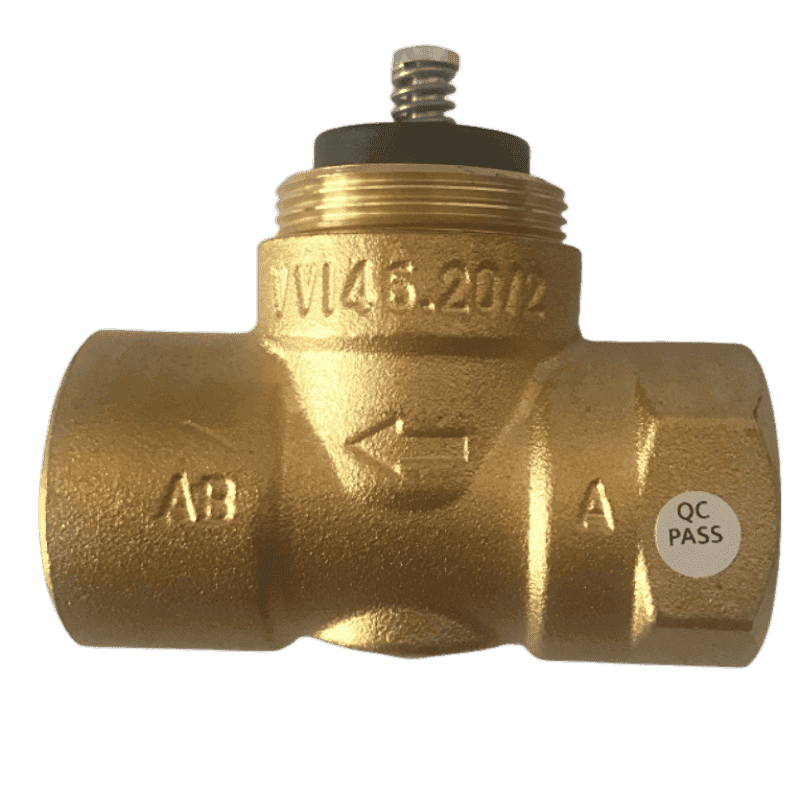
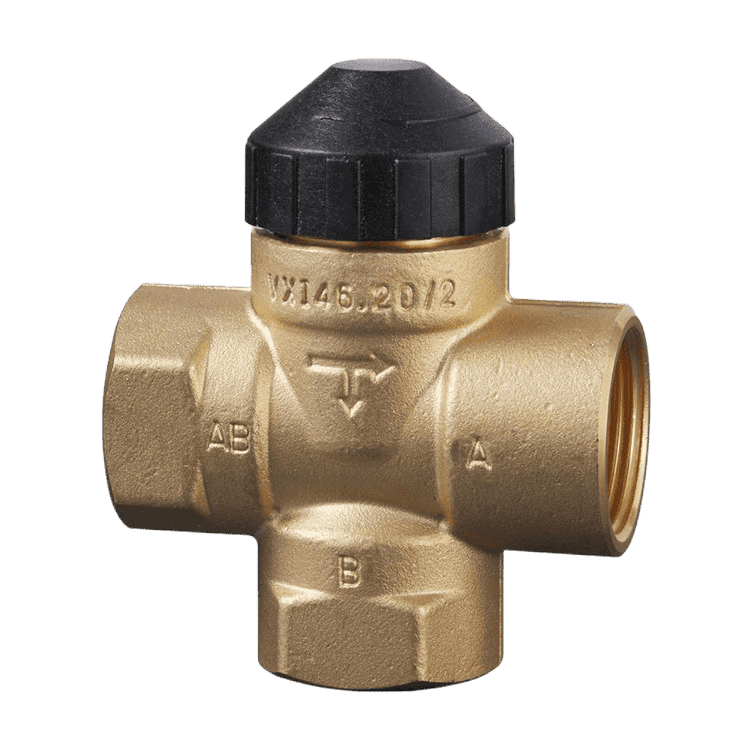
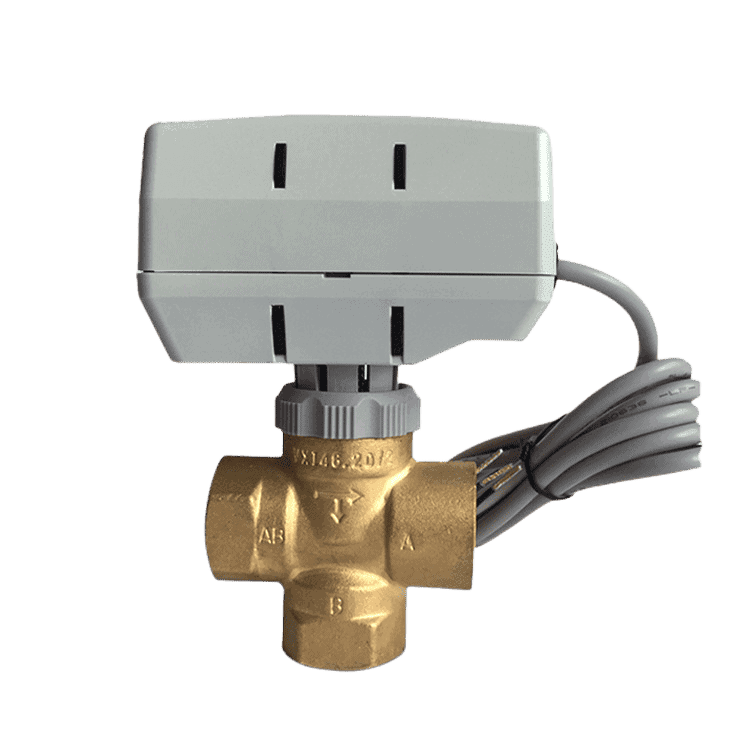
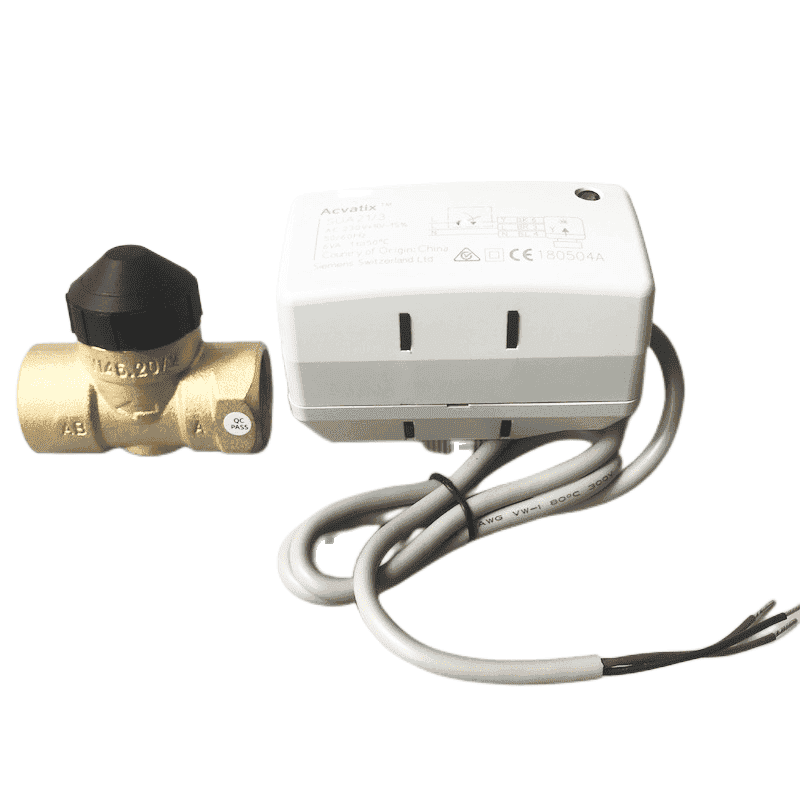
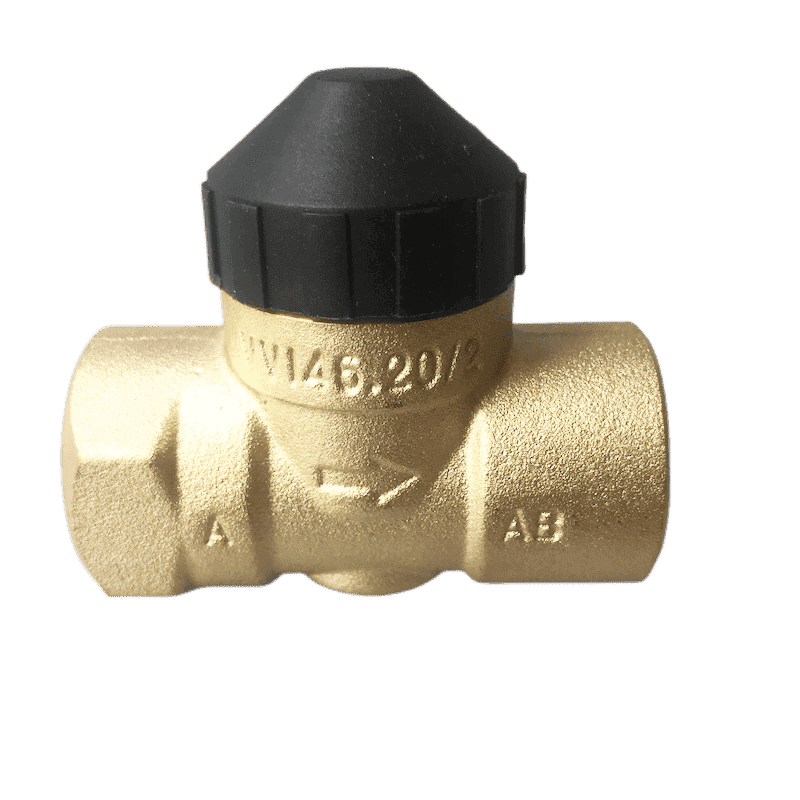
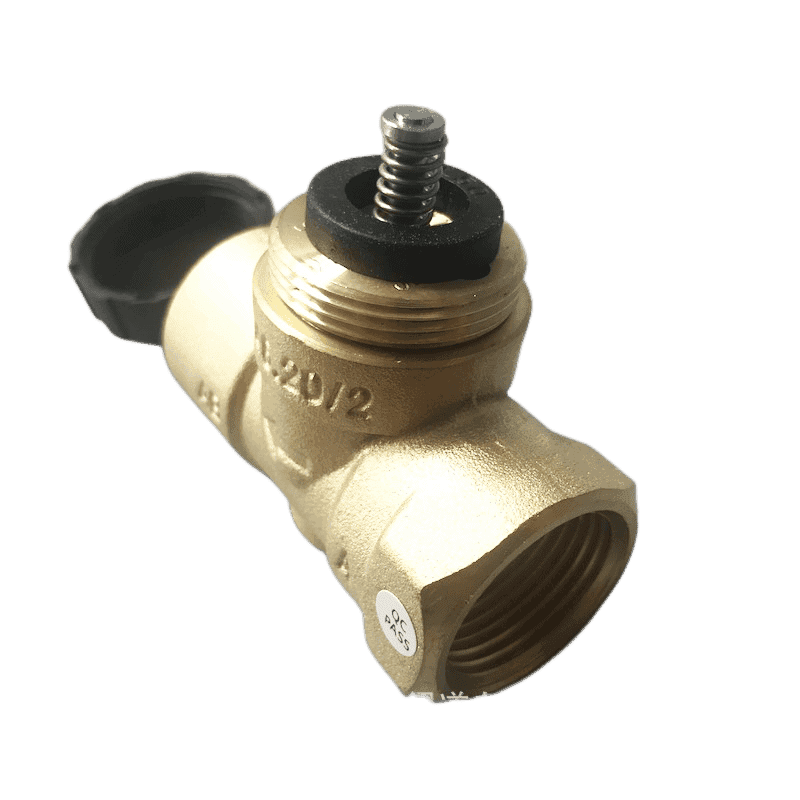

Electric Ball Valve Body
JX-0305
- 2 Way body; DN15-DN25 ( 1/2″ – 1 “)
- Driving model: Electric/Manual with position indicate
- PN20
- Valve characteristic; 90-degree rotary(ON-OFF)
- Power supply; AC230V;50-60HZ; 2W;DC24,DC12V,DC5V
- Torque: 12 Nm
- Running time: 40-50 seconds
- Valve platform; ISO52119(F03);
- Valve materials; Brass raw materials.
- Cable command: 3 wires with 2 points controlling
- BSP(G) Thread Standard
- Brass body
- Robust brass construction for high temperatures and long life
- And easy to install

Electric Ball Valve
Electric ball valves are designed to control the flow of liquids and gases in industrial applications. They have a long service life, high reliability, and a low-pressure drop, making them an excellent choice for many applications. This article will discuss the design and construction of electric ball valve bodies and their advantages over other types of valves, such as solenoid or manual valves.
Electric ball valves comprise several components, including a valve body, stem, seal seat, handle or actuator, and an electric motor. The valve body is the most important portion of the assembly; it houses all other components while also controlling fluid pressure. The internal shape allows it to direct fluid into the desired port when open and block off any flow when closed. Valve bodies come in various shapes and sizes, depending on specific requirements such as operating pressure range or environmental conditions.
History: When Developed
Electric ball valves have been around since the early 1900s and are still widely used today. The design of these valves has remained largely unchanged over the years, with some slight modifications made to improve their efficiency. Electric ball valve bodies were developed in response to the need for a better way of controlling the flow of liquids and gases through pipe systems.
These specialized electric valves have two components: a body and a rotator or actuator. The body is composed of a cylindrical chamber that houses an internal spherical element called an electric ball valve core. This core is connected to an externally-mounted handle or switch, which can open and close the valve by turning it counterclockwise or clockwise.

Design: Components & Construction
When it comes to designing an electric ball valve body, there are many components and construction considerations that must be taken into account. For example, the material chosen for the valve’s body needs to be tough and withstand various conditions. It should also be lightweight and easily machinable to reduce manufacturing costs. Additionally, any seals used in the valve must provide proper sealing performance while not degrading over time due to external influences such as temperature or water exposure.
The construction of an electric ball valve is another key consideration in its design; this includes factors such as how the parts will fit together and any internal mechanisms necessary for operation. Proper assembly techniques are essential for ensuring quality control while also providing a dependable solution that won’t fail prematurely due to poor workmanship.

Conclusion: Summary of Features
The electric ball valve body is a unique device that provides users with several features and advantages. It offers superior fluid flow control, precise temperature regulation, and the ability to easily switch between open and closed positions. Furthermore, its robust construction allows it to withstand pressure and temperature changes without affecting performance.
The electric ball valve body has been designed to provide an economical solution for controlling fluid flow in various applications. Its easy-to-use controls make it convenient, and its built-in safety features ensure reliable operation with minimal maintenance requirements. Additionally, its compatibility with a wide range of valves makes it ideal for customizing systems for specific needs.
The adjustable brass ball valve is one of the most versatile options when it comes to opening and closing valves. This type of valve can be used in many industries, making them perfect for any business that needs to control water flow or process liquids. If you are looking for a reliable product with years of proven success, this might be just what you need!
There are many different types and sizes of brass ball valves. However, one of the most popular is the adjustable brass ball valve because it can be used for various applications. This type is versatile and can be adjusted from DN15 up to DN25. This means that you can use it in any size application! It’s also easy to install and has a long lifespan, making it an excellent choice for your next project.
One of the best things about adjustable brass ball valves is their adjustability. This means you can easily change the amount of water flow by turning the handle in either direction. Whether you are looking for a slow stream or a powerful jet, this valve gives you the flexibility to get the job done. And because it is made entirely of brass, you can trust that it will last for years without corroding or rusting.
If your business needs a dependable and adjustable ball valve, look no further than our electric brass ball valve! Our team has over 20 years of experience creating high-quality products for our customers, so you can be sure that we know what we’re doing. Contact us today to learn more about the adjustable brass ball valve and how we can help you get started!
FAQs
1. Which actuators are this electronic control ball valve compatible with?
This electronic control ball valve works with standard three‑wire on‑off actuators and sends back-end-limit signals. It supports spring return. The valve closes safely when power drops out. It fits HVAC protection circuits that need this fail‑safe shutoff feature. Our original actuators come in DC24V, AC24V, and AC220V. If you want to buy actuators from another supplier, ask us for the stem size and torque requirements before ordering. You can check if the parts match ahead of time.
2. Does the electronic control ball valve support 0-10V analog regulation signals?
This electronic control ball valve has a proportional regulating model. It takes the standard 0–10 V DC analog signal. It changes the valve opening step by step based on voltage signals from your controller, and this keeps the water flow under dynamic control. It works well with floor-heating exchange stations, central heating, and hot-water temperature-control systems.
You can fit this proportional valve with an actuator that sends position feedback. In addition to reading the incoming 0–10V control signal, it sends a separate 0–10V signal to your controller. This signal tells the system the valve’s actual position for closed-loop control. This is a 90-degree rotary design. The control signal lines up with the valve’s turning position inside the set working range. Normally, 0V means fully closed, 10V means fully open, and voltages in between match the middle opening positions.
3. What control input signal is available for the electronic control ball valve?
This electronic control ball valve has two actuator choices, on/off and modulating, to fit different automation control needs.
On/Off Type (On/Off / 3-Point Control): It runs on AC 230 V or AC 24 V power. The simple on/off model switches the valve fully open or fully closed with trigger signals. The 3-point model uses two separate signals for OPEN and CLOSE. You can add passive dry contact limit feedback, too. This sends the valve’s fully open and fully closed status back to your controller. It works for basic start-stop control on HVAC, floor heating, and hot water systems.
Modulating Control Type: This model reads analog signals of DC 0–10V or DC 4–20mA. It shifts the valve opening smoothly following commands from the controller. You can get matching 0–10 V or 4–20 mA position feedback based on the actuator setup. The main controller measures the valve’s actual opening, which supports automatic tuning and closed-loop system control.
4. Can the 2-way and 3-way electronic control ball valves be shipped together?

Yes, Plumberstar can pack 2-way and 3-way electronic control ball valves together for shipment. They can go into the same full container or share one LCL shipment. Please list each model, size, and quantity separately on your order sheet. Every single valve comes in its own color box printed with the right model number. We also stick labels on the outer cartons to distinguish 2-way and 3-way valves. This keeps stock from getting mixed up when you receive and count the goods at your warehouse. We make one combined packing list and invoice for all items, so you can finish customs clearance in a single batch.
5. Is this electronic control ball valve suitable for a low-pressure steam system?
This electronic control ball valve cannot work for low-pressure steam systems. It only handles continuous temperatures up to 95°C. Even low-pressure saturated steam, such as 0.1 MPa gauge pressure, runs hotter than 120°C. This sits past the valve’s temperature limit. The inner seals, such as EPDM, and the valve core are designed for liquid water. High-temperature steam causes these seals to wear out quickly, warp, or even melt.
