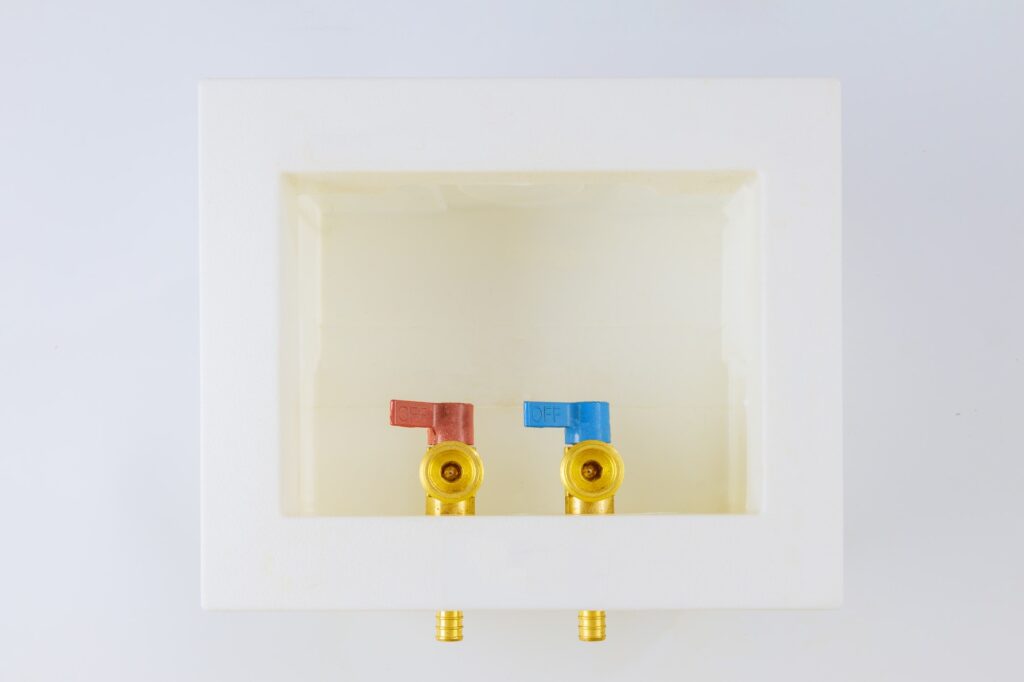
The washing machine valve is the part that links the two water hoses to the machine. It maintains the flow of both cold and hot water. This inlet valve is found on the back of your washing machine. It controls the entry of water into your washing machine. In other words, this valve acts as a kind of gatekeeper. It allows water to flow into a tube when it receives specific electrical signals from the washer. As this valve acts as a gate, it remains closed.
The solenoid activates the gate to open to pass the water into the machine. Washing machine valves are intended for fast disconnection of the water supply. They reduce damage during leakage and difficulties for more specific plumbing work. The more suitable handle intends to decrease the space. It permits washing machines to fit under kitchen counters. The valve can use different devices with water taken care of, like dishwashers.

How does the Washing Machine Inlet Valve Work?
The machine’s inlet valve has two line ports. These ports are cold water hoses and hot water. Yet, these two ports are set at the back of the washing machine. A valve regulates every port. Yet, the solenoid valve transmits electrical energy. This energy is used to open and close the flow of cold and hot water. It is based on the wash temperature setting and signals from the water level switch. Setting a water inlet valve is a matter of checking the elements till you find the issue. Sometimes, the fix will wash the filter mesh. Yet, an alternative to the entire valve is required.
Standard Size: The typical sizes are;
1/4″, ·3/8″, ·1/2, 3/4″ and 1″.
Technical Specification: Inlet Water Solenoid Valve for Washing Machine
| Mounting Space | 45 mm |
| Inlet | G3/4 |
| Water Pressure Range | 0.02 to 1 Mpa |
| Rated Voltage | AC 110V, AC 220V |
| Working voltage | AC 110V ±15%, AC 220V ±15% |
| Flow rate | >2.5L/min |
| Outlet | 2×Φ12mm |
How to install a Washing Machine Valve?
The subsequent stages will help you install a washing machine valve and stop flooding.
Step 1: Turn off the cold and hot water valves. Yet this valve leads to the washing machine.
Step 2: Detach the hoses from the back of the washing machine and slide it out of the way.
Step 3: Fasten the two brass 90-degree elbows to the washing machine valve.
Step 4: Apply the close-quarter tubing cutter. It will cut into existing cold and hot water supply pipes.
Step 5: Clean the new pipe and fit it with the cleaning brush.
Step 6: Apply the acid brush to flux the pipe ends and fittings.
Step 7: Solder the new pipe and fit it into the previous water supply tubes.
Step 8: Attach the compression fittings to the brass elbows. It connects the washing machine valve to the water supply pipes.
Step-9: Attach the pipe to the wall with a 3/4″ screw and pipe clips.
Step 10: Slide the washing machine back into the same stage. Yet, it connects its cold and hot water hoses to the valve.
Step 11: Seal the washing machine’s power. Then, open the cold and hot water close valves.
Ste-12: Snap the cover onto the valve. It opens the valve by sliding its lever to the left.

How to Substitute a Washing Machine Water Inlet Valve?
Before You Start
Detach the washing machine from the power. Yet, the water supplies are before looking at the water bay valve. Please switch off the washer and turn it off at the wall outlet. Switch off the hot and cold water valves on the house side of the water supply hoses. Set a pail on the floor to get water from the supply hoses.
Unscrew the washer closures of the hoses from the washer. If necessary, use pliers to loosen the links. Direct the loss of each hose into the bucket to empty the hose’s water.
To replace this, you’ll need the following things
Tools/Equipment
• Flashlight
• Pliers
• Bucket
• Multi-meter
• Screwdrivers

Guidelines
- Check the Filter Screens
Check for stops in the channel separating the water inlet valve. If they exist, they obstruct the water stream, which is why water inlet valves fail. This is the most specific issue to fix.
Use a flashlight to peer inside the water channel valve’s two hose-fitting ports. There should be a screen inside the port. Spotless the screens if they are grimy.
- Test the Inlet Valve Solenoids
Test the valve for failure when the clog screens are not the issue. Depending upon the machine model, you might need to end either the back or the front of the washer cabinet. It is done to get close enough to the wire links on the water inlet valve.
End the back, top, or front of the cabinet as suitable. The owner’s manual is the guide to follow for the apparatus. Yet, note that two wires link with every solenoid. Pull them off each in turn, and name them so you can reconnect them.
Placed a multimeter on the OHM X1 set. Test the solenoids for flow by contacting one tester probe to one of the two ends of each solenoid. The perusal ought to show some opposition. If the reading shows zero resistance, the solenoid fault and the valve should be replaced. Test the two solenoids; the whole valve should be replaced if either is defective.
- Replace the Water Inlet Valve (depending on the situation)
Unscrew the latches, tying down the valve to its lodging or the rear of the washer. Note the variety and position of the wires connected to the solenoid and name them. Detach the wires by pulling the attachments separately.
Separate the inlet valve from the inside tube that sends water to the tub. Relying upon the kind, it comes with a hose brace, which you end with pliers or a screwdriver.
Record the brand and model number of the washer. Yet, if you can track it down, the brand and part number of the water channel valve. With that data, get a substitution valve from a machine parts seller.

Problems with the Washing Machine Valve
An inlet valve manages a fairly complex junction. This conjunction between mechanical, electrical, and fluid parts of a machine washer. Thus, it is normal for inlet valves to experience issues with vast flow. The most common problem is that of a confined water stream. This is not the result of unsuitable work on such a scale.
However, it is due to a residue blocking the inlet port. Inside the inlet valve’s ports is a standard mesh filter screen. Yet, this rounded piece of metal mesh is like the inlet screen on a fixture. It is liable for preventing sand and minerals. It also applies to other trash from reaching your system. Such waste will be kept around the channel during backup around the filter. It will delay the discharge of water into the machine.
This might introduce two issues. To start with, it will slow the water section in your washer. At times, if the action turns out to be thick enough. However, it might keep water from entering the machine. When this occurs, the tension inside the stock hoses develops. Thus, the strain might turn out ideal when the hose starts to spill. In the most alarming situation possible, the hose will burst. It transfers a regular flow of water across the floor.

Solenoid Problems
An inlet valve may stop working because of issues with the solenoids. Like every single electrical part, the solenoids have a specific life span. Yet, they are prone to becoming overworked and burned out. When this occurs, the electrical signal from the machine can’t set off the doors within the bay valve to open.
A poor solenoid prevents water from entering the washtub. Confirmation of the solenoid is necessary, as it causes this issue. A skilled maintenance person will check if the solenoid is stuck shut. The professional will replace the entire water valve if that is the situation. We never try to disassemble a water valve, and it is not intended for that to finish in the field.
From steven lavimoniere
FAQs about Washing Machine Valve
What type of thread is the washing machine hose?
The cold and hot hoses have 3/4″ female thread-fittings on each end and come in different lengths, from 4 to 10 feet.
What is the Standard Size of a Washing Machine Valve?
All washing machine valves are provided in standard 15mm sizes.
What size thread is a washing machine valve?
Valve/tapes, connectors, and fittings for plumbing in your kitchen. The two typical hoses supply water from the back of the machine. The cold and hot hoses are 3/4″ in diameter. The hoses are marked to distinguish them from each other. You can attain a hose with a 90-degree elbow on one or straight ends.