Brass is an excellent metallic alloy. It contains copper and zinc, thus combining the effect of the two. It’s a favorite metal in plumbing pipe fittings. Different types of brass pipe fittings are available with a lot of specs.
Brass Pipe Fittings:
Brass pipe fittings are the joints that connect two parts of the fittings. Brass pipe fittings are of different shapes and sizes. Every plumbing system needs a joint or some fitting. They perform their enhanced functions and help to lead a smooth flow.
Brass is one of the favorite metals in the plumbing industry. It has a wide range of properties. Let’s check out the properties of brass in the pipe fittings.
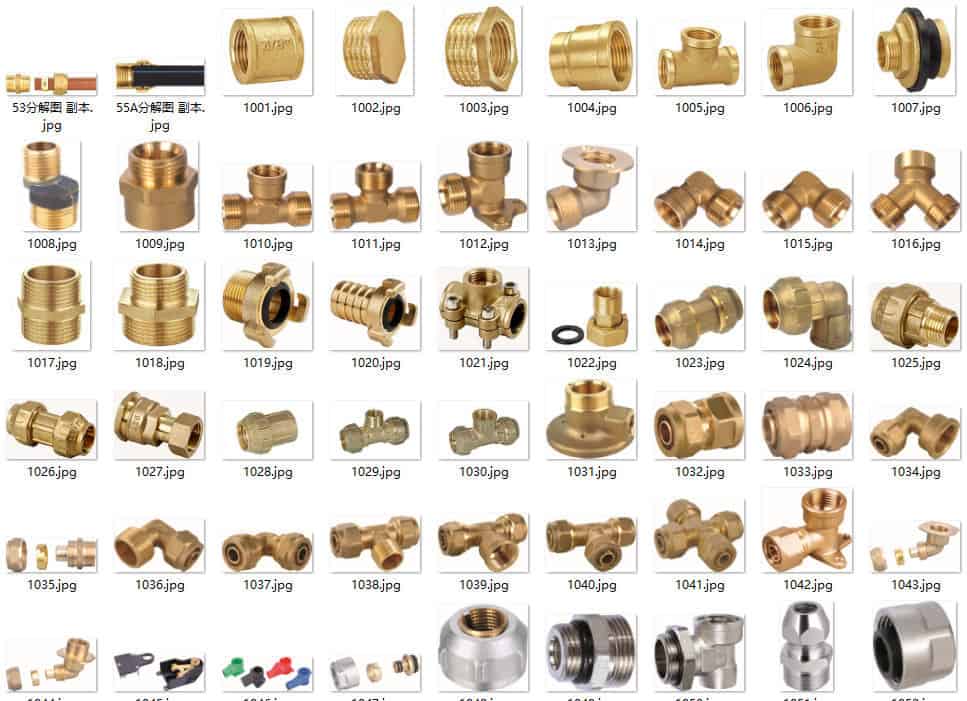
Properties of Brass:
- Resistance: Brass fittings are resistant to corrosion. They can survive well under harsh conditions. Brass can avoid rusting for a very long period. The fact is that brass is also resistant to high mechanical stress. It means it can perform under mechanical pressure.
- Durable Nature: Brass fittings can easily withstand heavy-duty work, making them equally effective for homes and industries. The surface of the product stays for years without cracking. Brass can easily withstand hot water in pipelines.
- Versatility: Brass pipe fittings are versatile. A single brass fitting can be found in a considerable variety. Industries produce brass products on a vast scale because of their widespread use. Different types of brass pipe fittings are available in many shapes.
- Temperature Range: We know that brass is an excellent product for hot water treatments. It shows brass fittings can bear high temperatures without getting damaged. It has good conductivity and can withstand more Temperature than other metals.
- Malleable: We often need to mold the shapes of fittings to adjust them. Brass has the quality of malleability, which means brass pipes can easily be molded into different shapes. They can also be adjusted in tight spots by heating and molding.
Specifications Of Brass in Fitting Products:
| Pressure. | 3000 psi |
| Density. | 3000-5500 kg/cub.m |
| Melting Temperature. | 900-1045°C |
| Electrical Resistance. | 0.07-0.08 Ohm / m |
| Specific Heat capacity (20°C). | 0.377 kJ/kg-1/K-1 |
Different Types Of Brass Pipe Fittings.
Brass pipe fittings come in different shapes as per their use. The most well-known and common types of brass pipe fittings are the following.
Brass Elbow Fittings
- Brass elbow fittings are curved and change the flow direction of liquid across a pipeline. Elbow fittings are available in different sizes and materials, but brass elbows are the most trusted. Elbows are widely used and are required in practically every plumbing system. Two elbows are used: 45° bend and 90° bend.
45° Bend brass elbow connects the pipe to change direction at 45 degrees. At the same time, we use the 90° elbow to connect pipes at 90 degrees.
Specifications.
Product: Forged 45° Brass Elbow.
Material: Brass.
Size: 1/4×1/8
Thread: 1/8 NPT.
Working Temperature: High Temperature.
Applications: Air Drill, Air Line, Gas, and fuel system.
- Brass Couplings: When we need to connect the two pipes of the same width, we install coupling fittings. The coupling serves as a bridge to connect two identical pipelines or to replace a leak. When a piece of pipe is broken, the coupling can be used by cutting off the broken or damaged part and installing the coupling.
Coupling comes in two types based on their structure. Slip coupling has a more straightforward setup. It contains two pipes tucked into each other. One of them can be slid to fix the damaged pipe. A compression coupling prevents leakage between two pipes. It has seals on both sides that stop leakage immediately.
Specifications.
Straight Brass Coupling.
Material: Brass or DZR
Size: 20×20
Pressure: 1.6 MPa
Working Temperature: -10°C to 80°C.
Applications: Water, gas, and oil pipelines.
Buy Premium Quality “Coupling Fitting with Chrome” here.
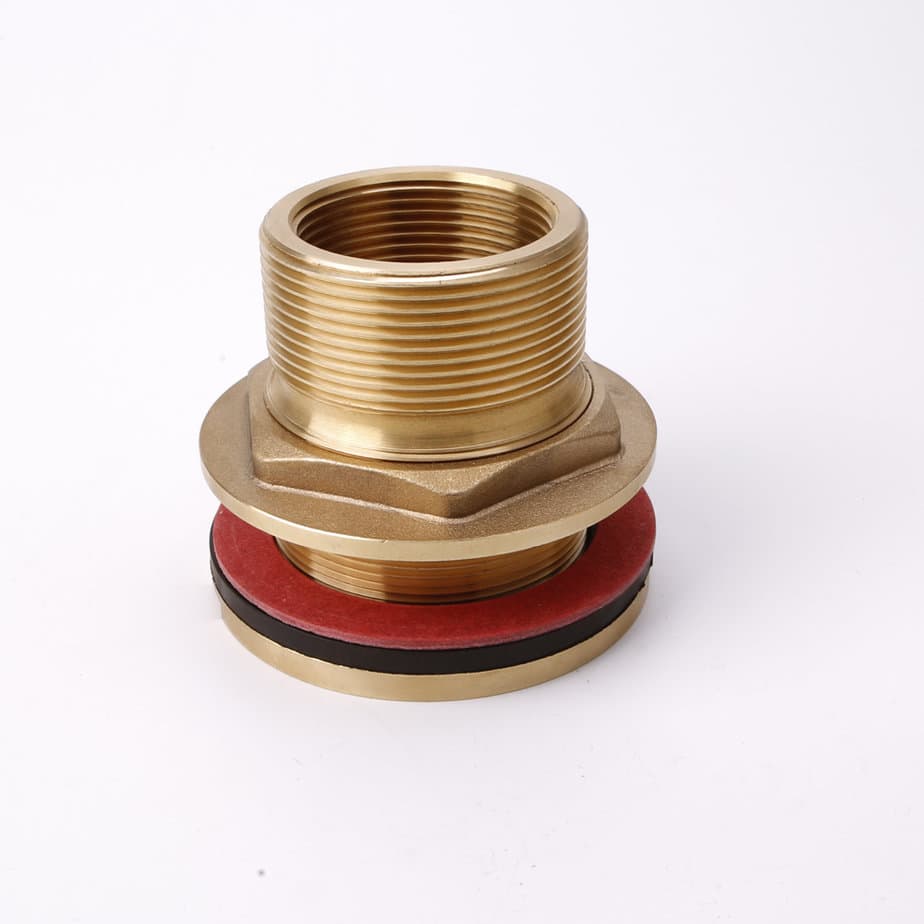
- Brass Adapters: Brass Adapters modify the threaded shape of a pipe’s plane ends. Materials with bendable qualities can be used to make threads. Brass adapters have two ends: one threaded and the other unthreaded.
There are two types of adapter threads: male threads present outside and female threads appearing inside. Bolt is an example of a male adapter but also an example of a female adapter.
Specifications.
Full-range Brass Coupler Thread Adapter.
Material: Brass, DZR fitting ( lead-free).
Size: 1/2 × 15 mm.
Pressure: 3 to 16 bars.
Thread: NPT.
Working Temperature: –20 to 120 degrees.
Applications: Wide uses in industries and water pipelines. Suitable for the irrigation system.
Buy Premium Quality “Brass F/M Adapter Fitting” here.
- Brass Reducers: A brass reducer is a type of fitting that reduces the diameter of a giant pipe. It’s got a decreasing structure to it. One side of the fitting is significant for connecting with a larger tube. The second opening, on the other hand, is smaller and divides larger areas into smaller ones.
Brass Reducers come in two types: eccentric and concentric. There is a slight distinction between them. Because of their cone-shaped construction, concentric reducers may have an air batch. On the other hand, the eccentric reducer has a parallel edge to the connecting pipe that prevents air from getting stuck.
Specifications.
Plain Brass Hex Reducer.
Material: Brass, DZR.
Size: 3/8-4.
Thread: ISO7(BS21), ISO228-1(BS2779).
Max Pressure: 1.6MPa.
Max Temperature: 200°C.
Applications: Hydraulic System. Natural Gas and Refrigeration.
- Brass Unions: A brass union and coupling in function. A nut holds the pipe in place in the center of the union. Union has a detachable structure. A coupler is not detachable when it is fixed. A union has male and female threads present in it.
Specifications.
Brass straight fitting type union.
Material: Lead-free regular brass.
Size: 1/4F to 3/4F.
Pressure: 1000Psi (Barstock), 125Psi (Casting).
Thread: Male, NPT.
Working Temperature: -40°F to 250°F.
Applications: Oil, gas, and plumbing purposes. Also usable for steam.
- Brass Plugs: Brass plugs seal the end of pipelines. The seal may be temporary or permanent. Usually, we use a plug when we need to repair a specific portion of the pipe. During inspection or repair, the plug stops the flow from the supply line. A plug has male threads. We connect female threads of pupe to male threads of plug.

Specifications.
Brass thread Fitting Plug.
Material: Lead-free Brass.
Size: 1/8 M to 3/8 M.
Pressure: 1000Psi (Barstock), 125Psi (Casting).
Thread: Male NPT.
Working Temperature: -40°F to 250°F.
Applications: Oil, water, compressed air, and industrial use.
Buy Premium Quality “Pressure Tank Tee” here.
- Brass Outlet Fittings: Brass Outlets are branch connection fittings. They make connections between two pieces at 45° or 90°. One of these pipes is a generous inlet, while the other is an outlet. Olets solve the problem of the size difference and join them at an angle.
Specifications.
Outlet Brass Air hose pipe fitting.
Material: Brass /aluminum.
Size: 1/1.5-6.
Working Pressure: 1.6MPa.
Working Temperature: -20°C to 40°C.
Applications: Usually applicable for water pipelines. Equally suitable for industrial handling of chemicals.
- Brass Sleeves: Brass sleeves are popularly used to join two pipelines or tubes. A brass sleeve has three parts: a compression ring, a nut, and a fitting body. These compression fittings are ideal for joining two fittings of different materials.

Specifications.
Brass Metal Bushing Sleeve.
Material: Brass, stainless steel, aluminum, copper, iron.
Size: Customized range.
Pressure: 240N/mm2.
Working Temperature: 40 to 240°C.
Applications: Metal casting, metal drawing, metal coating fittings, etc.

Where should we use Brass Pipe Fittings?
Brass pipe fittings apply to almost every kind of plumbing. It is because of the unique properties of zinc and copper that make up brass. Brass has been standard for centuries; even today, it is the favorite pick of experts. Here are some of the applications where we can use brass pipe fittings.
- Plumbers and construction choose brass. It is due to its versatile nature and corrosion-resistant properties.
- Brass pipe fittings are famous for their durability. These properties attract buyers to use brass for heavy jobs.
- Industries’ brass pipe fittings carry chemicals, hot water, steam, and many sensitive substances.
- For example, the automotive industries use brass fittings in hose ends, fuel line valves, and air brakes.
- Refrigerators, compressors, and adaptors also use brass pipe fittings.

Takeaway:
Brass Pipe Fittings are very popular and commonly used. Brass fittings are best for both industrial and residential services. The properties of brass are more appealing than those of any other metal.
Brass fittings can bear high temperatures and high pressure. They are hard to wear out. Brass is not brittle but also offers good strength. There are so many types to choose from, the right kind for use.
Brass pipe fittings may seem a little bit expensive. But they last for an impressive period. The qualities it offers pay off the cost you pay for buying.
By this time, you should have understood the specs of brass fittings. You can then choose the product that suits your requirements and decide wisely.
Reading Recommendation: How to work a Stainless Steel Flexible Pipe Hose?