
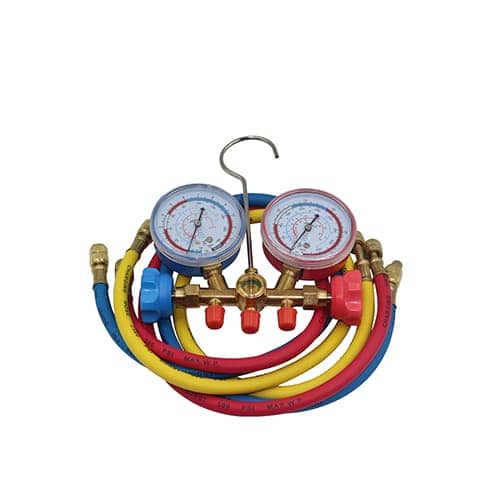
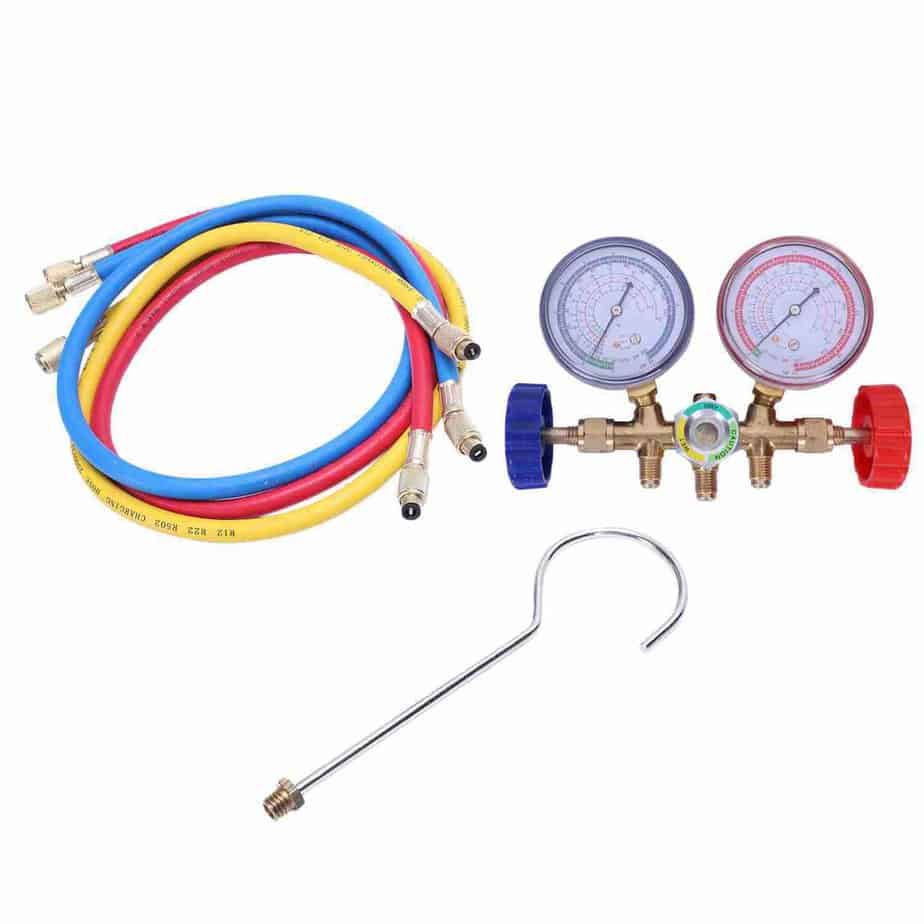
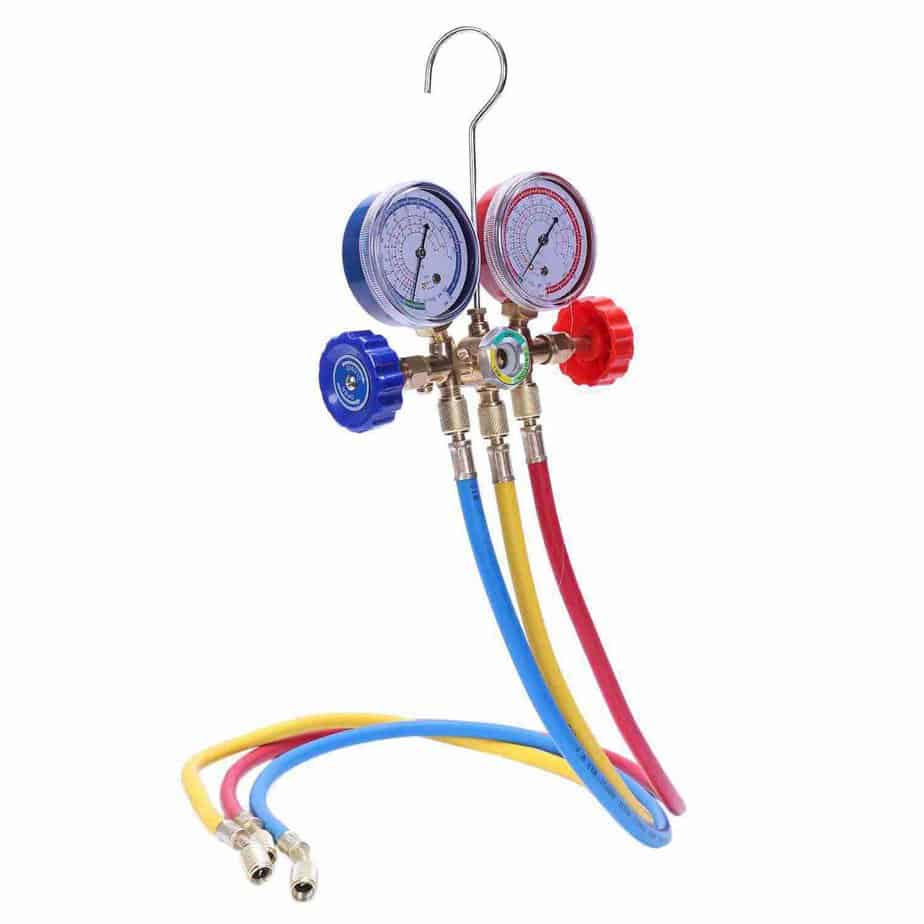

Refrigeration Manifold Gauge
JX-0919
- A/C Diagnostic Manifold Gauge Kit
- HVAC R12 R22 R502
- Manifold Gauges A/C Tester Refrigerant Gas Service Diagnostic Kit with Quick Couplers
- Complete Diagnostic and Service Gauge Set for use on Air Conditioning Systems (Automotive / Home)
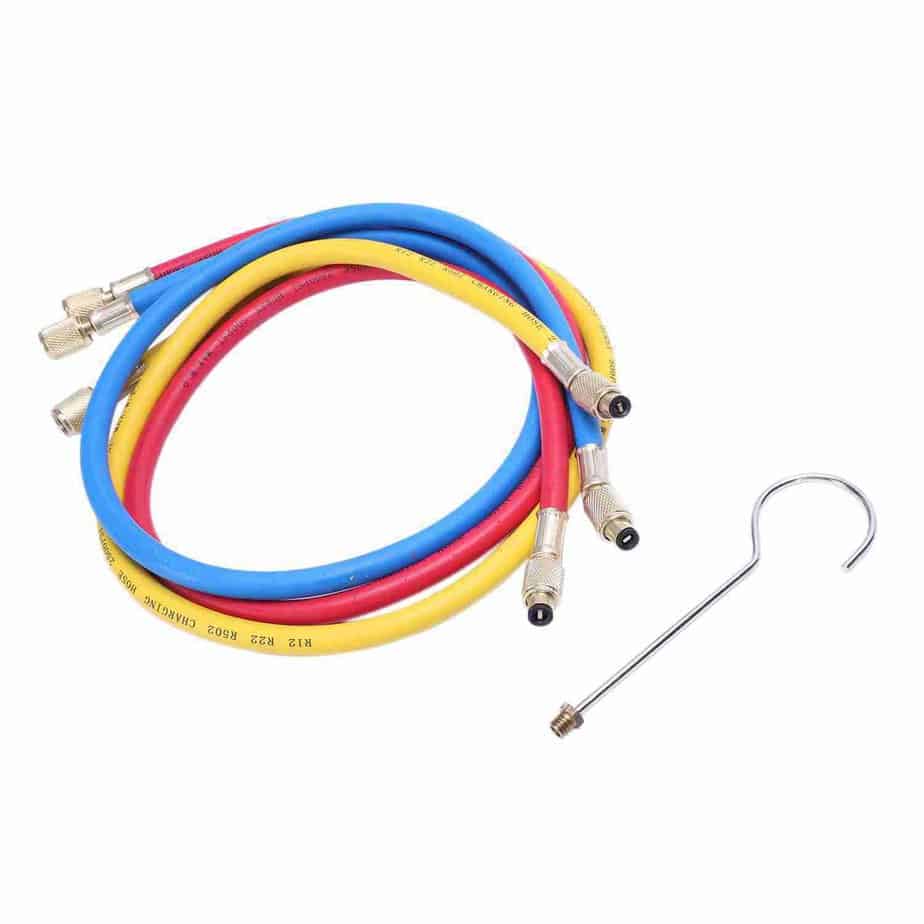
- Refrigerant Charging Hose 2500PSI Burst 500PSI Max W.P. each hose is approx. 5ft ( 60 inches) with 1/4″ SAE fitting
- 10 Amps High Rate Charging
- Ideal for R12, R22 & R502 refrigerants
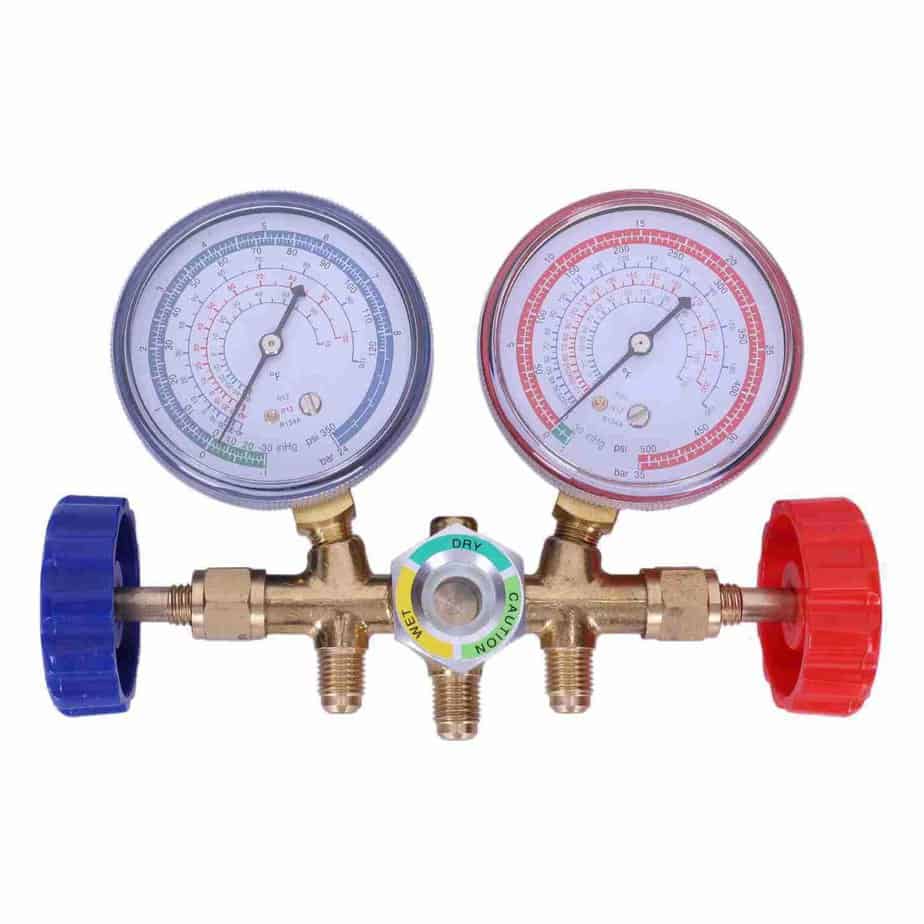
- High-quality brass valve body
- Gentle and comfortable design hand wheel structure
- Prevalent streamlined design pressure gauge
- Durable product quality
A refrigeration manifold gauge is used to measure the pressure in a refrigeration system. The gauge has two hoses that are attached to it. One hose goes into the high side of the system, and one goes into the low side. It then reads out what pressure is being measured through each hose by using numbers on a scale at its base. This gauge is important for determining how much refrigerant needs to be added to a system and whether or not there are any leaks. It can also help diagnose problems with the system.
Refrigeration Manifold Gauge: How it Works
A refrigeration manifold gauge has two hoses that attach to it. One hose goes into the high side of the system, and one goes into the low side. The gauge measures pressure through each hose using numbers on a scale at its base. This information helps you determine how much refrigerant needs to be added to a system and whether or not there are any leaks. Additionally, this gauge can help diagnose problems with a refrigeration system.
How to Use a Refrigeration Manifold Gauge
To use a refrigeration manifold gauge, you first need to attach the two hoses to the gauge. One hose goes into the high side of the system, and one goes into the low side. Once the hoses are attached, you can then read out what pressure is being measured by looking at the numbers on the scale at its base. This information can help you determine how much refrigerant needs to be added to a system and whether or not there are any leaks. Additionally, this gauge can help diagnose problems with your refrigeration system.
A refrigeration manifold gauge is used to measure the pressure in a refrigeration system. The gauge has two hoses that are attached to it. One hose goes into the high side of the system, and one goes into the low side. It then reads out what pressure is being measured through each hose by using numbers on a scale at its base. This gauge is important for determining how much refrigerant needs to be added to a system and whether or not there are any leaks.
FAQs
1. Which refrigerants are the refrigeration manifold gauges designed for?

This refrigeration manifold gauge works with R12, R22, and R502 refrigerants. The dials have clear pressure marks and temperature charts for these three refrigerants, so repair workers can read the system pressure easily when they fix machines, and use the temperature numbers to see if the system runs well. This gauge set fits most air conditioners and commercial cooling machines that use these refrigerants.
2. What material is the refrigeration manifold gauge lens made from?
You can pick either polycarbonate (PC) or tempered glass for this refrigeration gauge’s cover, based on your working environment, scratch resistance requirements, and budget. The transparent PC cover has roughly 89% light transmission. It holds up well against knocks, though it scratches more easily than glass.
Tempered glass is the upgrade choice if scratch resistance matters most to you. It does not hold refrigerant oil stains easily, but it breaks more easily under hard knocks. We check the seal between the lens and gauge case after assembly, following the inspection rules we agreed on with you, and this keeps moisture and dirt from getting inside the gauge.
3. How do you ensure the calibration of the refrigeration manifold gauge before shipment?
Plumberstar’s refrigeration manifold gauge gets calibrated on a test bench kept at a steady 20±2℃. First, we check the zero position for each gauge. We open both the high and low pressure sides to air and wait 3 minutes, and we adjust it if the needle moves more than ±0.5% FS to get it back to zero. Any gauge that does not pass this check gets fixed and will not go to the full calibration test. We use five fixed test points across the full scale: 0%, 25%, 50%, 75%, and 100%. We take readings as pressure goes up and as pressure comes back down. Our standard 1.6 class gauges need to stay within ±1.6% FS of the real pressure value, and we lock the gauge to adjust it if any test point falls outside this range.
Our system automatically saves all the data while we run tests, like the reference pressure, what the gauge shows, reading differences, and also the room temperature and humidity. When calibration is done, we keep the pressure at the full scale level for 5 minutes to watch if the needle moves. If the reading shifts more than 0.8% FS during that time, the gauge does not pass the stability test. We will replace its Bourdon tube and redo the whole calibration check. We save all the original calibration files for 36 months, so you can look up and check these records anytime you need them later.
4. Can the length of the refrigeration manifold gauge’s hoses be customized?
Our refrigeration manifold gauge comes with hoses in a standard 5-foot length. These hoses have an inner rubber layer that stands up to refrigerants, and they work well for service jobs on most car air conditioners and small refrigeration systems. You can pick other lengths; we stock 3-foot and 6-foot options, and we can also make special sizes like 200 cm. We can supply different fitting types too, to fit the common service practices in your area.
5. Are replacement hose gasket and valve core depressor kits available for the refrigeration manifold gauge?
We can supply replacement kits for this refrigeration manifold gauge. The kits hold hose gaskets and valve pin core parts, and all these pieces fit perfectly with our original manifold gauge sets. Just tell us what you need when you place your order, and we can change how many of each part go into the kit for you.
