
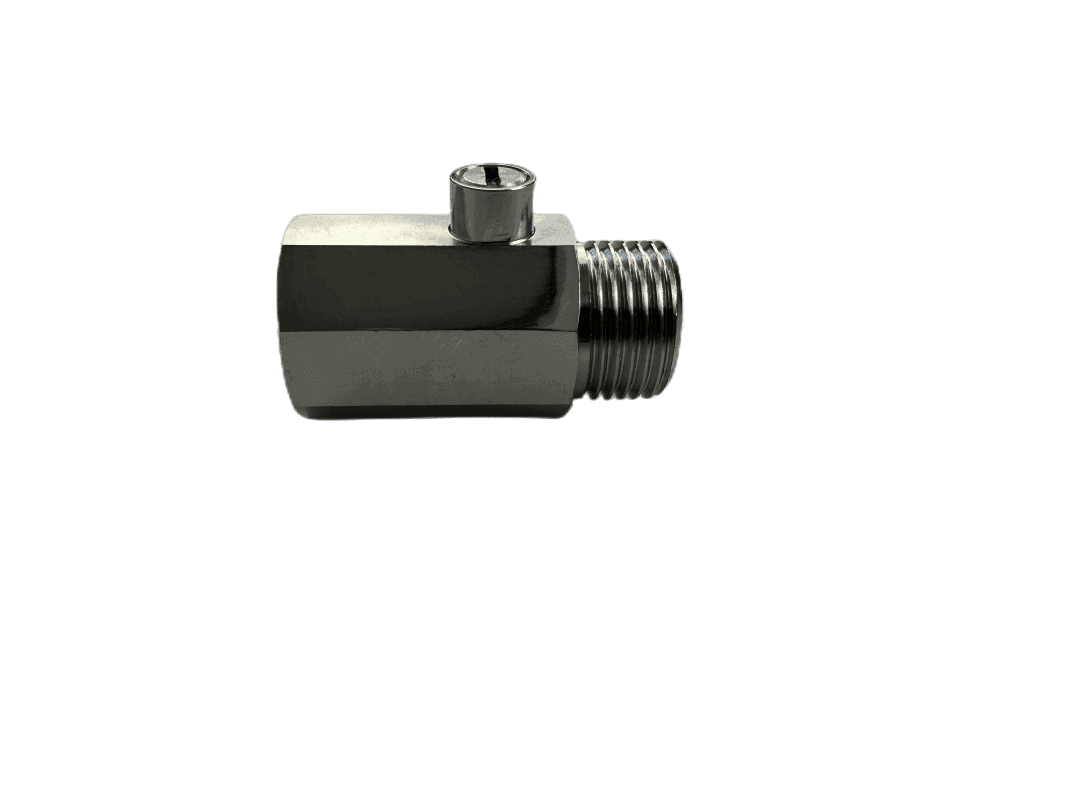
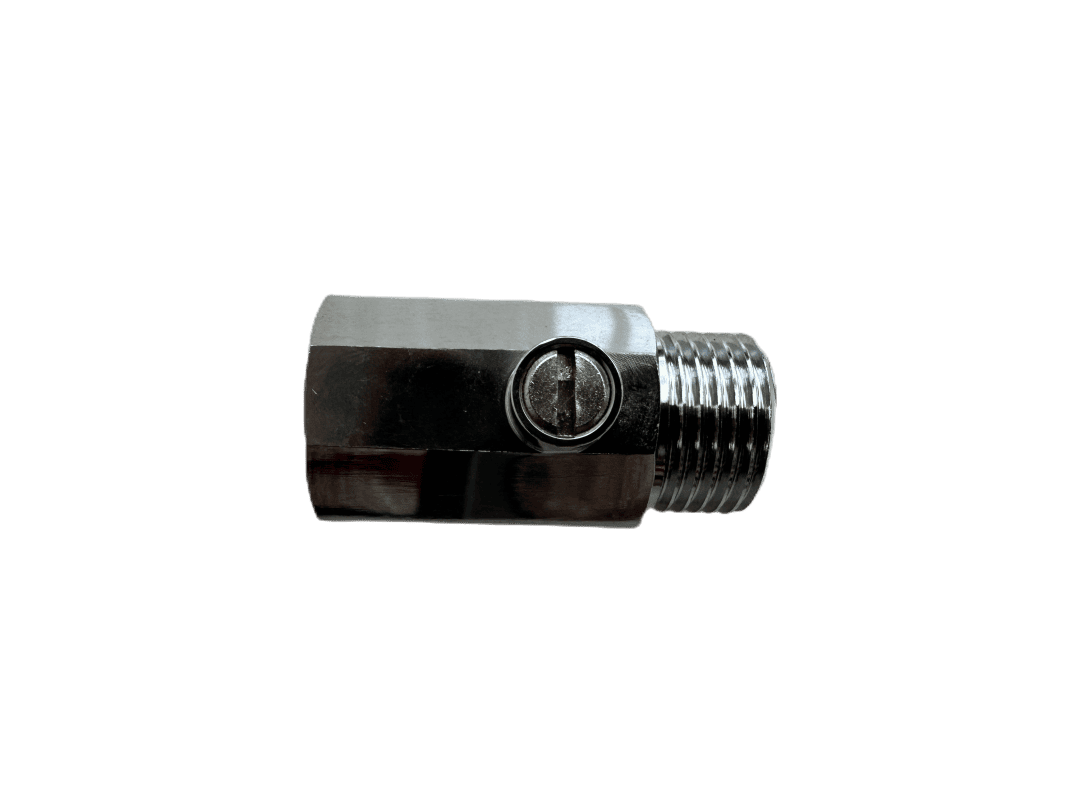
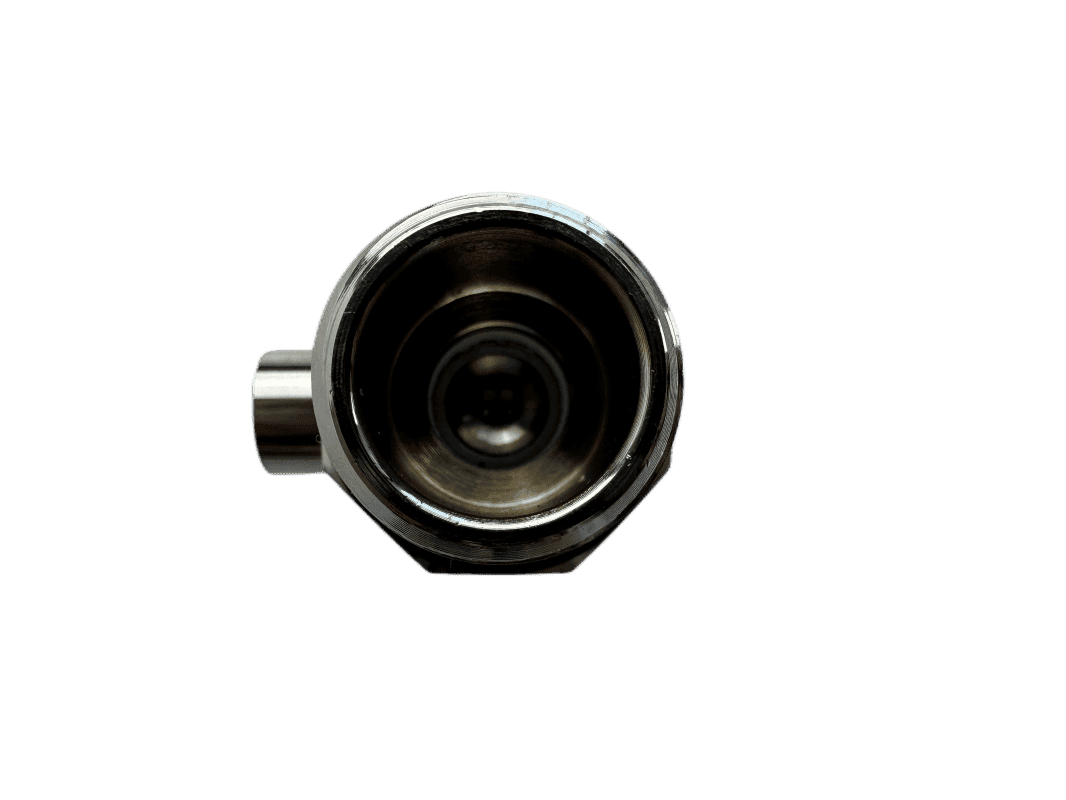
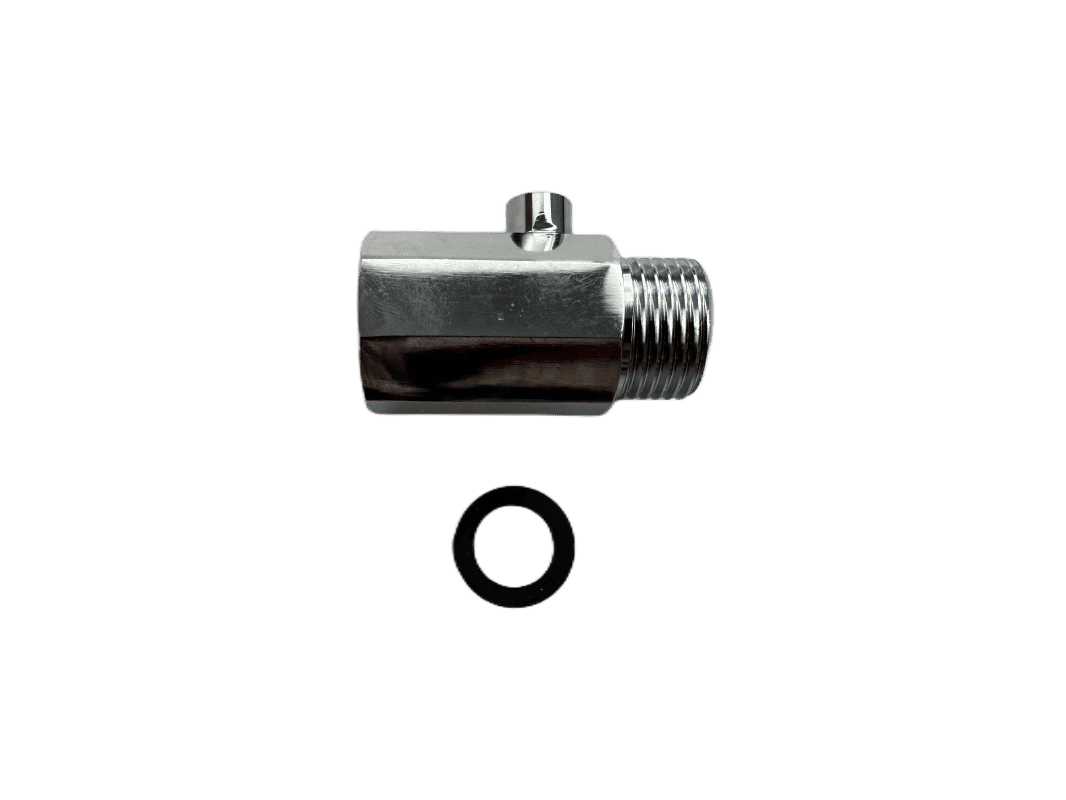
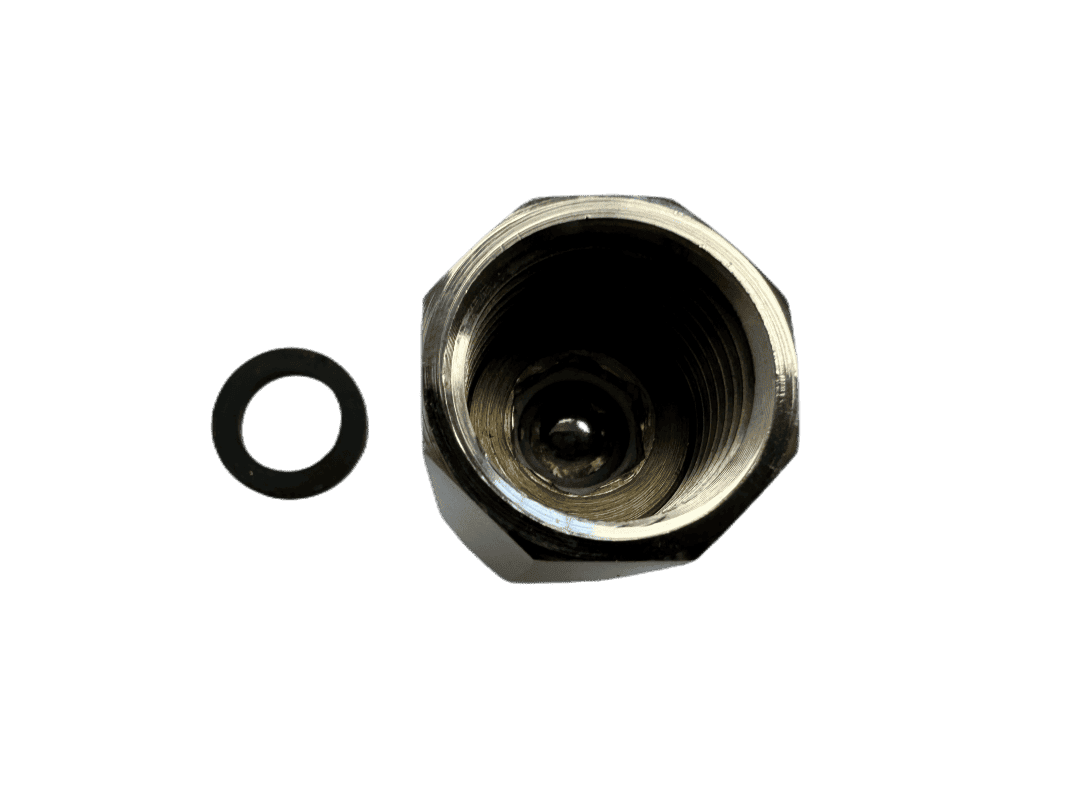

Mini Ball Valve
JX-0440
- Brass Mini Ball Valve
- Lead-free brass and DZR
- Working pressure of 125 psi
- Female x Male; NPT, BSP
- 1/2″FXM
- A double-seal system and heavy-duty aluminum Alloy handles allow flow in either direction.
- Working temperature of 2°F to 175°F, Fast 1/4 turn open or closed operation
- Each valve is individually tested for maximum safety for heavy-duty water, oil, and gas.
Mini-ball valves are quarter-turn ball valves used to shut off fluid flow in the pipework. It has to turn the handle to a right angle when the user wants to close or open the valve. One finds male or female threads on one end of the ball valve. One can use the mini-ball valve to get through tight spaces when one might not require a larger valve. They are used in hot, cold, and compressed air systems for household and small enterprise applications.
Raw Materials Used for Manufacturing the Mini Ball Valve

Consequently, material selection in the choice of a mini-ball valve is a factor that must be taken into quite considerable account. Various materials produce different, distinct properties and applications.
The material used for constructing these small valves is also commonly stainless steel, PVC, and brass. While possessing greater flexibility and lighter construction, which make it ideal because of its low thermal expansion property, stainless steel is solid with high corrosion resistance.
Brass is the most utilized material in the production of mini-ball valves. Brass is a high-grade material that is durable, corrosion-resistant, and robust. It also finds widespread use in many industrial, medical, automotive, and piping applications and is cheap. These make brass the best choice for a wide range of projects that require reliable performance from their micro ball valves.
Choosing a Mini Ball Valve
A wide range of specifications and choices is present in miniature ball valves. These alternatives offer the capacity to select the optimal ball valve.
Size; 1/4″,3/8″ and 1/2″
Thread: FemalexFemale, FemalexMale.

Four-way and five-way ball valves:
Four-way and five-way designs are also included in Mini Ball valves. There are either four or five potential flow connections. The most prevalent ball porting is present in these multi-port valves. It renders them appropriate for diverting or mixing flow.
Diverter valves with an “L” or 90-degree opening that permits flow are known as five-way ball valves. This flow occurs between the bottom or standard port and one side port, but none of the other ports are involved.
One-way or unidirectional vs. two-way ball valves:
A two-port ball valve is a more frequently employed micro ball valve. It is equipped with two terminals or connections. The flow direction differs substantially between a one-way and a two-way ball valve.
A particular flow direction characterizes one-way ball valves due to its exclusive function of sealing and managing pressure in a single direction. A single chamber is always present to secure a one-way valve ball. This seat is designated for use in opposition to the ball.
Additionally, mini-ball valve covers provide a surface. It exerts pressure on the object. The cost of unidirectional ball valves is lower. Two-way ball valves can manage the pressurized flow. They can work without the valve components experiencing premature degradation or leakage.
Three-way diverter (L-port) vs. mixing (T-port) ball valves:
The spheres within miniature three-way ball valves are designed in two distinct ways. The first is an L-port, while the second is a T-port. The two ball port varieties are oriented either vertically or horizontally. The openings of L-port three-way ball valves are shaped like an “L.” The passage of T-port three-way ball valves is shaped like a “T.” Diverter valves are L-port valves. They can redirect the flow between various endpoints.
How Do You Test Mini-Ball Valves?
Frequently, mini-ball valves are implemented in smaller applications that necessitate more precise control. It is crucial to find a model that is suitable for the application and suits your needs, as they are available in various designs.
Before testing a micro ball valve, verify it is compatible with the piping system. Open the valve wide to observe the pressure accumulating in your plumbing system. Connect the valve to the pressure-reducing valve or relief valve. If there is excessive pressure, gradually close the valve until the pressure is reduced to an acceptable level. If the valve lacks a shutoff valve, installing one before placing it in service in your application will be necessary.
Another method of testing microball valves is to employ a gauge probe. Carefully observe the gauge reading as you insert the probe into one of the apertures and open and close the valve. Make sure all terminals are accessible to ensure precise readings.
End Connection of Mini Ball Valve
Mini ball valves may be positioned at any angle or orientation. Enough space is available for the lever’s 90-degree operation. The valves operate when installed in an erect position.
Threaded Connections:
An omit fitting should be of the appropriate dimension for the pipe. We must secure it. Then, secure the valve by screwing it. Spanner flats should be situated adjacent to the pipe connection. To prevent any pressure, both extremities must receive appropriate support.
Compression-end:
The pipe’s end must be square and free of any defects. Unscrew the fastener. Next, please insert it into the fitting until it reaches the pipe stop. Slide the olive and nut back onto the fitting. Tighten your hand until it is unable to rotate.
Mini Ball Valve Life Expectancy
Any ball valve can experience substantial wear and strain. The rotation operation of most ball valves results in their failure due to their nearly constant use. The rotation is typically 1/4 turn from a shaft that is affixed horizontally.
It rotates around its right-angle axis about the cylindrical opening. Sometimes, mini-ball valves cease to operate because they have exceeded their expected lifespan of eight to ten years. Mini-ball valves may malfunction due to corrosion within or near the valve.
Ball valves can deactivate a fixture to regulate the passage of substances or gases. A rotary ball valve, which is a type of ball valve, is responsible for the regulation of fluids or gases. The bore of rotary spheres can open and close to either restrict or permit fluid passage. Please feel free to contact us if you have any further valve requirements.
FAQs
1. Is the mini ball valve suitable for use with high-pressure water systems?
Plumberstar mini ball valves use one-piece forged brass bodies. This integrated build removes weak connecting spots and makes the whole valve handle higher pressure safely. Our regular 1/2-inch version holds a rated working pressure of 12 bar, proven by pressure lab tests. It works well for home booster water lines, small device water feeds, and regular industrial cold water pipes. The solid valve body stands up well when pressure surges briefly.
We fit PTFE sealing seats inside each valve. These parts keep tight, leak-free seals for years when used within standard pressure limits. If your setup involves hot steam or other harsh working environments, get in touch. We will pick the right valve model after checking your actual temperature, pressure, and sealing needs.
2. Has the mini ball valve undergone the salt spray test?

Every electroplated mini ball valve core passes neutral salt spray tests. Our regular bright chrome surface goes through 48 straight hours of standard salt spray testing. No rust, bubbling, or peeling plating shows up after the test finishes. The valve body uses lead-free forged brass. We coat it with two layers of nickel and chrome. The full plating thickness stays around 8 microns. This finish fits regular bathroom gear, damp indoor spaces, and normal outdoor water pipes.
If your project sits on coastlines or places with heavy damp and salt mist, we offer stronger anti-rust upgrades. We can add thicker nickel layers and better surface passivation steps. We can also run salt spray tests for over 100 hours if you need proof for your project. We can hand over all related production settings, test logs, and batch quality papers to match your project rules.
3. What are the advantages of brass Mini Ball Valves compared with stainless steel models?
Brass mini ball valves are faster to make. Brass cuts and shapes easily, and it bends well, too. After forging and precise CNC cutting, the valve body hits steady tightness standards. We keep measurement errors for vital sealing parts within ±0.02 mm.
Stainless steel is hard to machine. Brass lets us cut threads, adjust internal structures, and make global standard ports like NPT and BSP much easier. This makes our brass mini valves perfect for home water lines, small machine piping, and custom OEM orders.
We use low-lead brass for all parts touching drinking water. We offer multiple surface finishes for brass valve bodies. Shiny chrome, brushed texture, and matte black coating are all available.
4. Can we visit the Plumberstar factory?
Yes! Our manufacturing factory sits at No.7, Qinggang Industrial Zone, Taizhou, Zhejiang, China. Buyers from all countries are welcome to come over for factory tours and on-site audits. We will show you around production workshops, finished goods storage rooms, and our sample display area during your trip. You can also talk face-to-face with our engineers and QC staff. We can go over product internal designs, full production workflows, inspection standards, and all OEM & custom development options.
You may check physical samples right on site and watch our product testing steps. We can also talk through bulk order volumes, shipment timelines, custom packaging, and shipping plans for the Europe and North America markets. We need at least three working days’ notice via email or WhatsApp to prepare a smooth visit for you. Just tell us how many people are coming, your planned arrival time, and the main items you want to check. We will arrange a fixed member of our team to receive you ahead of your trip. Transportation to our factory is convenient. We provide free pick-up service from Ningbo Airport, Taizhou Airport, and local high-speed railway stations.
5. Do Mini Ball Valve manufacturers offer ODM design services?
Plumberstar offers full original ODM design and development work for small mini ball valves. We do OEM private label manufacturing, and also supply all-in-one custom packages. We adjust product designs, inner structure layouts, prototype samples, and large batch production to match your market targets, working environments, and project demands.
Our ODM custom work covers nearly all key valve parts. You can change valve body look and internal build, inner water passage shapes, hole sizes, two-way or three-way layouts, handle styles and lock structures, joint thread types, surface plating finishes, and sealing materials. We can tweak or fully redesign any of these parts following your requests.
Our technical team works off your hand sketches, CAD files, 3D digital models, or real physical samples. We also check if each design can be smoothly manufactured. We finish early plan reviews within 24 to 48 hours after getting your custom request. We send the first 2D or 3D design drafts for you to sign off on in 3 to 7 working days; exact time depends on how complicated your design is.
If you own full independent designs for ODM items, we can sign an NDA privacy contract together. This agreement locks down all your design blueprints, technical papers, custom molds, and prototype samples.
