Angle valves are key control components that connect supply piping to end-use fixtures in residential and commercial water systems. During procurement and installation, mismatches often occur in size, connection standard, valve mechanism, material, or service environment.
This article starts with the basic construction and types of angle valves, then covers common applications, connection methods, size designations, specification differences across markets, and the selection of brass, stainless steel, DZR materials, and surface finishes. Based on practical purchasing and inspection scenarios, it explains how to assess valve quality, identify common failure causes, and avoid specification, material, and installation errors during procurement, helping buyers make more accurate selections and improve purchasing and quality control.
1. What Is an Angle Valve?
An angle valve is a small shutoff valve installed between a water supply line and an end-use fixture. It mainly controls the water supply to an individual fixture. The inlet and outlet are typically arranged at 90°, making the valve suitable for connecting a wall outlet to a faucet, toilet, or similar fixture.
1) Angle Valve Construction and Operating Principle
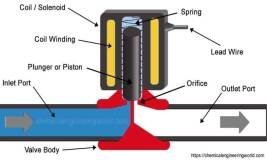
A typical angle valve consists of a body, cartridge or ball, stem, seals, handle, inlet, and outlet. Turning the handle moves the stem and changes the position of the internal shutoff element. A Multi-Turn design normally requires several turns to close gradually, while a Quarter-Turn design typically opens or closes with about 90° of rotation.

Angle Valve Internal Cross-Section
2) Why Does an Angle Valve Use a 90° Inlet-to-Outlet Layout?
Residential supply pipes often project horizontally from the wall, while flexible hoses for faucets, toilets, and other fixtures must run upward or sideways. The 90° layout redirects the flow and provides independent shutoff in one component. It eliminates a separate elbow, reduces connection points, and saves installation space.
2. What Are the Main Types of Angle Valves?
Angle valves can be classified by their internal shutoff mechanism and operating method. During procurement, confirm the internal design first because it affects operation, flow capacity, sealing performance, and service life.
1) Cartridge Angle Valve
A Cartridge Angle Valve controls flow through an internal cartridge. Common designs include rubber-sealed and ceramic cartridges. Different cartridges use different operating strokes, sealing methods, and maintenance procedures.
2) Ball Angle Valve
A Ball Angle Valve controls the waterway with a ported ball. It normally rotates 90° between fully open and fully closed positions and typically uses Quarter-Turn operation. Key inspection points include ball roundness and surface quality, seat fit, and operating torque.
3) What Is the Difference Between Cartridge and Ball Angle Valves?
| Item | Cartridge Angle Valve | Ball Angle Valve |
| Primary shutoff element | Cartridge | Ball |
| Common operation | Multi-Turn / Quarter-Turn | Quarter-Turn |
| Operating travel | Depends on cartridge design | Typically about 90° |
| Main QC points | Cartridge, seals, travel | Ball, seats, torque |
| Maintenance | Some cartridges are replaceable | Depends on product design |
Cartridge vs. Ball Angle Valve Construction
4) Quarter-Turn, Multi-Turn, and Dual Outlet Angle Valves
Quarter-Turn describes the operating method and typically requires about 90° of rotation to open or close. Multi-Turn requires several turns and allows the opening to change gradually. A Dual Outlet valve provides two outlets from one inlet, for example to supply both a faucet and a water filter, reducing the need for an additional tee and fittings.
3. Where Are Angle Valves Commonly Used?
The primary function of an angle valve is Point-of-Use Shutoff. When one fixture requires service, the corresponding angle valve can be closed without shutting down the entire building water supply.
1) Toilet Water Supply
Toilets are one of the most common angle valve applications. The in-wall supply line connects through the angle valve to the toilet supply hose. In North America, a 3/8″ OD Compression outlet is common. The hose connection at the toilet end may use a different size, so confirm the valve-end and fixture-end connections separately.
2) Washbasins and Bathroom Faucets
Washbasins typically use one angle valve on each hot and cold supply line. Each line can be isolated independently, which also simplifies later replacement of the faucet or supply hose.
3) Kitchen Sinks
Kitchen sink supply arrangements are similar to those for washbasins, but they may also serve a water filter, dishwasher, or other equipment. A Dual Outlet Angle Valve or another branch fitting can be used where required.
4) Dishwashers, Water Filters, and Other Water-Using Equipment
Connection specifications vary considerably among these devices. For OEM projects, confirm the equipment connection first, then define the angle valve Outlet Size and connection type. Do not apply a standard washbasin angle valve specification without verification.
4. What Connection Types Are Used for Angle Valves?
The connection type mainly depends on the piping system and interface standard. During selection, verify the exact inlet and outlet connection forms to ensure compatibility.
1) Compression Connection
A Compression connection seals by tightening a nut and ferrule onto the tube and is very common on North American angle valves. For example, 1/2″ OD Compression × 3/8″ OD Compression means the two ends connect to tubes with actual outside diameters of 1/2″ and 3/8″, respectively. Note that Compression sizes are generally specified by the actual tube outside diameter (O.D.), which differs from the nominal sizing system used for NPT, BSP, and other pipe threads.
2) NPT, BSPT, and BSPP (G) Threaded Connections
NPT is used mainly in North American systems. BSPT is a tapered pipe thread and is commonly designated with R. BSPP is a parallel pipe thread and commonly uses the G designation. Even when both are marked “1/2,” thread form, pitch, taper, and sealing method may differ, so they are not directly interchangeable.
3) PEX and CPVC Connections
PEX and CPVC systems use dedicated angle valve connections, such as 1/2″ CPVC × 3/8″ OD Compression. Although the inlet may also be marked 1/2″, it is still a different interface from 1/2″ NPT or 1/2″ Compression.
4) Push-to-Connect Connection
Push-to-Connect fittings grip and seal the pipe internally for fast installation. During selection, confirm the approved pipe material, actual pipe diameter, and required insertion depth.
5) Sweat / Solder Connection
Sweat connections are mainly used with copper tube, for example 1/2″ Nominal Sweat × 3/8″ OD Compression. The outlet may match that of a Compression angle valve, but the inlet construction is different.
6) Which Connection Should Be Used for Different Pipe Materials?
Copper tube can use Compression, Sweat, or compatible Push-to-Connect connections. PEX and CPVC should use connections designed for the corresponding piping system. For bulk purchasing, write the specification in full: Inlet Size + Inlet Connection + Outlet Size + Outlet Connection. Specifying only “1/2″ × 3/8″ Angle Valve” can easily result in the wrong order.
Overview of Angle Valve Connection Types
5. How Are Common Angle Valve Sizes Specified?
Understanding angle valve size designations is essential for identifying the correct product specification. During selection, first distinguish the inlet size from the outlet size.
1) Inlet Size and Outlet Size
- Inlet Size: the end connected to the wall supply line; 1/2″ is common in residential applications.
- Outlet Size: the end connected to the fixture supply hose; 3/8″ is common in North America, while some European products commonly use 1/2″.
2) What Does a 1/2″ × 3/8″ Angle Valve Mean?
Standard designation: first number = inlet; second number = outlet.
- 1/2″ × 3/8″: 1/2″ inlet and 3/8″ outlet; common in North America.
- 1/2″ × 1/2″: 1/2″ inlet and outlet; found on some European products, water heaters, and commercial equipment.
- 3/4″ × 1/2″: used on some higher-flow branch lines.
- 1/2″ × 1/4″: common for water filters and ice makers.
1/2″ × 3/8″ Angle Valve Size Diagram
3) What Is the Difference Between Nominal Size and O.D.?
- Nominal Size: the designated size of a pipe thread or tube and not necessarily its actual outside diameter. For example, in the North American copper tube system, 1/2″ Nominal Copper Tube has an actual O.D. of 5/8″, while the 3/8″ in 3/8″ OD Compression directly indicates the actual outside diameter of the connected tube.
- O.D. (Outside Diameter): the actual outside diameter of the tube. A 3/8″ OD tube has an actual outside diameter of about 9.5 mm. Angle valve inlets are often designated by Nominal Size, while Compression connections commonly use O.D.
Angle valve inlets are often specified by Nominal Size, while Compression outlets commonly use O.D. A 3/8″ NPT thread has an outside diameter of about 17.1 mm, whereas a 3/8″ OD tube has an outside diameter of about 9.5 mm. They belong to different sizing systems.
4) Common Angle Valve Inlet and Outlet Size Combinations
| Size Combination | Inlet | Outlet | Primary Market | Typical Application |
| 1/2″ × 3/8″ | 1/2″ NPT / PEX / Sweat | 3/8″ OD Compression | North America | Toilets, washbasins, kitchen faucets |
| 1/2″ × 1/2″ | 1/2″ NPT / PEX / Sweat | 1/2″ OD Compression or thread | Europe; some North American commercial applications | European faucets, water heaters |
| 3/4″ × 1/2″ | 3/4″ NPT | 1/2″ OD Compression | Some North American projects | Higher-flow branch lines |
| 1/2″ × 1/4″ | 1/2″ NPT / PEX | 1/4″ OD Compression | Multiple markets | Water filters, ice makers |
6. What Is the Difference Between American and European Angle Valves?
Angle valves differ by market in connection standards and installation practices, which also affects product design. The following comparison covers appearance, construction, and related features.
1) Differences in Appearance and Product Design
| Comparison | American Angle Valve | European Angle Valve |
| Typical appearance | Round handwheel or lever handle is common | Cross handle or small knob is common |
| Handle type | Both Quarter-Turn and Multi-Turn are common | Multi-Turn products remain common |
| Outlet | Compression connection is common | Male thread or Euroconus connection is common |
| Surface finish | Chrome is common | Chrome, Brushed Nickel, Original Brass, etc. |
| Certification | UPC/cUPC, NSF/ANSI 61, etc. | WRAS, DVGW, etc. |
2) Differences in Common Inlet/Outlet Sizes and Connections
- American: common inlets include 1/2″ NPT / PEX / Sweat, with 3/8″ OD Compression commonly used at the outlet.
- European: common inlets include G1/2 or R1/2. Outlets may use G3/8 or G1/2 male threads, or connections such as Euroconus.
American vs. European Angle Valve Specification Comparison
3) Market Differences Between NPT and BSP/G Threads
- NPT: common in the United States and Canada. It is a tapered pipe thread and is normally used with a suitable thread sealant.
- BSPT (R): common in the United Kingdom, Australia, New Zealand, and parts of Asia.
- BSPP (G): common in continental Europe and other markets. It is a parallel pipe thread and normally uses an end-face sealing arrangement.
7. Common Angle Valve Materials and Surface Finishes
Angle valve materials and surface finishes affect appearance, corrosion resistance, service life, and application suitability. In practice, the most common options fall into the following categories.
1) Standard Brass Angle Valves
Standard free-machining brass often contains a certain amount of lead, and chemical composition varies by grade. Brass offers good machinability and corrosion resistance and is widely used for angle valves. For potable-water projects, confirm the target market requirements for lead content and material compliance.
2) Lead-Free Brass Angle Valves
Lead-free brass is commonly used for potable-water angle valves. Bismuth (Bi), silicon (Si), or other alloying approaches may replace part of the lead used in conventional free-machining brass. Common grades include C89833, C89836, and C89837, with differences in composition and mechanical properties. Potable-water projects must also confirm NSF/ANSI 61, NSF/ANSI 372, or the applicable target-market requirements.
3) DZR Brass Angle Valves
DZR (Dezincification Resistant) brass improves resistance to dezincification through controlled composition and microstructure. Dezincification often occurs under water conditions involving high chloride levels, low pH, elevated temperature, or prolonged stagnation. As zinc gradually leaches from standard brass, a porous copper-rich structure can form, reducing strength and sometimes producing pink or red areas on the surface. Common DZR brass grades include CW602N (CZ132/CuZn36Pb2As system). Grades under different standards should not be treated as automatically equivalent. DZR brass is suitable for applications such as coastal areas, corrosive water, hot-water systems, and piping subject to prolonged stagnation.
4) Stainless Steel Angle Valves
- 304 stainless steel: provides good corrosion resistance and suits normal municipal water. Pitting still requires attention in high-chloride environments.
- 316 stainless steel: contains molybdenum and generally offers better resistance to pitting and crevice corrosion than 304. It suits some coastal and high-chloride environments, but machining difficulty and cost are usually higher.
5) Chrome, Nickel, Brushed Nickel, ORB, Gold, Black, and Original Brass
| Surface Finish | Appearance | Characteristics | Common Style |
| Chrome | Bright silver mirror finish | Corrosion-resistant, easy to clean | Engineering, modern |
| Polished Nickel | Warm silver | Soft appearance | European, premium bathroom |
| Brushed Nickel | Matte silver-gray with brushed texture | Scratches are less visible | Modern minimalist |
| ORB | Dark oil-rubbed bronze | Highly decorative | American vintage |
| Gold | Gold | Highly decorative | Light luxury, European |
| Matte Black | Matte black | Strong modern appearance | Modern, industrial |
| Original Brass | Golden yellow | Oxidizes over time and develops patina | Vintage, industrial |
Chrome is durable and easy to clean, making it suitable for engineering applications. During installation, avoid gripping ORB and Matte Black surfaces directly with tools. Original Brass oxidizes over time and develops a patina.
Material and Surface Finish Comparison
8. What Are the Advantages and Limitations of Angle Valves?
Angle valves mainly provide point-of-use water control and are highly practical in residential and commercial buildings, but they also have defined application limits. Understanding both their advantages and boundaries supports correct selection.
1) Main Advantages of Angle Valves
a. Local isolation: service one fixture by closing its angle valve without shutting down the entire water supply.
b. Integrated 90° flow direction change: reduces additional elbows and connection points.
c. Simple construction: common angle valves have relatively simple internal designs, supporting mass production and maintenance.
d. Relatively low cost: suitable for the large number of terminal water points in residential and commercial buildings.
e. Multiple connection options: compatible designs are available for copper, PEX, CPVC, steel pipe, and other common piping materials.
f. Clear operating status: on some Quarter-Turn products, handle position provides a quick visual indication of open or closed status.
2) What Are the Limitations of Angle Valves?
a. Not suitable for precise flow control: Quarter-Turn valves are designed for rapid opening and closing. Use Multi-Turn or another regulating valve where fine adjustment is required.
b. Standard angle valves are mainly intended for point-of-use supply. For high differential-pressure service, select a product with the appropriate pressure rating.
c. Not suitable for high-temperature steam: cartridges, seats, and sealing materials all have defined temperature limits.
d. Not suitable for viscous fluids or media containing large amounts of particles: particles can damage the cartridge, ball, or sealing surfaces.
e. Multi-Turn products generally do not allow fully open or fully closed status to be determined directly from handle position.
f. When both outlets of a Dual Outlet valve are used simultaneously, flow through each outlet depends on the internal passage, outlet size, and supply pressure.
g. Zinc-alloy angle valves generally provide lower corrosion resistance and long-term mechanical performance than brass. Use caution when specifying them for long-service projects.
9. How to Select the Right Angle Valve
Select an angle valve based on the installation location, piping system, and actual service conditions. Confirm the following key factors step by step.
1) Determine Whether an Angle Valve Is Appropriate for the Installation Location
Wall outlet with flow redirected to equipment below → Angle Valve.
Isolation on a straight pipe run → Straight Stop.
Outdoor frost-proof faucet or washing-machine supply → dedicated Hose Bibb / washing-machine valve.
Concealed in-wall location without normal access for operation → a standard manually operated angle valve is generally not recommended.
2) Select the Valve Based on Operating Frequency and Internal Mechanism
For frequently operated locations, consider a ceramic Cartridge or another Quarter-Turn design.
For higher-flow applications, consider a Ball design.
Where gradual flow adjustment is required, consider Multi-Turn or another regulating design.
For locations that remain unused for long periods, consider scaling and seizure risks.
3) Select the Connection Based on Pipe Material and Target Market
| Pipe Material | Common North American Connection | Common European Connection |
| Copper | Sweat / Compression / Push-fit | Compression / Solder / Euroconus |
| PEX | Crimp / Expansion / Push-fit | Push-fit and applicable PEX systems |
| CPVC | CPVC solvent-weld socket / Push-fit | Relatively uncommon |
| Steel pipe | NPT thread | BSPT / BSPP thread |
4) Determine Inlet and Outlet Sizes from the Equipment Connection
Check the equipment supply-hose connection: 3/8″ OD Compression is common for toilets, washbasins, and kitchen faucets in North America; European faucets commonly use 3/8″ or 1/2″ threaded connections; water filters and ice makers commonly use 1/4″ OD.
A 1/2″ building supply connection is common in residential applications.
Use a complete designation, for example: 1/2″ NPT Inlet × 3/8″ OD Compression Outlet.
5) Select the Valve Body Material Based on Water Quality and Service Environment
| Water Quality / Environment | Valve Body Materials to Consider |
| Normal municipal water | Lead-Free Brass |
| Coastal / high chloride | DZR Brass or 316 Stainless Steel, depending on chloride concentration, temperature, and stagnation conditions |
| Low-pH acidic water | Evaluate material compatibility against actual water quality; DZR does not mean immunity to acidic corrosion |
| Hot-water system | DZR Brass, Lead-Free Brass, or other suitable materials, considering temperature, water quality, and certification requirements |
| Long-term stagnation | DZR Brass may be considered |
| High humidity / appearance requirements | 304 or 316 Stainless Steel, etc. |
6) Confirm Working Pressure, Temperature, and Potable-Water Certification Requirements
Working pressure: confirm the building supply pressure and the angle valve rated working pressure.
Working temperature: confirm whether the service is cold water, hot water, or hydronic, and verify the temperature limits of the cartridge, seat, and seals.
Potable-water certification: NSF/ANSI 61, NSF/ANSI 372, and UPC/cUPC are common in the United States and Canada; WRAS in the United Kingdom; DVGW in Germany; and WaterMark in Australia.
10. How to Evaluate Angle Valve Quality
Angle valve specifications, materials, and actual manufacturing quality all affect service reliability. During purchasing or inspection, check the following areas.
1) Check Valve Body Material, Weight, and Wall Thickness
Weight: compare products of the same size and construction. If a 1/2″ angle valve is noticeably light, for example below about 120 g, inspect further for possible zinc alloy, thin-wall brass, or another lightweight construction.
Wall thickness: check critical pressure-retaining areas and thread roots for obvious weak sections.
Material identification: machined brass surfaces are typically golden yellow; zinc alloy is closer to dark silver-gray; stainless steel is silver-gray.
Casting quality: surfaces should show no obvious sand holes, shrinkage cavities, or cracks. Pay particular attention to thread roots and flow-passage corners.
2) Check the Cartridge, Ball, and Sealing Structure
Ceramic cartridge: ceramic disc surfaces should be flat and smooth, with no obvious scratches, chipped edges, or notches.
Ball: the ball should be round and smooth, rotate freely, and show no obvious binding.
Seals: surfaces should show no obvious flash, bubbles, cuts, or aging.
Stem: the stem should not be visibly bent, threads should be complete, and the stem-to-body interface should use the specified O-ring, packing, or other sealing arrangement.
3) Check Thread Machining and Sealing-Surface Quality
Threads: the thread form should be clear and complete, with no broken threads, cross-threading, or obvious burrs. Use standard ring and plug gauges for go/no-go inspection.
Sealing surfaces: the internal cone of a Compression connection should be smooth and free of obvious scratches; the inside of a solder socket should be even.
Angle: inlet and outlet directions should comply with the drawing. Obvious misalignment can affect installation and loading.
4) Check Plating and Other Surface Finishes
Chrome: bright and uniform, with no obvious blistering, peeling, exposed base material, or color variation.
Brushed Nickel: uniform brush pattern, with no missed areas or obvious scratches.
ORB / Matte Black: check adhesion, impact damage, coating loss, and edge coverage.
Original Brass: clear coat should be uniform, with no obvious runs or bubbles.
5) Check Operating Feel, Sealing, and Pressure Performance
Operating feel: Quarter-Turn operation should be smooth and consistent without binding, with clear fully open and fully closed positions. Multi-Turn operation should be smooth, without obvious changes in resistance.
Leak test: with the valve closed, check the Outlet, stem, and connection points for leakage.
Pressure test: under the specified test conditions, check the body for deformation, cracking, and leakage.
For bulk orders, establish an AQL sampling plan, teardown inspection, and pressure/leakage test plan based on order quantity and acceptance requirements.
Angle Valve Quality Inspection / QC Check
11. Common Angle Valve Failures and Causes
Failure 1: Leakage at the Connection
Symptom: water slowly leaks where the angle valve connects to the female threaded elbow in the wall. It may begin with only a few drops, but prolonged leakage can penetrate the wall or cause water damage. Cause analysis:
1. PTFE tape wrapped in the wrong direction: if the tape is wrapped opposite to the tightening direction, it can loosen as the valve is screwed into the female thread and compromise thread sealing.
2. Incorrect amount of PTFE tape: too little may not fill the thread clearance; too much may prevent proper thread engagement.
3. Insufficient thread engagement: if the valve is not tightened to the proper position, long-term pressure fluctuations can lead to leakage.
4. Misaligned concealed female thread: if the female elbow is not perpendicular to the wall, the valve thread carries load on one side after installation. Further forced tightening increases deformation; an eccentric offset fitting can be used for correction.
Failure 2: Valve Does Not Shut Off Fully / Drips
Symptom: after the handwheel is fully tightened, the outlet still drips or flows slowly and the water supply cannot be completely isolated. Cause analysis:
1. Ceramic cartridge wear: in hard water or water containing sand, particles entering the ceramic sealing surfaces create abrasive wear. Over time, scratches develop and cause leakage.
2. Scale buildup and cartridge sticking: when the angle valve is not operated for long periods, calcium and magnesium deposits can build up on the cartridge and prevent the ceramic discs from seating completely. This is more common in hard-water areas.
3. Seal aging and hardening: the EPDM seal at the bottom of the cartridge can gradually harden under prolonged hot-water service and lose its ability to compensate for small clearances between the cartridge and valve body.
Failure 3: Valve Body or Thread Root Breakage in the Wall
Symptom: during service or maintenance, the angle valve breaks at the thread root and part of the threaded section remains inside the wall fitting. Cause analysis:
1. Zinc-alloy body corrosion or material degradation: zinc-alloy bodies are sensitive to water quality, moisture, and installation conditions. Long-term corrosion can cause local material loss, reduced strength, or deterioration in the threaded area, increasing the risk of fracture during removal or installation.
2. Excessive installation torque: overtightening can create microcracks at the thread root of a brass angle valve. Long-term pressure fluctuations may cause these cracks to propagate.
3. Misaligned wall thread + lateral load: if the concealed female elbow is installed out of alignment, forcing the valve into position subjects it to long-term lateral bending stress. Pressure pulsation and thermal expansion/contraction can then promote fatigue fracture.
4. Freeze cracking: at low temperatures, residual water inside the valve can freeze and expand. Materials with lower toughness, such as some zinc alloys, are more prone to cracking.
Failure 4: Valve Body Perforation / “Sweating”
Symptom: small seepage points appear on the valve body and slowly release water like “sweating,” usually at thinner or weaker areas of the body. Cause analysis:
1. Casting porosity: defects in molding sand or pouring practice during brass body casting can create small internal pores. After long-term service, plating wear or corrosion may expose the pores and create leakage points.
2. Corrosion perforation: in water with high chloride content or low pH, long-term brass service may result in dezincification. Local wall thickness gradually decreases until perforation occurs.
3. Stress corrosion cracking: under the combined effect of a specific corrosive medium and high residual stress, brass may develop stress corrosion cracks, usually starting at stress-concentration areas. Confirming SCC requires evaluation of the fracture surface, crack morphology, and corrosive environment.
Typical Angle Valve Failure Cases
12. Common Mistakes When Purchasing Angle Valves
Mistake 1: Choosing a Zinc-Alloy Angle Valve for a Lower Price
Zinc-alloy angle valves usually cost less than lead-free brass, but they carry higher long-term risks of corrosion and fracture. Several field checks can help identify them:
Weight: if a 1/2″ angle valve weighs less than about 120 g, pay closer attention to the possibility of zinc alloy, thin-wall brass, or another lightweight construction.
Thread color: machined brass threads are typically golden yellow, while zinc alloy is closer to dark silver-gray.
Material designation: purchasing documents should specify materials such as Lead-Free Brass, DZR Brass, or 304 Stainless Steel. The term “Alloy” alone does not identify the actual material.
Mistake 2: Ignoring the Cartridge and Seals
Angle valve life depends heavily on the cartridge, seals, and assembly quality. A heavier body or brighter plating does not guarantee a more reliable internal structure. During inspection, remove and inspect the cartridge directly:
Ceramic disc surfaces should be flat and smooth, with no obvious scratches, chipped edges, or notches.
High-quality alumina ceramic has high hardness and normally shows no obvious mark when lightly scratched with a fingernail; lower-quality ceramic or plastic cartridges scratch more easily.
For hot-water service, pay particular attention to seal material. EPDM is more suitable than standard NBR for long-term high-temperature service.
Mistake 3: Ignoring Installation and Maintenance Clearance
If the angle valve is too close to the wall, cabinet, or adjacent fittings, installation and later maintenance become more difficult. Multi-outlet valves are larger and require more working space. Leave adequate wrench clearance around the handwheel and surrounding components. Where space is limited, confirm valve body depth, handwheel dimensions, and actual installation clearance during the selection stage.
13. Summary
Plumberstar specializes in valves and piping connection products. It provides angle valves and customized solutions for engineering projects, bulk procurement, and OEM customers, supporting comprehensive evaluation from specification confirmation and material selection through production and quality control. If you are sourcing angle valves for a specific market or application, contact Plumberstar for additional product and project support.